
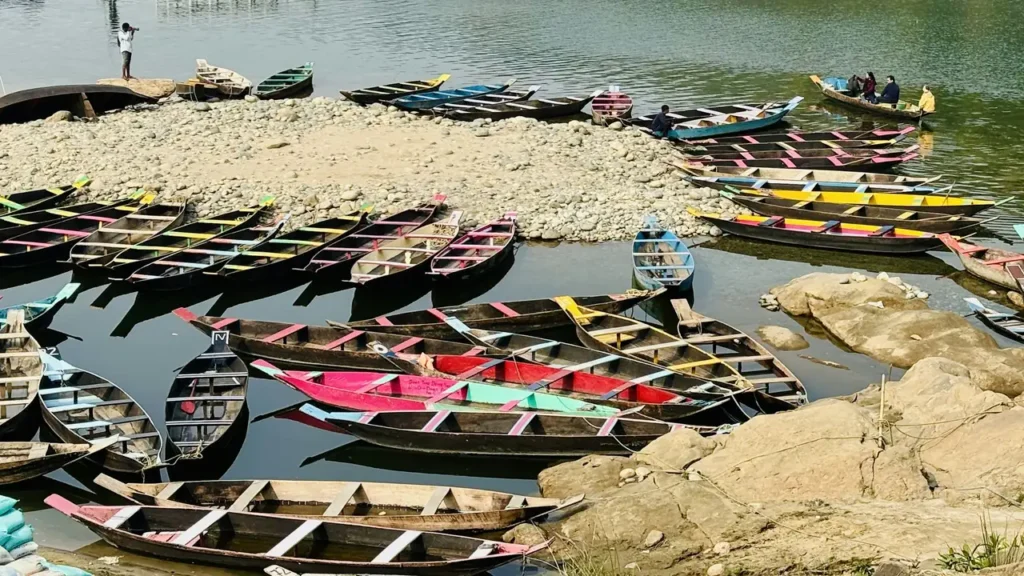
Travel to Dawki & Shnongpdeng: A First-Timer’s Guide to the Umngot River
An honest guide to Dawki and Shnongpdeng — when the Umngot is clear, boating and riverside camps, the border, and how to combine it with Mawlynnong.
Dawki is a small town on the Bangladesh border where the Umngot River runs so clear in the dry months that boats seem to float on air. Shnongpdeng, just upstream, is quieter, with riverside camps, a suspension bridge and kayaking. Both are an easy add-on to a trip through Mawlynnong.
Visit between October and May; the glass-clear water is most reliable in November–February and depends on recent rain. Stay a night at Shnongpdeng rather than doing Dawki as a rushed day trip, and pair it with Mawlynnong.
Permits checked: 27 October 2026, against Meghalaya Tourism’s planning FAQ. This is a border area — confirm current rules before you travel.
Why visit Dawki & Shnongpdeng
Why the Umngot is worth the drive:
The clear water
In the dry season you can see the riverbed beneath the boats.
Shnongpdeng
A quiet riverside village with camps, a suspension bridge and kayaking.
An easy loop
Combine it with Mawlynnong and the Riwai root bridge in one trip.
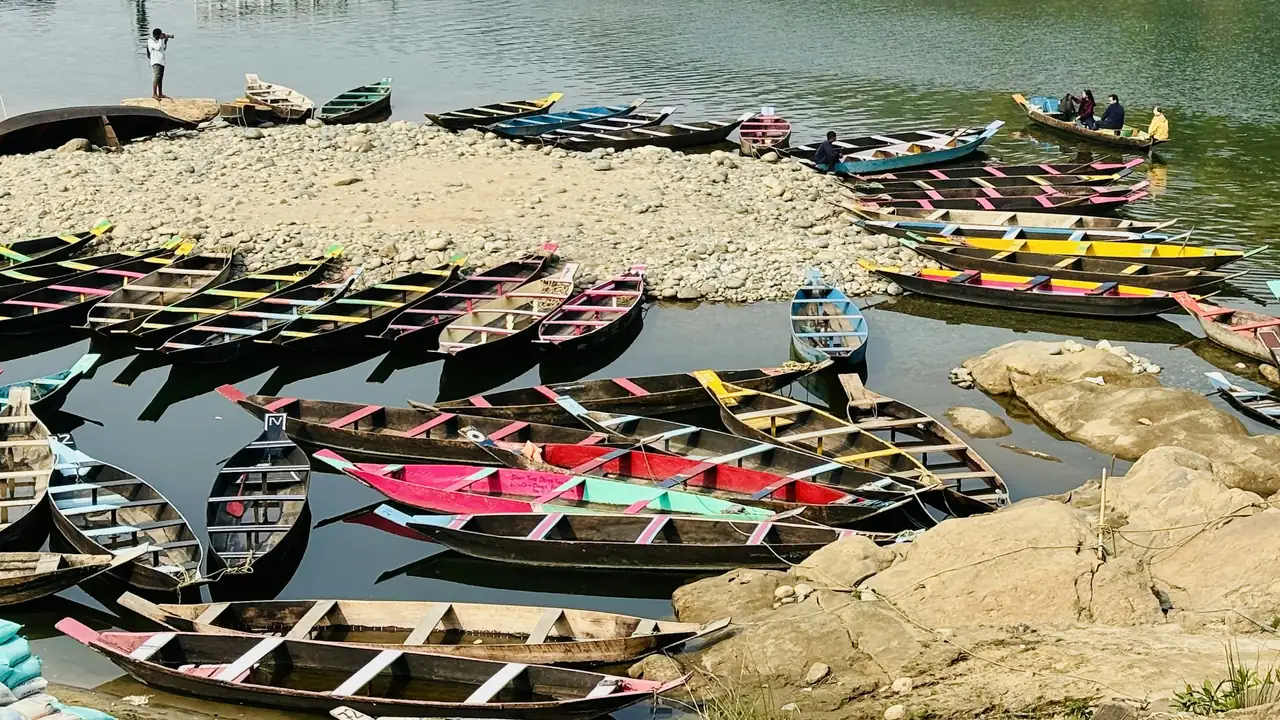
Boats on the Umngot River at Dawki. Photo: Shraddha Wasnik / Unsplash
When to go
October to May: Meghalaya Tourism’s best time to visit Dawki — good for boating and outdoor activities.
November to February: the dry winter months, when the glass-clear water is most reliable — Meghalaya Tourism’s itinerary singles them out. Clarity still depends on recent rain.
June to September (monsoon): the river runs high and muddy; boating may be suspended.
Weekends: busy with day visitors — weekdays are quieter.
Clear water is a dry-winter sight (November–February is most reliable), and even then a heavy shower upstream can cloud it for a day or two. In the monsoon, the Umngot is a brown, fast river.
Top things to do in Dawki & Shnongpdeng
The main things to do along the river:
Boat ride on the Umngot
A short ride in a wooden boat on the clear river at Dawki.
Shnongpdeng
Riverside camps, a suspension bridge and calmer water upstream.
Kayaking & cliff jumps
Offered by operators at Shnongpdeng in season. Use a registered local operator, wear the life jacket and safety gear provided, and skip water activities whenever operators suspend them after rain.
Dawki Bridge
The old suspension bridge over the river, a classic photo spot.
Dawki–Tamabil border
A brief stop to see the public area at the India–Bangladesh crossing. Crossing into Bangladesh is a separate journey with its own border formalities.
Mawlynnong
The tidy village and Riwai root bridge, about 30 km away.
What to eat in Dawki & Shnongpdeng
Food here is basic — riverside stalls and camp meals.
Fish & rice
Simple local meals by the water.
Camp meals
Meals are usually included with riverside camps.
Tea & Maggi
Quick snacks by the boat ghat.
Snacks & water
Options are limited — carry some.
Ask what’s included before booking a camp — meals, boating and kayaking are often priced separately.
Where to stay
Shnongpdeng’s riverside camps are the most memorable way to stay.
Riverside camps
Tents by the water — basic but beautiful.
Homestays
Simple rooms with local families.
Return to Shillong
Day trip if you want more comfort.
How to get to Dawki & Shnongpdeng & around
Dawki is about 2.5–3 hours by road from Shillong.
Indian visitors don’t need a permit for Meghalaya. Foreign visitors don’t need an Inner Line Permit, but must register on arrival (hotels usually handle this) and may need additional permission near the Bangladesh border — see Meghalaya Tourism’s planning FAQ.
A simple 2-day plan
Two relaxed days on the river, starting and ending in Shillong:
Mawlynnong to Shnongpdeng
Leave Shillong early — about 2.5 hours to Mawlynnong (from Sohra, add time). See the village and the Riwai root bridge, then continue to Shnongpdeng for an afternoon by the river and a night in a camp.
Boat ride & back to Shillong
Take an early boat ride at Shnongpdeng — ask your camp or a local operator where rides are running that morning — or drive down to the busier Dawki boat area. See the Dawki Bridge, then allow about 3 hours for the drive back to Shillong (around 85 km).
Practical tips that actually help
Go early
Boats get busy by late morning.
Carry ID
Border-area checkpoints may ask for it.
Cash
Boats, camps and fees are cash only.
Dry bag
Keep phones and cameras dry on the boat.
Check the season
No clear water in the monsoon.
Respect the river
Don’t leave litter on the banks.
Mistakes first-time visitors make
- Visiting in the monsoon. The water is muddy and boating may stop.
- Doing it as a rushed day trip. A night at Shnongpdeng is much better.
- Arriving at midday on a weekend. It’s crowded — go early or on a weekday.
- Forgetting cash. There are few ATMs nearby.
Planning Meghalaya around the Umngot?
Dawki pairs with Mawlynnong and Shillong. Tell us your dates and we’ll help you plan it.
Plan my Meghalaya trip →Dawki & Shnongpdeng FAQs
When is the Umngot River clear?
Visit between October and May for outdoor activities. The glass-clear river is most reliable in the dry winter months (November–February) and depends on recent rain.
Is it Shnongpdeng or Shnongpareng?
Shnongpdeng — the spelling used by Meghalaya Tourism.
How far is Dawki from Shillong?
About 2.5–3 hours by road.
Can you visit Dawki in the monsoon?
You can, but the river runs high and muddy and boating may be suspended.
Do you need a permit for Dawki?
Indian visitors don’t need a permit for Meghalaya. Foreign visitors don’t need an Inner Line Permit, but must register on arrival (hotels usually handle this) and may need additional permission near the Bangladesh border — see Meghalaya Tourism’s planning FAQ.
Related guides
Keep planning your Meghalaya trip with these:
Meghalaya Travel Guide
Root bridges, waterfalls and the Umngot — how to plan the whole of Meghalaya.
Travel to Mawlynnong
The tidy village and Riwai root bridge.
Ashvinee Nagle
I’m Ashvinee — I help first-time travellers plan India trips that actually work. I’ve spent years exploring the country’s regions, from Rajasthan’s forts to Kerala’s backwaters, and I write the guides I wish I’d had on my own first trips.
Written by Ashvinee Nagle
I travel India slowly and write it down honestly - practical guides and real itineraries from someone who lives here.
About Ashvinee →Plan your India trip with us
Get one short, honest India travel guide a week — plus a free 7-day Rajasthan itinerary to start.
Free. Unsubscribe any time.