
Festival guide · Pushkar
Pushkar Camel Fair 2026: when to go, what to see, and how to do it slowly
A livestock fair, a pilgrimage and a carnival on the same patch of desert — the 2026 dates, which days are for camels and which are for crowds, and the honest version of what you will find.
- Rajasthan
- Festival
- 3 days
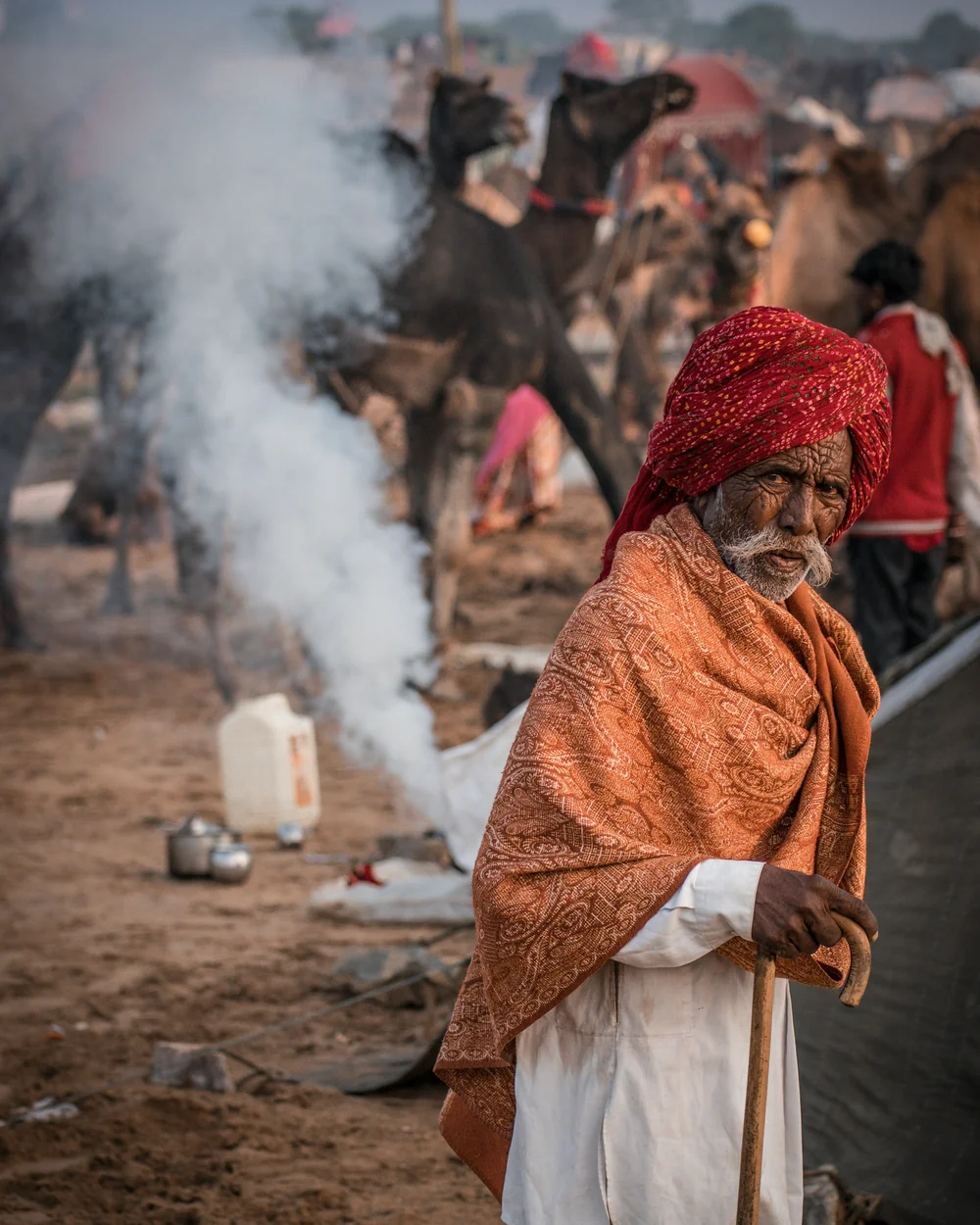
- Kartik PurnimaTue 24 NovThe climax and the holy dip
- Main programme~17–24 NovConfirm on Rajasthan Tourism
- Most camelsFirst daysTrading thins out by Purnima
- Nearest railAjmer, 15 km30 min by road
The short version
The Pushkar fair builds towards Kartik Purnima, which falls on Tuesday 24 November 2026; the organised programme usually runs for about a week before it. Come early if you want camels and trading — the herders arrive first and many leave before the full moon. Come at the end for the pilgrimage and the holy dip at the lake. Three days, with one of them on the trading grounds at sunrise, is the right length. Book a room now, because prices multiply for fair week.
What the Pushkar fair is now
For centuries this was a working livestock market. Herders walked camels, horses and cattle in from across Rajasthan to trade on the dunes at the edge of Pushkar, timed to the Kartik full moon, when pilgrims also come to bathe in the holy lake. The two events still share the same week. On top of them, Rajasthan Tourism now runs an organised programme of competitions, music and dance, and the fair draws a few hundred thousand visitors.
It is worth being honest about one thing before you go. There are far fewer camels than there used to be. India’s camel population has fallen sharply over recent decades as the animals lost their place in farming and transport, and herders at the fair say the same thing every year: fewer buyers, fewer animals, and a younger generation that is not taking up the work. The fair is still extraordinary. It is just more festival and less market than the old photographs suggest.
Trade
A real livestock market
Camels, horses and cattle are still bought and sold on the dunes, mostly in the first days.
Faith
A pilgrimage
Pushkar is one of Hinduism’s holiest towns, and Kartik Purnima is its most important bathing day.
Festival
A carnival
Competitions, folk music, a Ferris wheel and stalls selling everything from camel tack to bangles.
Pushkar fair 2026 dates
The fair follows the lunar calendar and builds towards the Kartik full moon, so the dates move every year. In 2025 it ended on 5 November; in 2026 it is almost three weeks later.
- Mid-NovHerders arriveCamps go up on the dunes and trading starts, often a week or more before the full moon.
- ~17 NovProgramme beginsThe organised events usually open about a week before Purnima. Confirm the exact date with Rajasthan Tourism.
- ~20–21 NovPrabodhini EkadashiThe religious fair begins in earnest; pilgrims start arriving in large numbers.
- Tue 24 NovKartik PurnimaThe climax. The holy dip at the lake at dawn, and lamps on the water in the evening.
Why then
The trading grounds are full, the herders’ camps are busy, and the light at dawn over the dunes is the reason people bring cameras.
What you miss
The big religious crowds and the holy dip. Some competitions have not started yet.
Best for
Photographers, anyone who wants the livestock fair itself, and anyone who hates crowds.
Why then
The town fills with pilgrims, the ghats are lit with lamps, and the fair feels like the whole of Rajasthan has arrived.
What it costs
Crowds, gridlocked roads and peak room prices. Many herders have sold up and gone home.
Best for
The spiritual side of Pushkar, and the full-moon night at the lake.
How the fair works
It helps to think of it as three events sharing one week and one small town.
- The livestock fair happens on the open dunes on the western edge of town. It starts first and winds down first. This is where the herders camp, and where the camels are.
- The organised programme runs at the mela ground, the fair’s stadium, with a published daily schedule of competitions and performances.
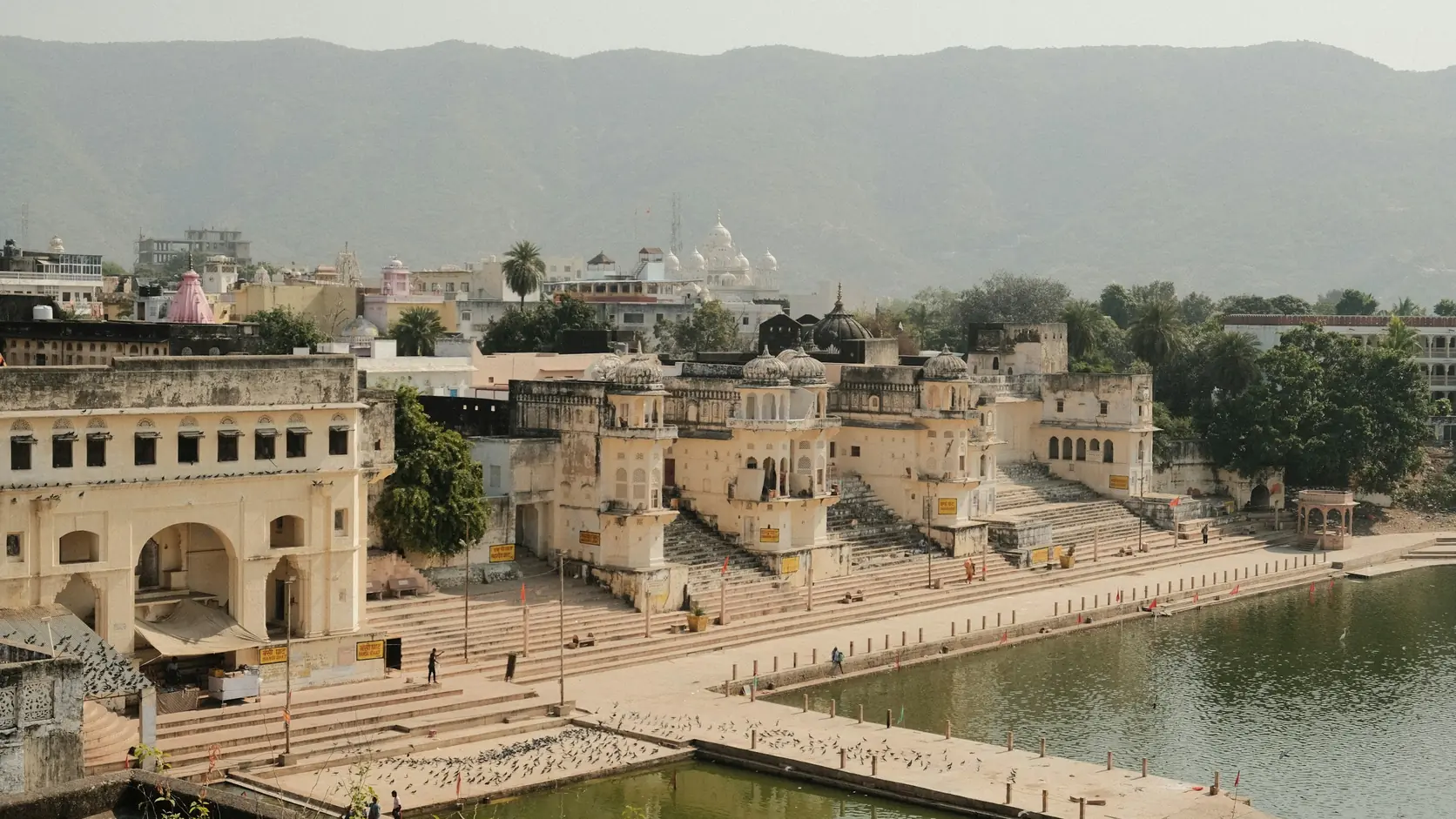
- The pilgrimage centres on the lake and its 52 ghats, and on the Brahma temple — one of very few in India dedicated to Brahma. It peaks from Ekadashi to Purnima.
Worth knowing
My Pushkar travel guide covers the town itself: the temples, the Savitri hilltop, the cafes and where to stay outside fair week. This post is only about the fair.
The trading grounds
If you only do one thing, go to the dunes at sunrise. The herders’ camps are waking up, fires are being lit, camels are being fed and groomed, and the low sun comes through the dust. By mid-morning the trading is under way and the light has gone flat.
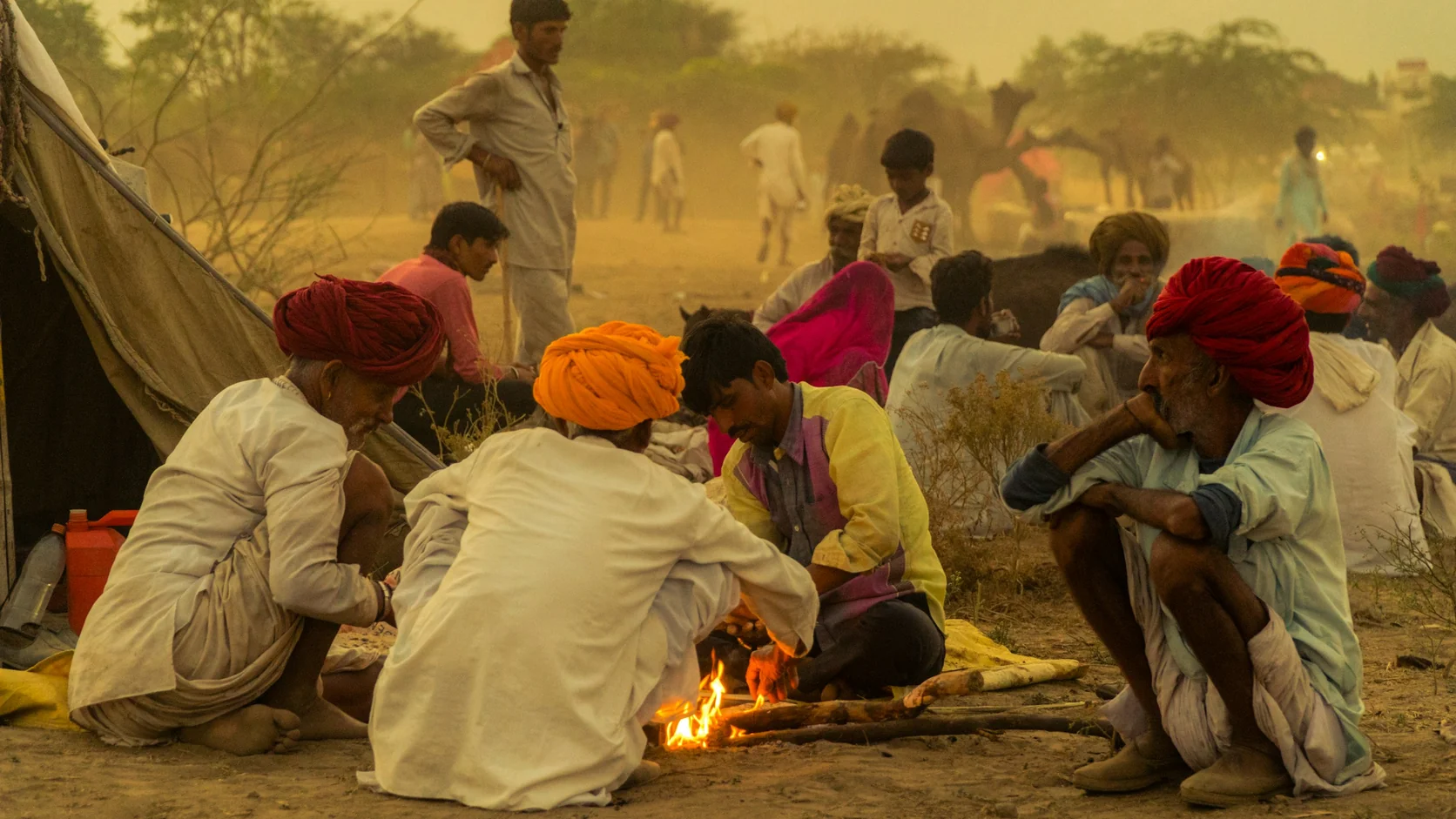
- Go early in the fair. Most trading happens in the first days. By Purnima, many herders have sold their animals and left.
- Ask before you photograph people. Some herders will ask for money for a portrait. Decide in advance whether you are comfortable with that, and agree before you shoot, not after.
- Give the animals room. Camels kick, and they do not warn you. Do not walk directly behind one.
- Watch where you walk. It is a working livestock ground, with everything that implies. Wear closed shoes.
The competitions
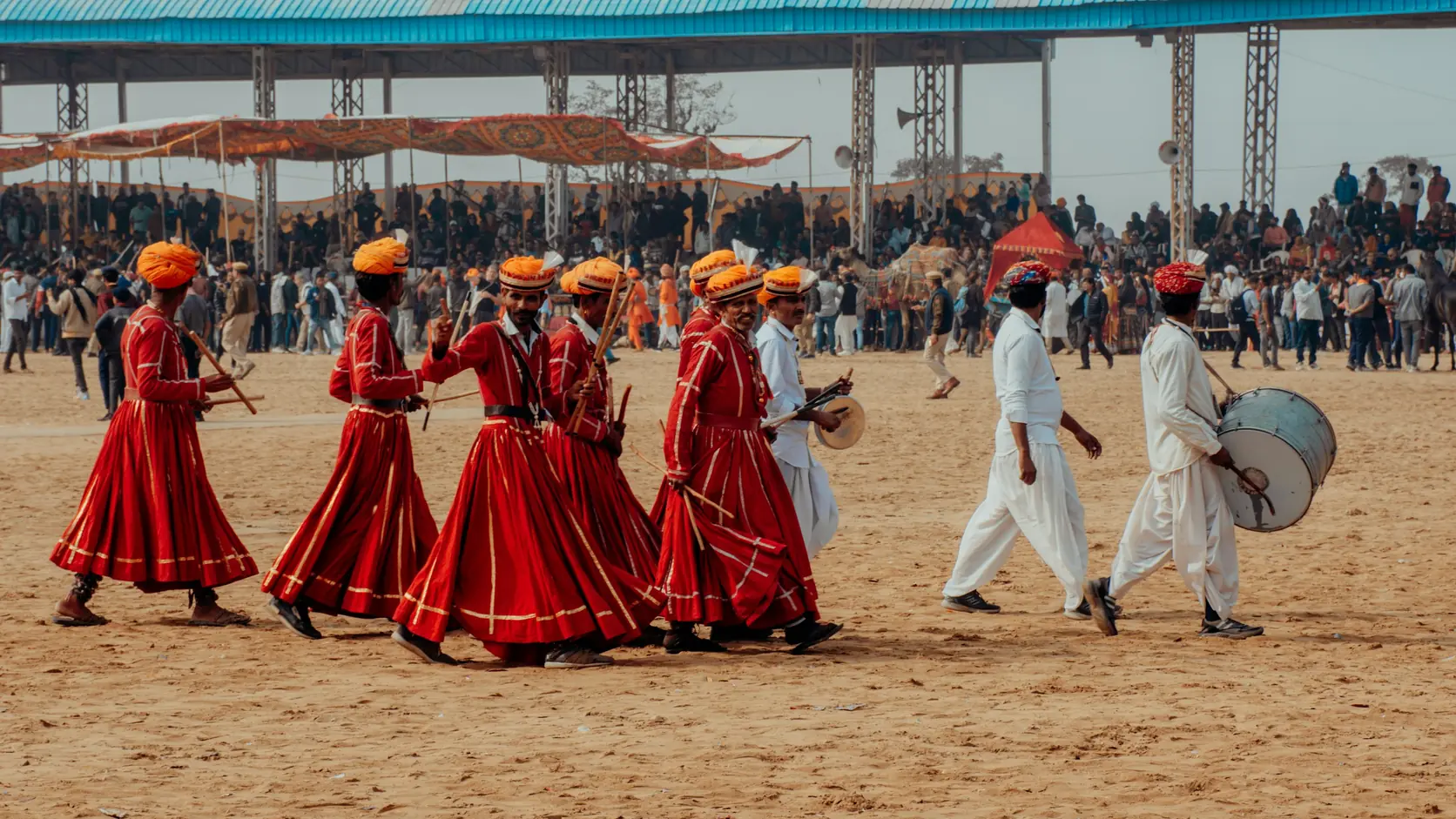
The organised programme is where the fair turns into a show. Events and timings change each year and are published by Rajasthan Tourism, but these are the regulars.
- 01
Camel races and decoration
Races on the sand, and contests for the best-decorated camel — mirrorwork, tassels, painted patterns and elaborate harness. The camel dance, where animals are coaxed into stepping to drums, is a crowd favourite.
- Mela ground
- Mornings
- Get there early
- 02
The longest moustache
Exactly what it sounds like, and taken very seriously. Contestants arrive with moustaches that have been grown, oiled and trained for years.
- Mela ground
- One session
- Check the schedule
- 03
Matka phod and the rest
Blindfolded pot-breaking, turban-tying races, a bridal competition, wrestling and tug of war. Visitors are sometimes invited to take part in the lighter events.
- Mela ground
- Through the week
- Free to watch
The slow rule
Come for the camels early, or for the full moon late. Trying to do both in one packed day gets you neither.
— Travel India
Kartik Purnima at the lake
On the full moon of Kartik, pilgrims bathe in Pushkar Lake before dawn. It is the most important day of the year here, and the ghats are packed from the early hours. In the evening, lamps are floated on the water and the whole lake glows. If you are not bathing, find a spot above the ghats well before sunrise and simply watch.
The ghat scam
At the ghats, someone will press flowers into your hand and lead you to the water for a blessing, then ask for a large “donation” for your family. Travellers call it the Pushkar passport. Politely refuse the flowers at the start and keep walking. If you want to make an offering, do it on your own terms, at a temple.
- Take your shoes off before you step onto any ghat.
- Do not photograph people bathing. This is worship, and many ghats ask you not to.
- The Brahma temple queue on Purnima can take hours. Go on an earlier morning instead.
Getting there
Everyone comes in via Ajmer, just over the hill. On the last days, the Ajmer road is slow, so allow time.
- RailAjmer JunctionThe practical gateway: about 15 km, 30 minutes by taxi. Well connected to Delhi, Jaipur and Mumbai.
- FlyJaipur (JAI)About 145 km, roughly three hours by road. The most flights and the most reliable option.
- FlyKishangarh (KQH)About 40 km away, but a small airport with few flights. Check schedules before you plan around it.
- LocalOn footPushkar is small. During the fair, walking is faster than any vehicle between the lake and the mela ground.
Where to stay
Book now. Fair week is Pushkar’s most expensive week of the year, and the good rooms go months ahead. Prices can be several times the normal rate, especially for the last days.
- TentsFair camps near the mela groundTented camps go up for fair week, from simple to luxurious. You wake up next to the fair, which is the point.
- LakeGuesthouses near the ghatsRooftop views of the lake, walking distance to everything. Noisy on the last nights.
- EdgeResorts on the outskirtsQuieter, with more space, but you will depend on transport.
- FallbackAjmerMuch cheaper and only 30 minutes away — except on Purnima, when the road can take far longer.
Food and town rules
Pushkar is a holy town, and it keeps its rules during the fair.
- No meat, no fish, no eggs, no alcohol. None of it is sold in town. This is a religious rule, not an oversight — respect it.
- Eat well anyway. Try the malpua (sweet fried pancakes soaked in syrup) that Pushkar is known for, dal-bati-churma, lassi, and the travellers’ cafes around the bazaar.
- Dress modestly in town and at the temples, and remove shoes and leather before entering.
- Drink bottled or filtered water, and be careful with cut fruit and water-based snacks from fair stalls.
A slow three-day plan
This one is built around Purnima on Tuesday 24 November. If you care more about camels than the pilgrimage, move everything three or four days earlier.
- Day 1Sun 22 Nov · Arrive, then the dunesArrive via Ajmer. Walk to the trading grounds for the late-afternoon light, then climb to the Savitri temple (or take the ropeway) for sunset over the fair.
- Day 2Mon 23 Nov · Sunrise and the programmeBe at the herders’ camps before sunrise. Mid-morning, go to the mela ground for the day’s competitions. Rest in the afternoon; evening aarti at the ghats.
- Day 3Tue 24 Nov · Kartik PurnimaUp in the dark to watch the holy dip from above the ghats. Slow breakfast. Stay for the lamps on the lake at dusk, and leave the next morning, not that night.
If you have more time
Pushkar pairs naturally with Jaipur, Jodhpur or Udaipur. My 7-day Rajasthan itinerary can be bent around the fair with one extra night.
Practical tips that actually help
- Bring a scarf or mask for the dust. The fairground is sand, churned by thousands of animals and people.
- Pack a warm layer. Late-November days are warm, but nights in the desert get cold, especially if you are out before dawn.
- Carry cash in small notes. Many stalls take UPI, but the network struggles in the crowds, and camel rides and small purchases are cash.
- Agree camel-ride prices first, including how long the ride is and where it ends.
- Keep valuables close. Pickpockets work the crowds on the last days, especially at the ghats and the mela ground.
- Use the sunglasses. The light on the sand is harsh from mid-morning.
FAQs about the Pushkar Camel Fair
When is the Pushkar Camel Fair in 2026?
The fair builds towards Kartik Purnima on Tuesday 24 November 2026. The organised programme usually runs for about a week before that, around 17 to 24 November, and livestock trading starts earlier still. Rajasthan Tourism publishes the exact schedule closer to the date.
Which days are best?
For camels and the livestock fair, the first days — most trading is done before the full moon. For the pilgrimage and the lake at its most atmospheric, the last two days up to Purnima. Very few visitors need the whole week.
Are there still many camels?
Fewer than there used to be. India’s camel population has declined sharply, and herders at the fair report fewer animals and buyers each year. There are still plenty of camels on the trading grounds in the first days, but go expecting a festival as much as a market.
Can I drink alcohol or eat meat in Pushkar?
No. Pushkar is a holy town, and meat, fish, eggs and alcohol are not sold. The food is vegetarian and very good.
How far in advance should I book?
As early as you can. Fair week, and especially the last few days, is the busiest time of the year in Pushkar, and prices rise sharply. Book both the room and your transport as soon as your dates are fixed.
Is the fair suitable for families?
Yes, with care. Children usually love the camels, the Ferris wheel and the competitions. Avoid the densest crowds on the final days, keep hold of small hands at the ghats, and plan rests in the afternoon heat.
Plan with us
Planning a Rajasthan trip around the fair?
I help travellers plan slow, well-paced India trips that get the timing right — including the Pushkar fair and the routes that carry on to Jaipur, Jodhpur or Udaipur. Free 48-hour reply.
Plan my India trip →
Written by Ashvinee Nagle
I travel India slowly and write it down honestly - practical guides and real itineraries from someone who lives here.
About Ashvinee →Plan your India trip with us
Get one short, honest India travel guide a week — plus a free 7-day Rajasthan itinerary to start.
Free. Unsubscribe any time.