
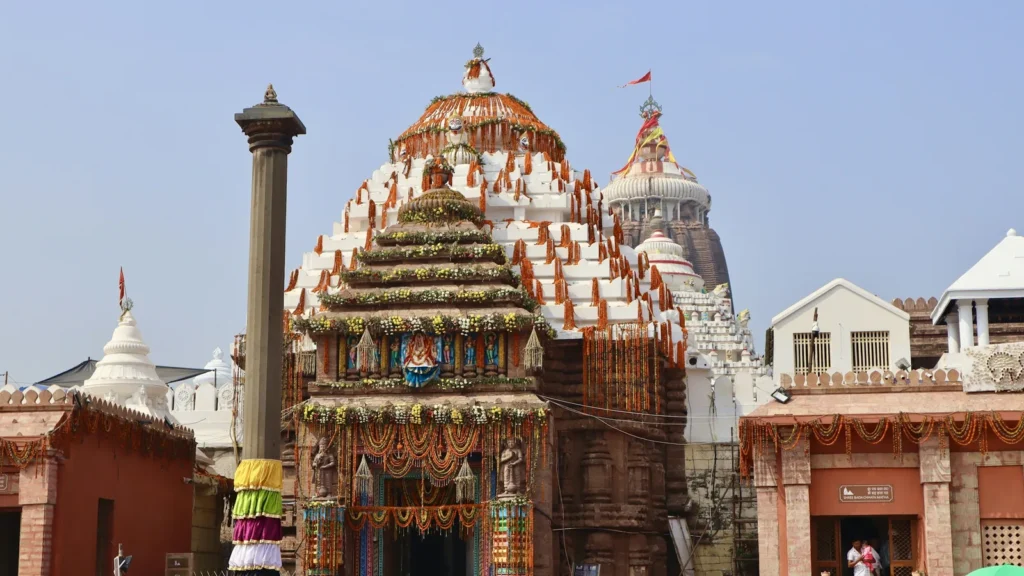
Puri: The Jagannath Temple Town, a Working Beach, and the Base for Odisha’s Coast
A practical guide to Puri — who can enter the Jagannath Temple and where to see its tower if you can’t, the fishing beach at dawn, the great Rath Yatra, and using the town as the base for Konark, Raghurajpur and Chilika.
Puri does two jobs at once, and it does them a few hundred metres apart. It is one of Hinduism’s four holy dhams, built around the 12th-century Jagannath Temple whose great tower rises over the old town and whose kitchen feeds thousands a day. And it is a beach town on the Bay of Bengal, where fishing boats still work the same sand that the weekenders walk on. Most visitors come for the temple, stay for the sea, and use the town as the launch pad for the rest of coastal Odisha — Konark up the shore, the craft village of Raghurajpur inland, and the Chilika lagoon to the south.
Puri is a pilgrimage town and beach resort on the Odisha coast, built around the Jagannath Temple (open to Hindus only — others get a fine view from the Raghunandan Library rooftop). Give it two or three days: the temple and old town, the beach at sunrise, and day trips to Konark, Raghurajpur and Chilika. October to February is the season; the Rath Yatra in June–July is extraordinary but overwhelming. It is the natural base for a wider Odisha trip.
Why visit Puri
Three reasons Puri anchors an Odisha trip — and one honest note about the crowds.
A living temple town
The Jagannath Temple is not a monument you tour; it is a working shrine at the centre of a town that revolves around it. Even from outside — which is as far as non-Hindus go — the scale, the crowds and the ritual life around the Lion Gate are the real experience.
A beach that still works
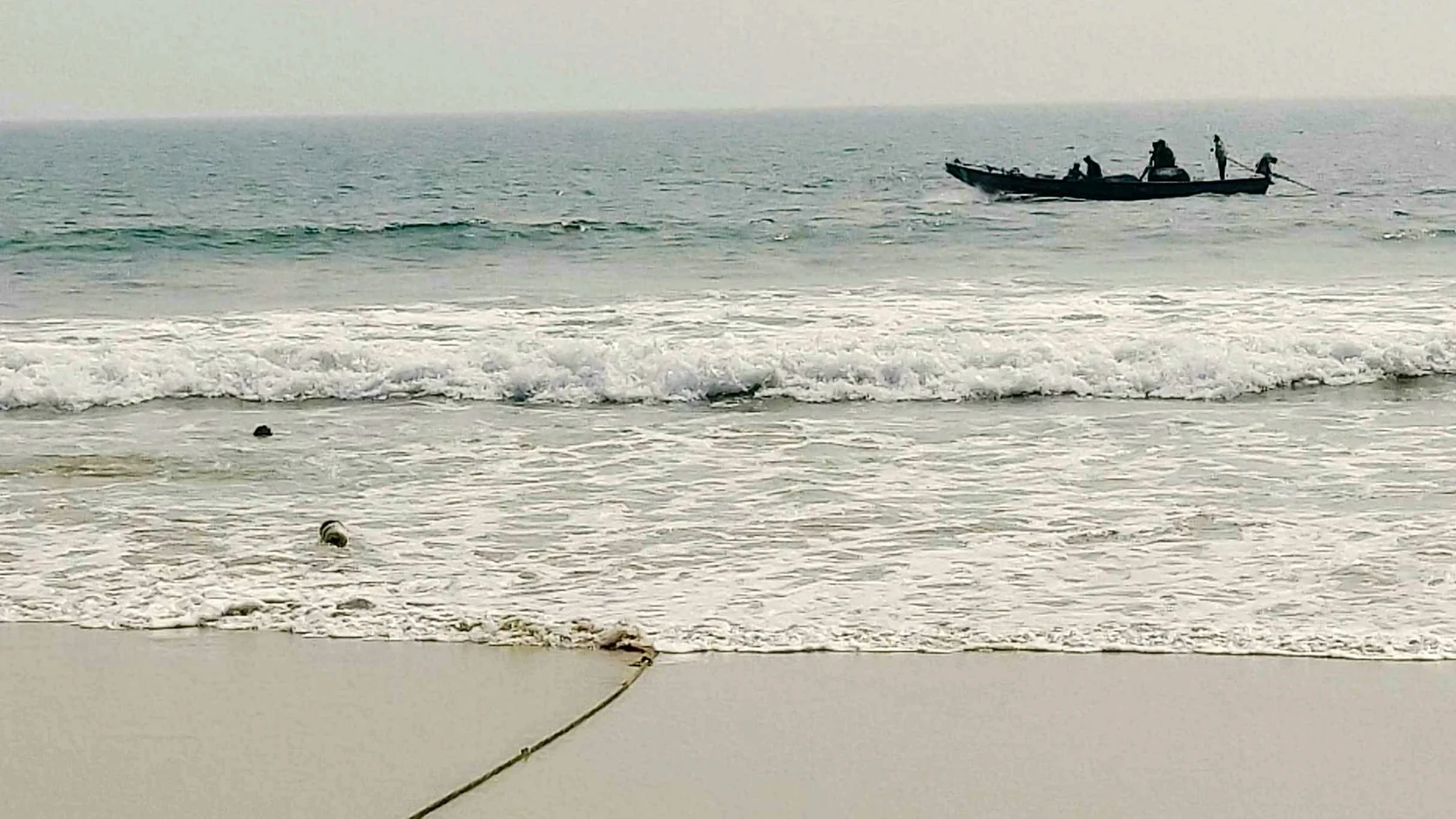
Puri’s sand is a fishing shore as much as a holiday one. Come at dawn and you’ll watch the nolia fishermen bring the boats in before the day-trippers arrive; the light and the quiet are the best hour on the coast.
The perfect base
Konark is 35 km up a coastal road, Raghurajpur 14 km inland, and the Chilika lagoon about 50 km south. You can see the headline sights of coastal Odisha and sleep in the same bed every night, which very few Indian trips let you do.
When to go
Puri is a year-round town, but the coastal heat and the festival calendar make the timing matter more than the temple’s opening hours.
October to February (the season): cool, dry and comfortable, with pleasant beach days and clear light. This is the right window for a first visit and for the day trips. December and January are busiest with Indian holidaymakers, so book ahead.
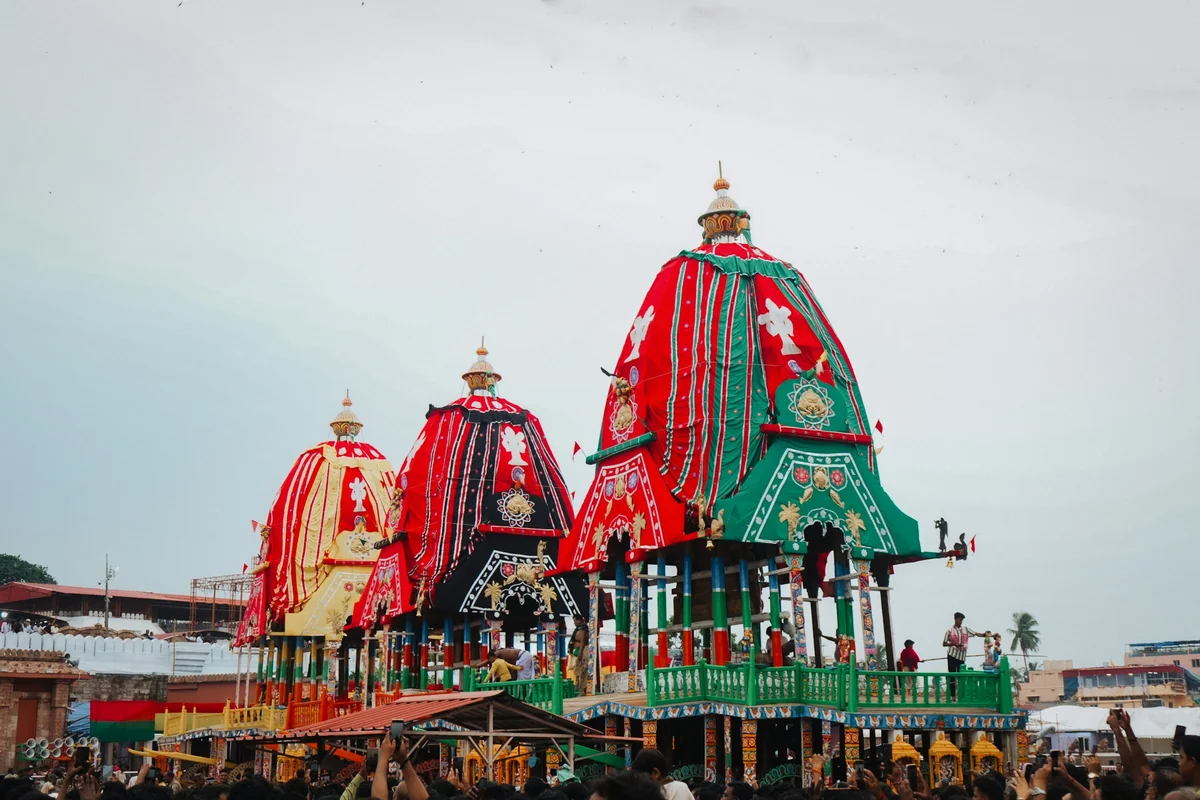
June–July (Rath Yatra): the great chariot festival fills the town with hundreds of thousands of pilgrims. It is one of India’s most extraordinary sights and one of its most crowded — plan months ahead, or avoid these weeks entirely if you want a calm trip.
March to May (hot): temperatures and humidity climb steadily; the sea breeze takes the edge off but midday is hard going. The monsoon (roughly July to September) is warm, green and wet, with the coast at cyclone-watch in the shoulder months.
Things to do in Puri
The temple and the beach are the core; the rest is easy day trips. Give the old town a morning on foot before the heat.
The Jagannath Temple
The 12th-century temple to Jagannath — a form of Vishnu — is one of the Char Dham and the spiritual centre of Odisha. Entry is for Hindus only, with no exception for foreign or non-Hindu visitors, and phones and cameras are not allowed inside. Everyone can take in the Lion Gate (Singhadwara), the Aruna Stambha pillar in front of it, and the ritual bustle of the surrounding lanes.
The Raghunandan Library rooftop
If you can’t go in, the rooftop of the Raghunandan Library, opposite the Lion Gate, gives a clear view over the wall to the 65-metre main tower. A small donation is customary. It is the single best vantage point of the temple for non-Hindu visitors.
Puri Beach at sunrise
The wide beach runs for kilometres; the stretch off the main road (Golden Beach) is the cleaned-up, awarded section. Come at dawn for the fishing fleet and the light, and look for the sand sculptures that Puri’s artists build near the water.
Mahaprasad at Ananda Bazaar
The temple’s kitchen is one of the largest in the world, cooking the day’s bhog in stacked earthen pots over wood fires. The food, once offered, becomes Mahaprasad and is sold at the Ananda Bazaar inside the complex — so this experience, like the temple, is for Hindu visitors; others can watch the potters and firewood trade that supplies it.
Gundicha Temple & the Bada Danda
The Gundicha Temple, about 3 km from the main shrine, is where the deities travel during Rath Yatra; the grand avenue between them, the Bada Danda, is the processional route. Outside festival time it’s a quiet way to understand the geography of the great festival.
Raghurajpur craft village
About 14 km inland, a heritage village where nearly every household paints pattachitra scrolls and works palm-leaf engraving. Half a morning, and the easiest place in Odisha to buy art straight from the artist.
What to eat
Puri eats well and cheaply — temple food, fresh seafood and Odisha’s sweet tooth all meet here.
Mahaprasad
The temple food, cooked in earthen pots and eaten off leaf plates — a meal and a ritual at once. Available to Hindu visitors inside the complex; the everyday Odia thali outside is the next best thing.
Fresh seafood
Prawns, crab and pomfret land on the same beach you’re eating beside. The CT Road shacks and hotel restaurants do it simply and well; ask for the local mustard preparations.
Khaja
Puri’s famous layered, syrup-glazed pastry, sold in boxes near the temple and along the road to Pipili. Sweet, crisp and made for taking home.
Gupchup & chaat
Odisha’s take on pani puri (here called gupchup) and evening chaat fill the lanes near the temple. Cheap, quick and part of the town’s rhythm after dark.
Where to stay
Puri has the widest range of stays on the Odisha coast, from pilgrim lodges to beachfront hotels. Where you sleep depends on whether you came for the temple or the sea.
CT Road & sea face
The strip of beach hotels, guesthouses and shacks east of the centre — everything from backpacker rooms to comfortable sea-view hotels. The best base for most non-pilgrim visitors, and walkable to the sand.
Grand Road / old town
Pilgrim lodges and dharamshalas cluster around the temple and along the Grand Road (Bada Danda). Basic and central — the right call if the temple is your reason for coming and you want to be in the thick of it.
Getting there and around
By train: Puri is a terminus with direct long-distance trains — the Puri–Howrah services from Kolkata, the Purushottam Express from Delhi, and connections toward Chennai and beyond. The station is a few kilometres from the beach and temple. For many visitors this is the easiest way in.
By air: the nearest airport is Biju Patnaik International at Bhubaneswar (BBI), about 60 km and 1.5 hours away, with flights from Delhi, Kolkata, Mumbai, Bengaluru and other cities. Prepaid taxis and app cabs run from the airport to Puri.
Getting around: the old town and beach are walkable or a short auto ride apart. For the day trips — Konark along the coastal Marine Drive, Raghurajpur, Chilika at Satapada — hire a car and driver for the day; it is inexpensive and far simpler than piecing together buses.
The Puri–Konark Marine Drive is one of the prettiest short coastal roads in eastern India, about 35 km. Pair Konark with Raghurajpur on the same day out, and keep Chilika (to the south) for its own morning.
A simple 2-day plan
Two days covers Puri itself and one coastal day trip; add a third for Chilika.
Temple, old town and the beach
Start early at the Jagannath Temple and the Lion Gate, then the Raghunandan Library rooftop for the tower view. Wander the Grand Road and the market lanes before the heat, rest through midday, and take the beach in the late afternoon and at sunset. Seafood on CT Road to finish.
Konark and Raghurajpur
Drive the Marine Drive to Konark in the morning for the Sun Temple in good light, then stop at Raghurajpur on the way back to watch the pattachitra painters and buy directly from them. Back in Puri for a last evening on the beach.
Practical tips that actually help
Temple entry is for Hindus only
There are no exceptions for foreign or non-Hindu visitors. Use the Raghunandan Library rooftop for the view, and don’t be talked into paying a ‘guide’ who promises entry.
Leave phones and cameras behind
They are not allowed inside the Jagannath complex, and there are cloakrooms for bags and footwear. Carry only what you need.
Agree fees with pandas up front
Temple priest-guides (pandas) and touts can be persistent around the Lion Gate. If you accept help, fix the amount before, and be firm otherwise.
Dawn beats midday
The beach is at its best at sunrise — fishing boats, soft light and no crowds. Midday sun on the sand is fierce for much of the year.
Give the coast a full day
Konark and Raghurajpur together make an easy, rewarding day trip. Don’t try to bolt them on to a temple morning — you’ll rush both.
Watch the festival calendar
Rath Yatra (June–July) is spectacular but the town is overwhelmed and rooms vanish. Come for it deliberately and early, or steer clear of those weeks.
Mistakes first-time visitors make
- Assuming you can go inside the Jagannath Temple. It admits Hindus only. Plan for the rooftop view instead so it isn’t a disappointment on the day.
- Only seeing the beach at midday. The dawn hour with the fishing fleet is the real Puri beach; the middle of the day is hot and busy.
- Treating Puri as a one-night stop. The town plus one coastal day trip needs two days minimum; a third lets you add Chilika without rushing.
- Coming during Rath Yatra by accident. If you haven’t booked months ahead, the festival crowds will define your trip rather than the temple or the coast.
Planning Puri and the Odisha coast?
Puri is the easy base — the question is usually how to string Konark, Raghurajpur and Chilika around it, and when to go. Tell me your dates and I’ll map the days for you.
Puri FAQs
Can non-Hindus enter the Jagannath Temple in Puri?
No. The Jagannath Temple admits Hindus only, with no exception for foreign or non-Hindu visitors. The usual workaround is the rooftop of the Raghunandan Library opposite the Lion Gate, which gives a clear view of the 65-metre main tower. Phones and cameras are not allowed inside the complex either.
What is the best time to visit Puri?
October to February, when the weather is cool and dry and the beach and day trips are at their best. June–July brings the Rath Yatra and huge crowds; March to May is hot and humid, and the monsoon runs roughly July to September.
How many days do you need in Puri?
Two to three. One day for the temple, old town and beach, a second for a Konark and Raghurajpur day trip, and a third if you want to add the Chilika lagoon at Satapada.
How do you get from Bhubaneswar to Puri?
Puri is about 60 km from Bhubaneswar and its airport (BBI), roughly 1.5 hours by road, with taxis and app cabs available. There are also frequent trains between the two on the East Coast line.
What is the Rath Yatra and when is it held?
The Rath Yatra is Puri’s chariot festival, held in June or July (the Hindu month of Ashadha), when the deities are pulled on giant chariots along the Bada Danda to the Gundicha Temple. It draws hundreds of thousands of pilgrims, so book far ahead or avoid those weeks if you want a quiet visit.
Is Puri Beach worth visiting?
Yes, especially at sunrise. It is a working fishing beach as well as a holiday one, and the early light with the boats coming in is the best hour. The main Golden Beach stretch is the cleaned-up section with an international eco-label.
Related guides
Keep planning your Odisha trip with these:
Odisha Travel Guide
Temples, the Konark Sun Temple, the Chilika lagoon and the wild coast — how to put an Odisha trip together.
Konark
The 13th-century Sun Temple built as a stone chariot — the natural day trip from Puri and one of India’s great monuments.

Written by Ashvinee Nagle
I travel India slowly and write it down honestly - practical guides and real itineraries from someone who lives here.
About Ashvinee →Plan your India trip with us
Get one short, honest India travel guide a week — plus a free 7-day Rajasthan itinerary to start.
Free. Unsubscribe any time.