
Tamil Nadu — Temple towers, Chola bronze, and coffee-scented hills
Gopurams painted like carnival cakes, a temple that has been opening its doors for a thousand years, rock carved into elephants on a beach, and a toy train that climbs into the clouds. Here’s how to plan it properly.
Tamil Nadu, at a glance
Tamil Nadu is the part of India that never stopped. The temples here aren’t ruins — they’re working buildings where the same rituals have run continuously for centuries, and a Chola bronze cast in 1050 CE is still carried through the streets on festival day. Add to that four UNESCO World Heritage listings, tea hills that stay cool while the plains bake, a 1,000-kilometre coastline, and a food culture that starts with filter coffee at 6am and doesn’t let up. It’s an easy state to travel — good roads, a dense rail network, four international airports — and a hard one to leave.
Six places that make a classic Tamil Nadu trip
Don’t try to cover the state in one go. Pick three or four of these, give each a couple of nights, and let the south set the pace.
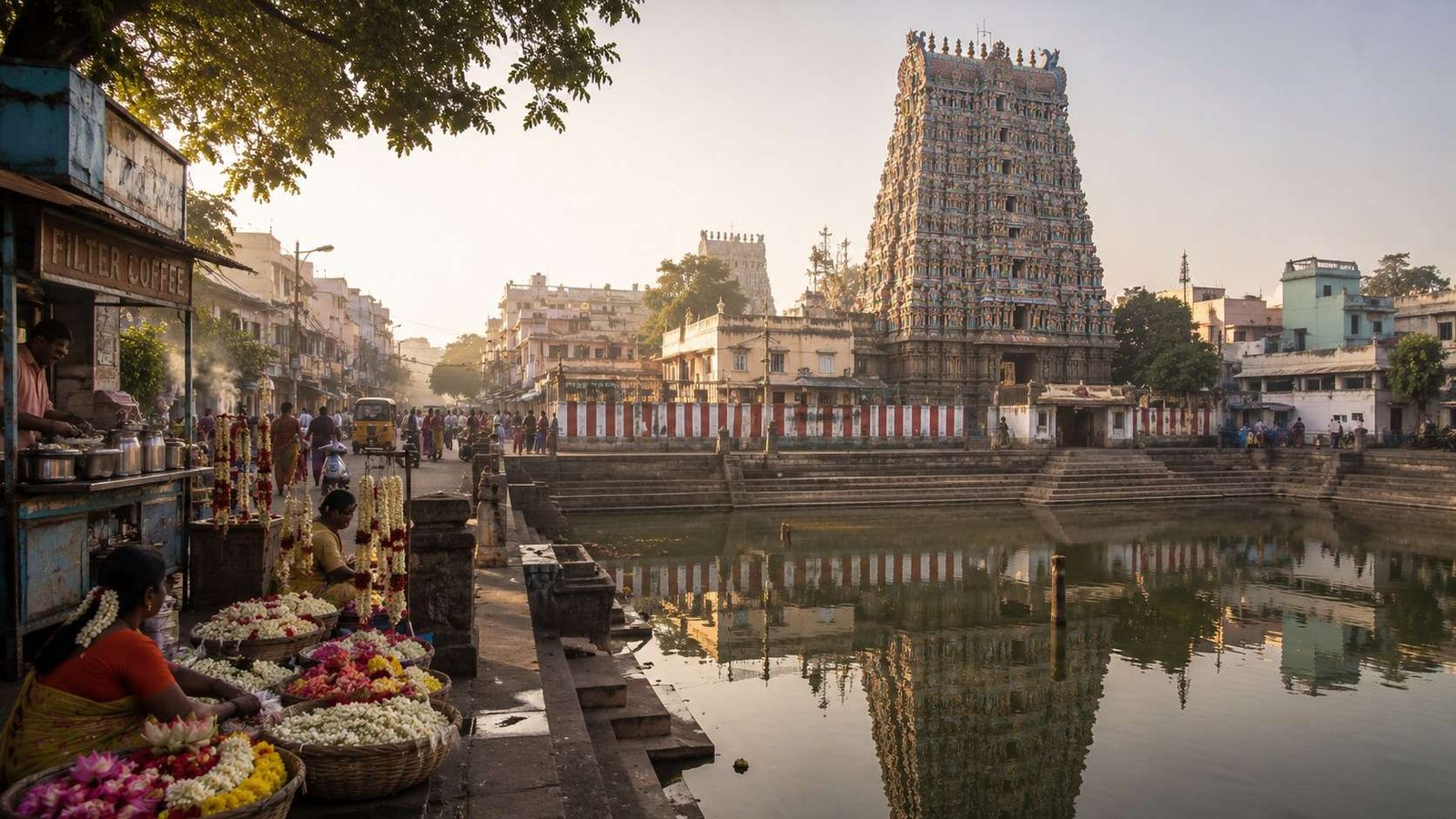
Chennai — The Gateway City
India’s oldest surviving colonial city and the south’s busiest airport, with Marina Beach, the temple lanes of Mylapore, December’s month-long music season, and the best idli you’ll eat anywhere.
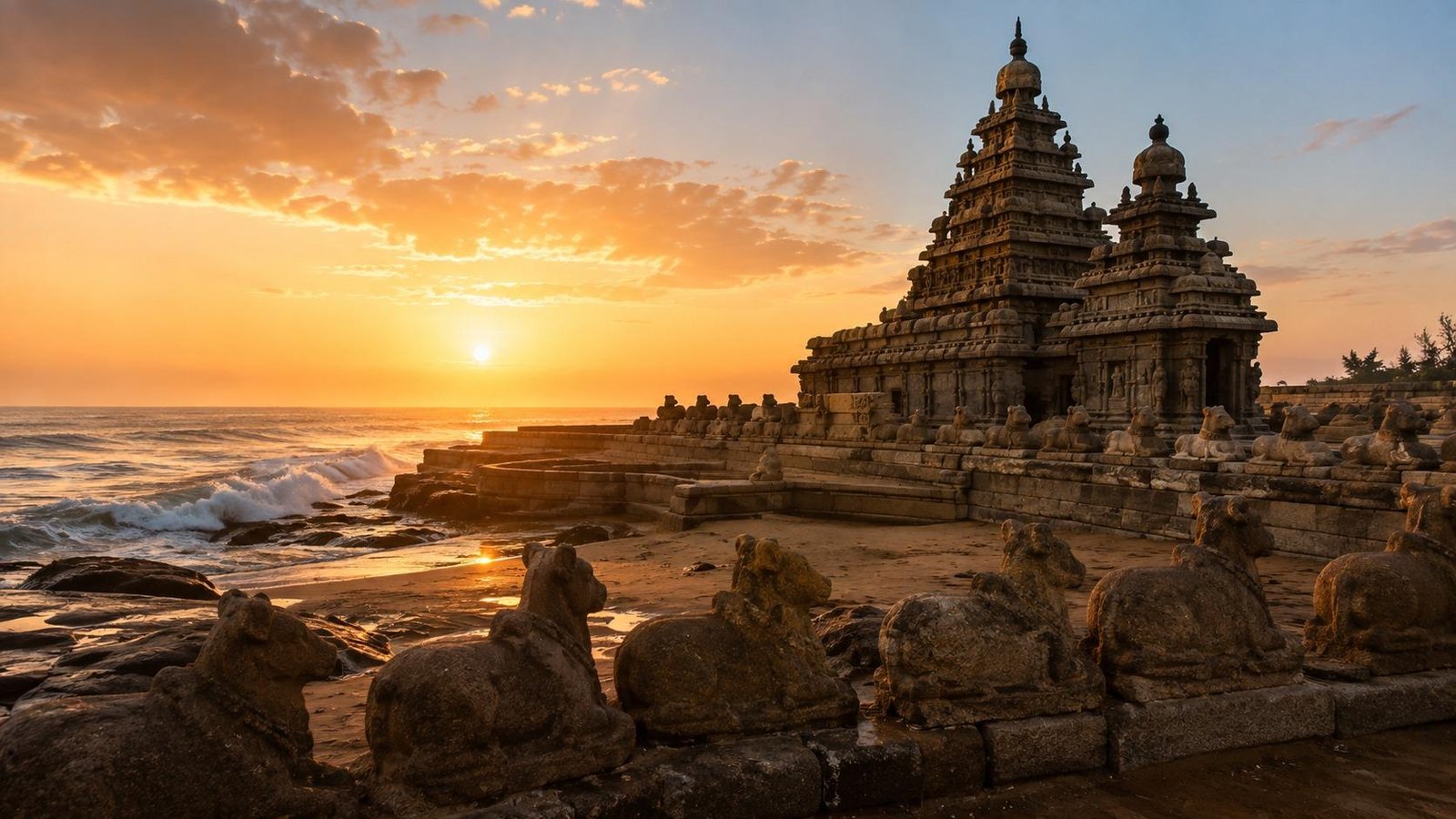
Mahabalipuram — The Stone Coast
A UNESCO site since 1984, where 7th-century Pallava sculptors carved whole temples out of standing granite. Two hours from Chennai, with beach shacks and crab masala waiting afterwards.
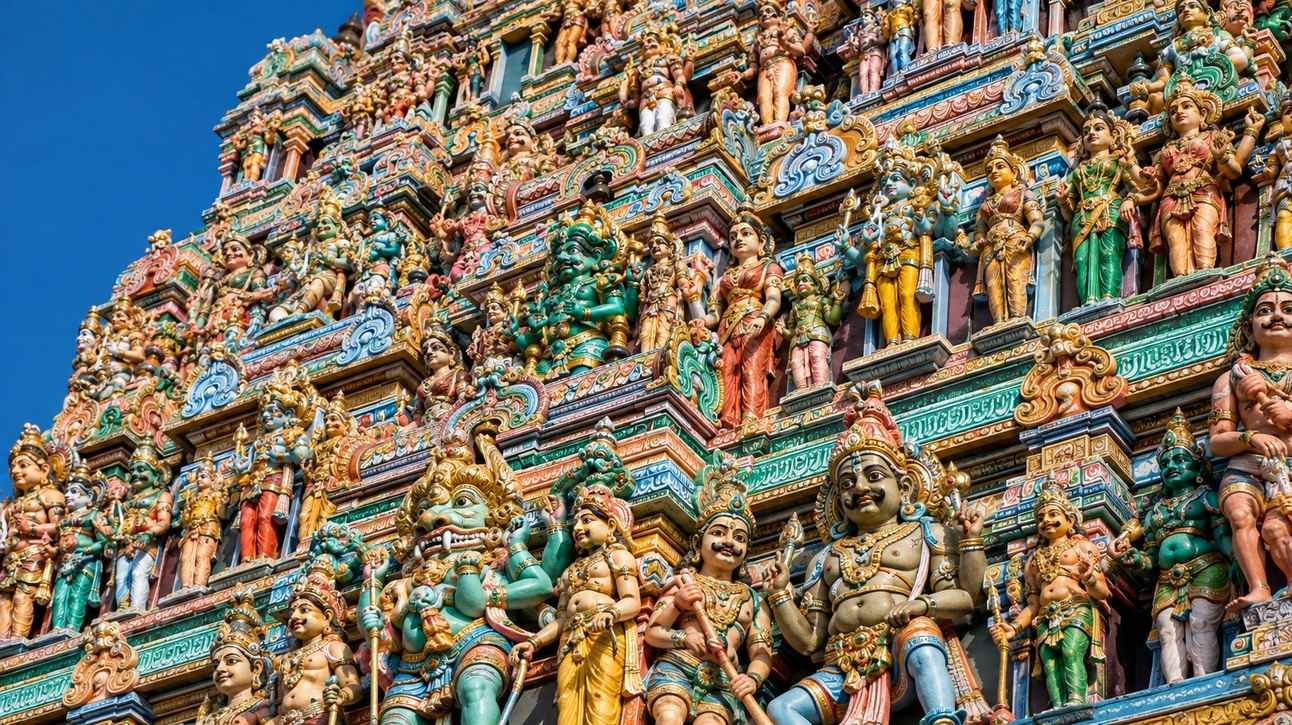
Madurai — The Temple City
One of the oldest continuously inhabited cities on earth, built in rings around the Meenakshi Amman Temple and its fourteen towers. Come for the 9pm night ceremony, stay for the jigarthanda.
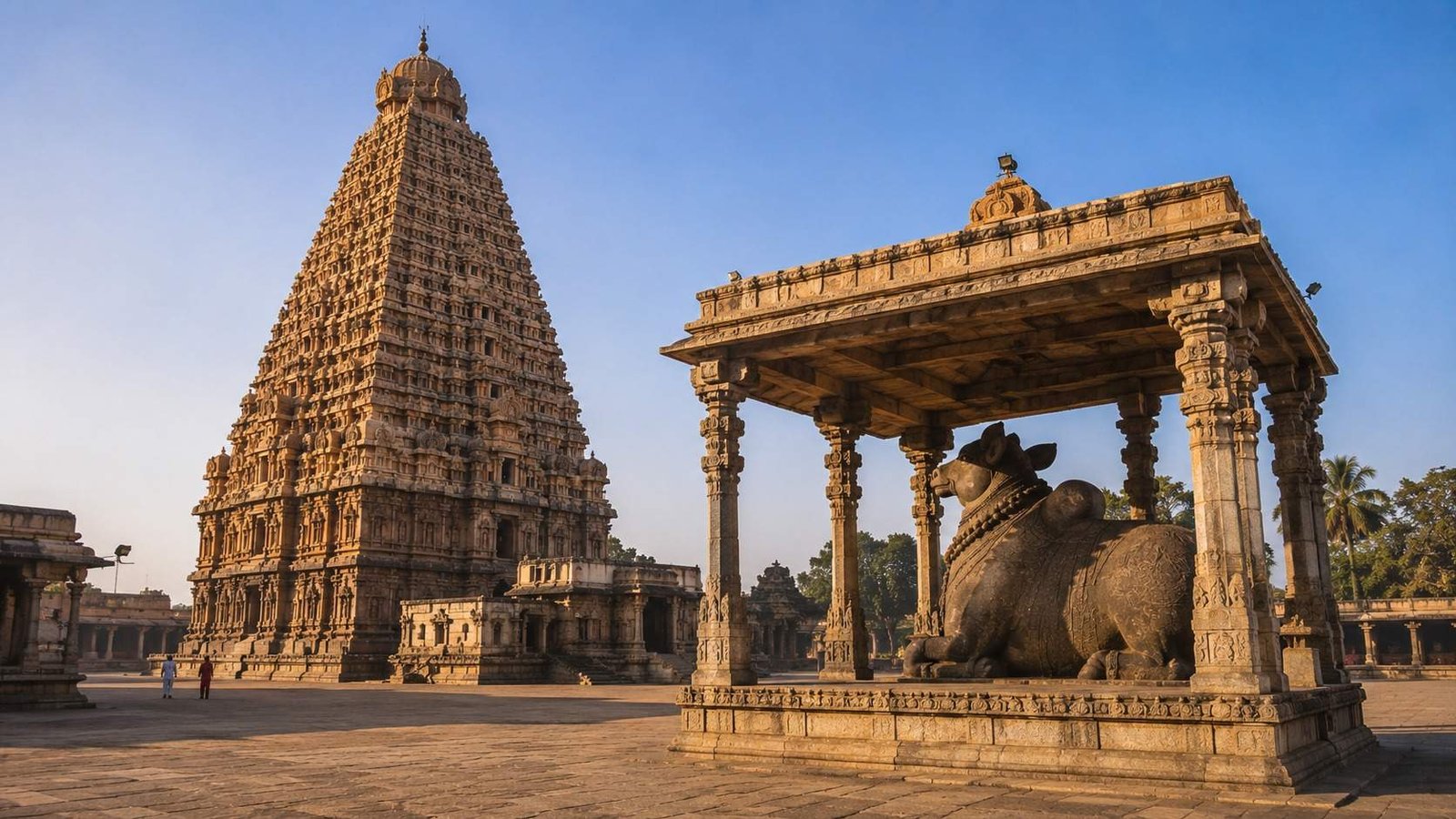
Thanjavur — The Chola Capital
The Big Temple, finished around 1010 CE, is the finest thing the Cholas built and still the tallest thing in town. Base yourself here for the whole Great Living Chola Temples circuit.
Ooty — The Blue Mountains
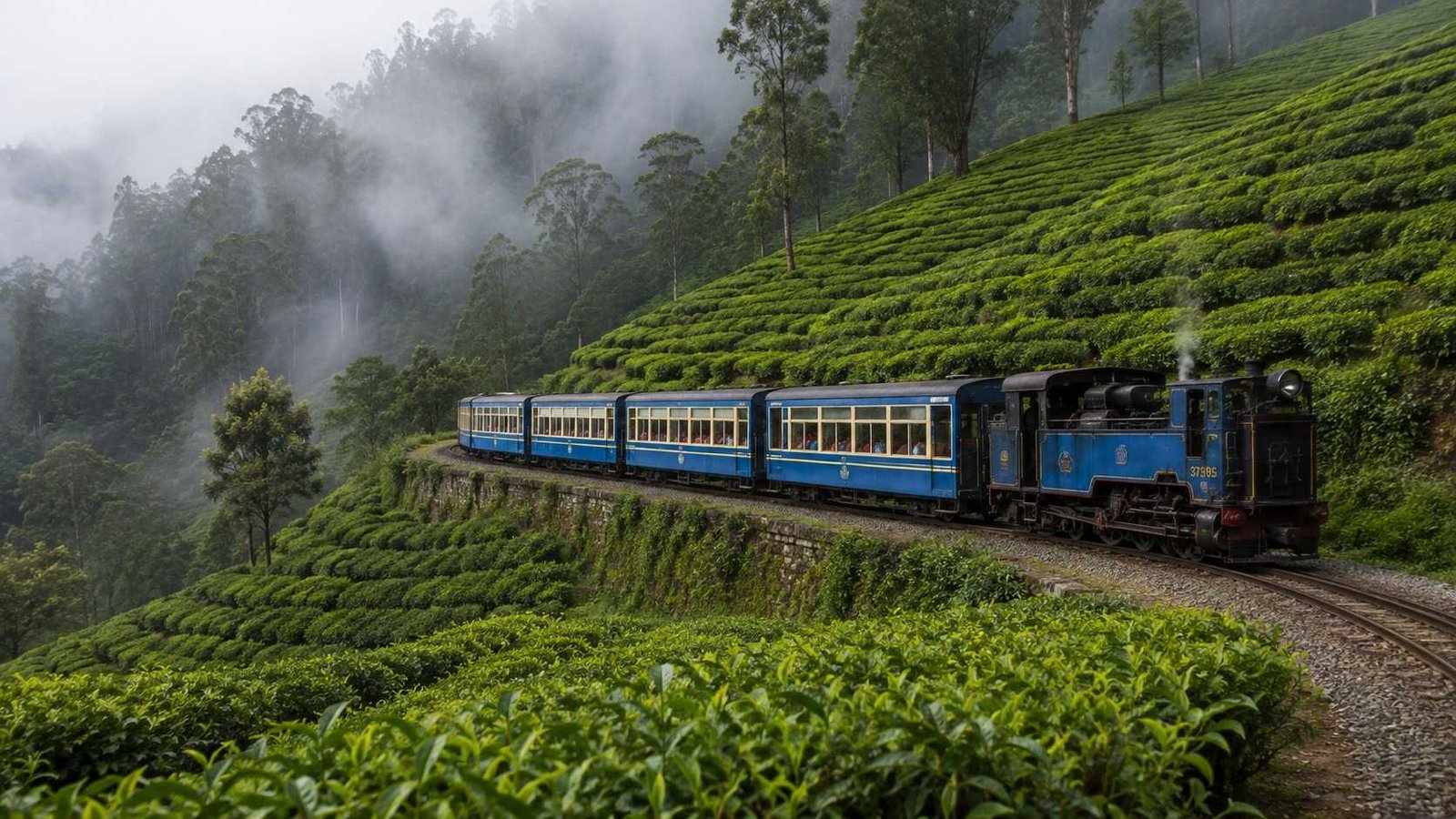
Tea slopes, eucalyptus air, and a UNESCO-listed rack railway that grinds up from Mettupalayam. Quieter, greener Coonoor makes the better base — and Mudumalai’s elephants are an hour away.
Rameswaram — The Island Pilgrimage
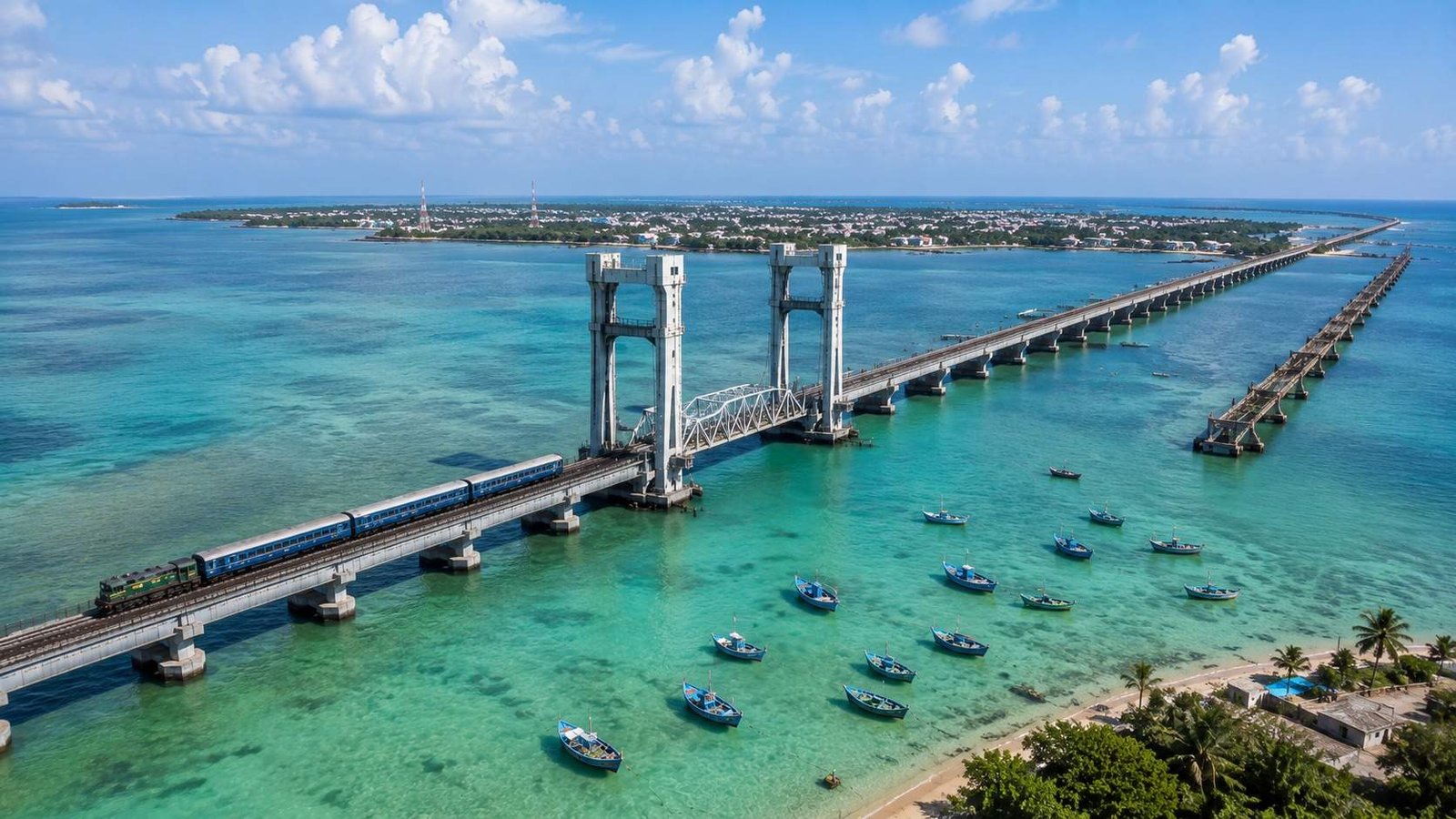
An island temple town with India’s longest temple corridors, reached across the sea by the new vertical-lift Pamban bridge. Drive on to Dhanushkodi, where the land simply runs out.
Pick the route that fits your dates
Tamil Nadu works at three different lengths. Trains handle the long hops easily; a car with a driver is worth it in the Chola delta and the hills.
The coast and the capital
Chennai · Mahabalipuram · Pondicherry. Museums and Mylapore, then Pallava stone carving and French-quarter breakfasts, all within a 150km stretch.
Temples of the south
Chennai · Mahabalipuram · Thanjavur · Madurai. Adds the Chola delta and the great temple city — the classic first Tamil Nadu trip.
Temples and hills
Chennai · Mahabalipuram · Thanjavur · Madurai · Coonoor. Ends with the toy train and cool air after a week in the plains.
Six things worth building the trip around
- Walk the Meenakshi temple corridors in Madurai just after opening, before the heat and the crowds arrive.
- Watch sunrise hit the Shore Temple at Mahabalipuram with the sea directly behind it.
- Stand under the vimana of the Big Temple at Thanjavur and work out how they lifted the capstone in 1010.
- Ride the Nilgiri Mountain Railway from Mettupalayam up through Coonoor — book the left-hand side going up.
- Eat a banana-leaf meal in Chettinad and let them keep refilling until you fold the leaf.
- Drive the sandbar road to Dhanushkodi, where two seas meet over a ghost town.
Where to stay
Chennai and Coimbatore have the full range of business and luxury hotels. The real character is elsewhere: restored Chettiar mansions around Karaikudi and Kanadukathan, tea estate bungalows in Coonoor and Valparai, French-colonial guesthouses in Pondicherry, and simple, clean pilgrim hotels in Madurai, Rameswaram, and Thanjavur. In temple towns, staying within walking distance of the east gate is worth more than an extra star rating.
How to get around
Trains are excellent and cheap — Chennai, Coimbatore, Madurai, and Trichy are the big junctions, and Vande Bharat services make daytime hops comfortable. Fly into Chennai for the coast, Madurai for the south, Coimbatore for the hills, Trichy for the Chola delta. For the temple circuit and the Nilgiris, a car with a driver saves hours. Chennai has a metro; everywhere else, autos and app cabs cover it.
What to eat
Rice, lentils, tamarind, curry leaf, and black pepper — and a lot of it served on a banana leaf. Try these at least once:
- Idli, vada and sambar
- Filter coffee in a steel tumbler
- Chettinad chicken or kozhi milagu
- Kari dosa in Madurai
- Jigarthanda
- Parotta with salna
- Crab and prawn at Mahabalipuram
- Payasam and Manapparai murukku
Small things that make a big difference
Do this
- Start temple visits at opening time — most close for a long afternoon break and reopen around 4pm.
- Dress modestly: covered shoulders and knees, and no shorts for men. A sarong won’t always pass.
- Apply for your free Nilgiris or Kodaikanal e-pass at epass.tnega.org before driving up — Ooty and Kodaikanal need separate passes.
- Leave your phone in the car or the locker at Madurai; phones and cameras are banned inside Meenakshi Amman Temple.
- Book trains a few weeks ahead in December and January — peak season and festival season at once.
Avoid this
- Don’t plan a coastal trip for October–November — that’s the northeast monsoon, and Chennai’s wettest, cyclone-prone stretch.
- Don’t visit the plains in April–June unless you’re heading straight to the hills; 40°C in Madurai is normal.
- Don’t wear shoes past the temple gate, and don’t photograph inner sanctums.
- Don’t underestimate drive times in the delta — the roads are good but the towns are slow.
- Don’t assume everyone speaks Hindi. English works far better across Tamil Nadu.
Common Tamil Nadu questions
What is the best time to visit Tamil Nadu?
December to March. The northeast monsoon soaks the coast through October and November, and the plains get very hot from April to June — though that’s exactly when the hill stations are at their best.
How many days do you need in Tamil Nadu?
Five days cover Chennai, Mahabalipuram, and Pondicherry. Seven add Thanjavur and Madurai for the full temple run. Ten to twelve let you finish in the Nilgiris or carry on south to Rameswaram and Kanyakumari.
How many UNESCO World Heritage Sites are in Tamil Nadu?
Four: the Group of Monuments at Mahabalipuram, the Great Living Chola Temples at Thanjavur, Gangaikonda Cholapuram and Darasuram, the Nilgiri Mountain Railway, and the Western Ghats, which the state shares with its neighbours.
Is there a dress code for Tamil Nadu temples?
Yes, in practice. Shoulders and knees covered, no shorts for men, footwear off at the gate. Madurai also bans phones and cameras inside, with lockers at the entrance. Several temples restrict the inner sanctum to Hindus.
Do I need an e-pass for Ooty or Kodaikanal?
If you’re driving up in a non-local vehicle, yes. It’s free, issued instantly with a QR code at epass.tnega.org, and Ooty (Nilgiris) and Kodaikanal (Dindigul) require separate applications. Government buses and the mountain railway are exempt. Check current rules before you set off, as enforcement periods have changed more than once.
Can you see tigers and elephants in Tamil Nadu?
Elephants, reliably — Mudumalai near Ooty and Anamalai near Pollachi are both on major elephant corridors. Tigers are present in both but sightings are far less predictable than in central India. Vedanthangal, near Chennai, is superb for birds from December to February.
How do I reach Tamil Nadu?
Chennai is the main international gateway, with Coimbatore, Madurai, and Trichy also handling international flights. By rail, Chennai, Coimbatore, Madurai, and Trichy are the major junctions, with direct trains from Delhi, Mumbai, Bengaluru, and Hyderabad.
Plan your Tamil Nadu trip with Travel India
Whether it’s a week of temples, a slow Chola-country circuit, or a coast-to-hills loop ending in the tea gardens, Tamil Nadu can be planned around your dates, budget, and travel style.
Written by Ashvinee Nagle
I travel India slowly and write it down honestly - practical guides and real itineraries from someone who lives here.
About Ashvinee →