
Bhongir Fort: The Great Monolith on Hyderabad’s Doorstep
A practical guide to Bhongir (Bhuvanagiri) — the huge single-rock fort an hour from Hyderabad, its climb and views, the rock-climbing scene, and the Yadadri temple nearby that makes it an easy day out from the city.
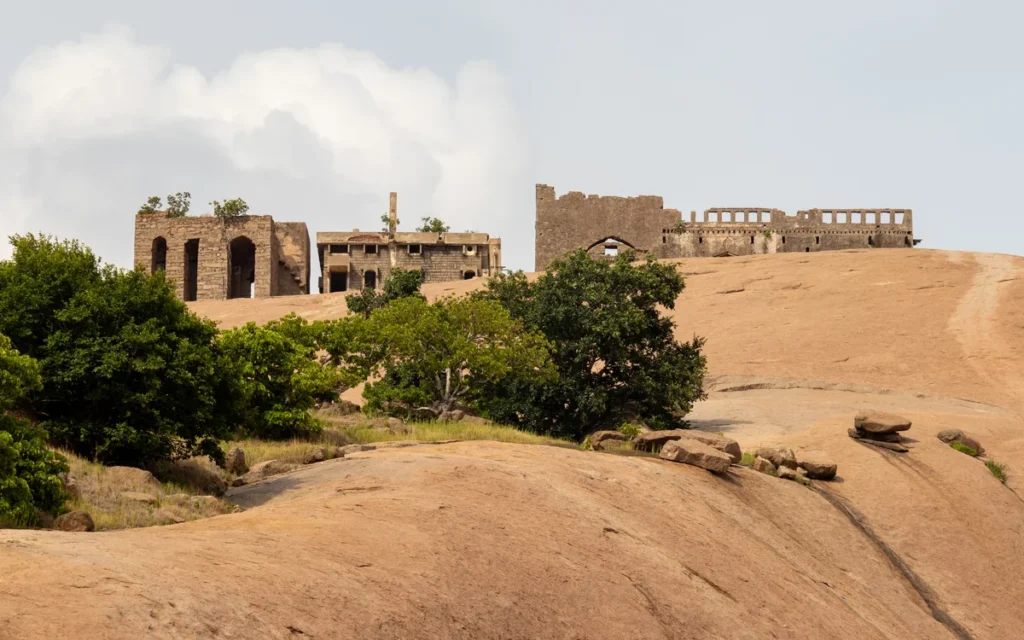
Bhongir — officially Bhuvanagiri — is the great monolithic rock that rises abruptly out of the plains about an hour east of Hyderabad, crowned by a fort the Kakatiyas raised in the 12th century. It is one of the easiest and most rewarding half-days out of the city: a stiff climb up carved and stepped rock to ramparts, cisterns and huge views over the Deccan, plus a growing rock-climbing and rappelling scene on the boulder itself. Pair it with the hilltop Yadadri temple nearby and you have a full, satisfying day trip.
Bhongir (Bhuvanagiri) is a huge single-rock hill fort about 50 km east of Hyderabad, built by the Kakatiyas, with a short, steep climb to ramparts and sweeping Deccan views. It’s one of the best half-day trips from the city, popular for rock climbing and rappelling, and pairs naturally with the nearby Yadadri (Yadagirigutta) Narasimha temple. Go in the cool months and start early to beat the heat on the exposed rock; it slots easily into a Telangana trip based in Hyderabad.
Why visit Bhongir
Three reasons Bhongir earns its place on a Hyderabad itinerary.
One astonishing rock
Bhongir is essentially a single vast dome of granite rising straight out of the plain — dramatic from the highway and more so from the top. The Kakatiya fort that crowns it makes the climb a piece of Deccan history as well as a viewpoint.
A big view for a short climb
The stepped, sometimes steep path gets you to the ramparts in under an hour, and the reward is a 360-degree sweep over the Deccan plains — a lot of view for not much time, close to the city.
Adventure on the doorstep
The boulder has become Telangana’s go-to spot for rock climbing and rappelling, with operators running sessions on its faces — an easy way to add a little adrenaline to a day trip from Hyderabad.
When to go
Bhongir is an exposed rock climb, so the weather matters more than for most sights.
October to February (the season): cool, clear and by far the best time for the climb and the views. Mornings are excellent.
March to June (hot): the bare rock bakes and the climb becomes punishing by mid-morning. If you must go, start at dawn and carry plenty of water.
July to September (monsoon): green surroundings and dramatic skies, but the rock gets slippery when wet — climb carefully, and skip it in heavy rain.
Things to do at Bhongir
The climb is the main event; the temple at Yadadri and the rock-sport operators round out the day.
Climb the fort
The stepped path up the monolith passes gateways, cisterns and Kakatiya ramparts to the summit, with huge views over the plains. It’s steep in places but short — go early, wear grippy shoes and carry water.
Rock climbing & rappelling
Bhongir’s granite faces are the region’s favourite for climbing and rappelling, with operators running guided sessions for beginners and up. Book ahead, especially at weekends.
Yadadri (Yadagirigutta)
The hilltop Lakshmi Narasimha temple at Yadadri, recently rebuilt on a grand scale in carved stone, is close by and makes the natural second half of a Bhongir day — history and adventure, then a major temple.
The Deccan view
The summit gives a full circle over the tank-dotted Deccan plains — the reason many people come. It’s best in the clear early morning or the softer late-afternoon light.
The town below
Bhuvanagiri town at the base has simple eateries and tea stalls for before or after the climb — an unfussy, local counterpoint to the effort of the rock.
What to eat
Food here is simple and local — eat in Bhuvanagiri town or bring snacks for the climb.
Local meals & tiffins
Simple Telangana meals, tiffins and biryani at modest restaurants in the town at the base of the rock — the practical place to eat before or after the climb.
Tea & snacks
Tea stalls and snack carts near the base are handy for a quick bite and a chai to power the climb — or to recover afterwards.
Water & a packed snack
The rock is exposed and there’s nothing to buy up top. Carry plenty of water and a snack, especially outside the cool months.
Hyderabad biryani
Most people are back in Hyderabad by evening — the ideal moment to reward the climb with a proper plate of the city’s biryani.
Where to stay
Bhongir is a day trip; almost everyone stays in Hyderabad. There are only basic options in the town itself.
Hyderabad
The obvious base — the full range of city hotels, an easy drive or train away, with Bhongir and Yadadri done as a comfortable day out and back.
Yadadri accommodation
If you want an early temple darshan at Yadadri, there is pilgrim accommodation around the hill — otherwise there’s little reason to stay out here rather than in the city.
Getting there and around
From Hyderabad: Bhongir is about 50 km east on the Warangal highway, roughly an hour by car — one of the closest worthwhile day trips from the city.
By train: Bhuvanagiri is on the Hyderabad–Warangal line, so frequent trains make it an easy, cheap rail day trip, with the rock a short ride from the station.
Getting around: the fort climb is on foot from the base. For Yadadri and around, a car or the local buses/autos work; a half-day taxi from Hyderabad is the simplest way to combine the two.
Bhongir pairs perfectly with the Yadadri (Yadagirigutta) temple, about 15–20 km away — fort and view in the morning, major temple after. Together they make a full, easy day from Hyderabad.
A half-day plan from Hyderabad
Climb the rock in the cool morning, then the temple — comfortably back in the city by evening.
Fort, view and temple
Leave Hyderabad early and climb Bhongir fort while it’s cool, taking in the Deccan view from the top (add a rappelling session if you’ve booked one). Drive on to Yadadri for the Narasimha temple, eat in Bhuvanagiri, and head back to the city for biryani.
Practical tips that actually help
Climb early
The rock is bare and exposed. Start at or soon after opening, especially outside winter — by mid-morning the granite radiates heat.
Wear grippy shoes
The path is stepped and steep in places and can be slick. Proper shoes with grip make the climb far safer and easier than sandals.
Book adventure ahead
If you want rock climbing or rappelling, book with an operator in advance — weekends are busy and slots fill up.
Pair it with Yadadri
The Yadadri temple is only 15–20 km away and makes the natural second half of the day. Plan the two together.
Carry water
There’s nothing to buy at the top. Bring plenty of water and a snack, and sun cover for the exposed summit.
Consider the train
Bhuvanagiri is on the Hyderabad–Warangal line, so the train is a cheap, easy way to reach the rock if you’re not driving.
Mistakes first-time visitors make
- Climbing in the midday heat. The bare granite bakes from mid-morning. Start early, or you’ll have a miserable, dehydrating climb.
- Wearing the wrong shoes. The stepped rock is slippery in sandals. Grippy closed shoes make it far safer.
- Skipping Yadadri. The temple is right next door and completes the day. Doing Bhongir alone leaves the trip half-finished.
- Turning up for adventure without booking. Rappelling and climbing need an operator and a slot, especially at weekends. Arrange it before you go.
Adding Bhongir to a Hyderabad trip?
Bhongir and Yadadri are the perfect day out from the city. Tell me your dates and I’ll fit them into your Telangana route.
Bhongir FAQs
What is Bhongir Fort famous for?
Bhongir — officially Bhuvanagiri — is famous for its huge single-rock monolith crowned by a 12th-century Kakatiya fort, about an hour from Hyderabad. It’s known for the short but steep climb, the sweeping Deccan views from the top, and a popular rock-climbing scene.
How far is Bhongir from Hyderabad?
About 50 km east of Hyderabad on the Warangal highway, roughly an hour by car. Bhuvanagiri is also on the Hyderabad–Warangal railway line, making it an easy train day trip.
How long does it take to climb Bhongir Fort?
The climb to the summit takes around 45 minutes to an hour at a steady pace, with a couple of hours ideal for the round trip and time at the top. It’s steep in places but short overall.
Can you do rock climbing at Bhongir?
Yes. Bhongir’s granite faces are Telangana’s most popular spot for rock climbing and rappelling, with operators running guided sessions for a range of levels. Book ahead, especially at weekends.
What is the best time to visit Bhongir?
October to February, for cool, clear weather on the exposed rock. Avoid the midday heat from March to June, and take care on the slippery rock during the monsoon.
What can you combine with a Bhongir trip?
The Yadadri (Yadagirigutta) Lakshmi Narasimha temple, about 15–20 km away, is the natural pairing — fort and view in the morning, a major hilltop temple after, and back in Hyderabad by evening.
Related guides
Keep planning your Telangana trip with these:
Telangana Travel Guide
Hyderabad, the Kakatiya temples, the dams and the Deccan hills — how to put a Telangana trip together.
Hyderabad
The Charminar, Golconda and the biryani — the city Bhongir is an easy day trip from.
Bhongir Fort photo by Ashok Vootla, CC BY-SA 4.0, via Wikimedia Commons; cropped and converted to WebP.
Written by Ashvinee Nagle
I travel India slowly and write it down honestly - practical guides and real itineraries from someone who lives here.
About Ashvinee →Plan your India trip with us
Get one short, honest India travel guide a week — plus a free 7-day Rajasthan itinerary to start.
Free. Unsubscribe any time.