
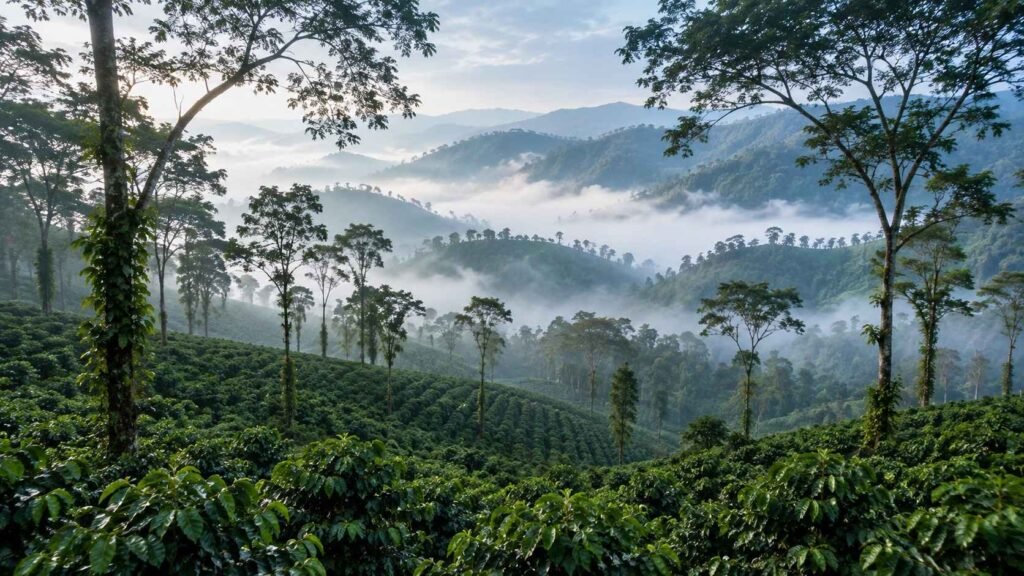
Coorg (Kodagu) — Karnataka’s Coffee Hills
Misty, forested hill country often called the ‘Scotland of India’ and the source of much of the country’s coffee — plantation walks, waterfalls, and slow Kodava-style meals.
Why visit Coorg
Coffee country you can walk through
Working plantations across Coorg welcome visitors for tours and tastings.
Cool, misty hills
The Western Ghats climate here is a welcome change from the plains — green year-round.
A distinct food culture
Kodava cuisine — pandi curry, bamboo shoot dishes — is unlike anywhere else in Karnataka.
When to go
October to March is driest and most pleasant; the monsoon (June–September) is spectacularly green but very wet.
Top things to do in Coorg
Plantation walk near Madikeri Do not miss
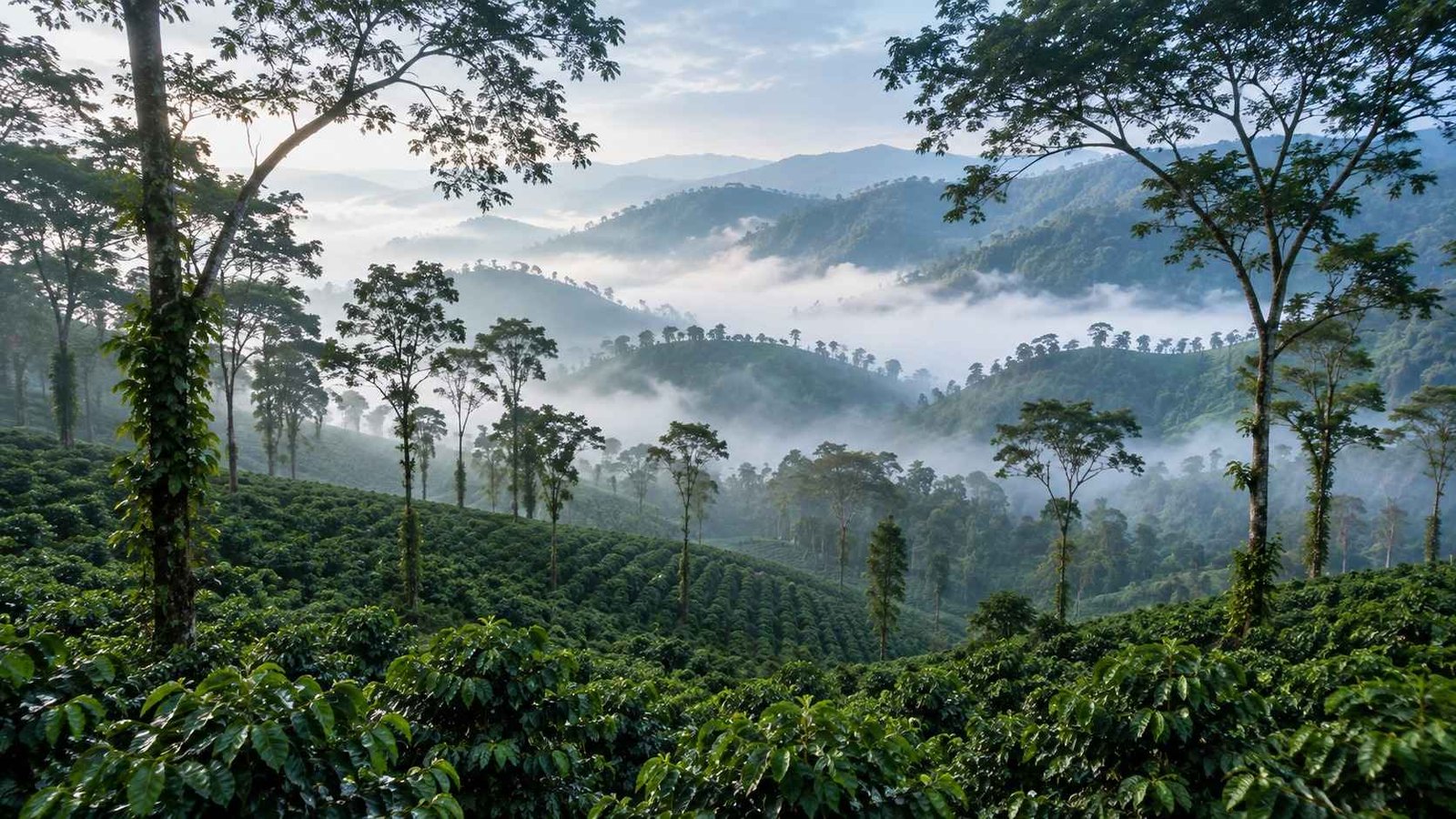
Guided walks through working coffee and spice estates, often ending with a tasting.
Abbey Falls
A scenic waterfall a short drive from Madikeri, framed by coffee and spice plantations.
Dubare Elephant Camp
Get close to working elephants on the banks of the Kaveri River, with bathing and feeding sessions.
Raja’s Seat
A garden viewpoint over the valley, especially pretty at sunset.
Golden Temple, Bylakuppe
A large Tibetan monastery complex with striking golden statues, near Kushalnagar.
Talakaveri
The source of the Kaveri River high in the hills, a quiet pilgrimage spot with good views.
What to eat in Coorg
Pandi curry
Coorg’s famous pork curry, a Kodava classic worth seeking out.
Kadambuttu
Steamed rice dumplings traditionally eaten with curry.
Estate-fresh coffee
Try coffee tasted straight from a plantation you’ve just walked through.
Coorg coffee & honey
Good souvenirs available directly from estates and local shops.
Where to stay
Homestays near Madikeri
Family-run stays on working coffee estates, often with home-cooked Kodava food.
Resorts near Kushalnagar
A wider choice of resort-style properties with pools and gardens.
Estate stays further out
Quieter plantation bungalows for those who want real seclusion.
How to get to Coorg & around
A simple 2-day plan
Estate day
A plantation walk and tasting in the morning, Abbey Falls and Raja’s Seat in the afternoon.
Full day
Elephants & temple
Dubare Elephant Camp in the morning, the Golden Temple at Bylakuppe in the afternoon.
Full day
Practical tips that actually help
Allow extra driving time
Ghat roads wind constantly — a short-looking distance can take much longer than expected.
Pack a light rain layer
Weather changes fast in the hills, even outside the main monsoon.
Try a homestay
Estate homestays often give the best food and the most authentic feel for the region.
Book Dubare ahead
Elephant camp slots can fill up, especially on weekends.
Mistakes first-time visitors make
- Underestimating drive times on Coorg’s winding ghat roads.
- Only staying one night, which barely covers the plantation basics.
- Skipping homestays in favour of generic hotels and missing the real Kodava food.
- Not booking Dubare Elephant Camp in advance during peak season.
Planning Karnataka beyond Coorg?
Coorg pairs naturally with the rest of Karnataka — see the full state guide for routes and timing.
Coorg FAQs
What is Coorg famous for?
Coffee plantations, misty hill scenery, and Kodava cuisine — it’s often called the ‘Scotland of India’.
What is the best time to visit Coorg?
October to March for the driest, clearest weather; the monsoon is lush but very wet.
How many days do you need in Coorg?
Two to three days lets you fit in plantation walks, waterfalls and the elephant camp without rushing.
How do you get to Coorg?
Fly into Mangaluru or Bengaluru, then drive; there’s no railway station directly in Coorg.
Related guides
Karnataka Travel Guide
The full state guide, routes and itineraries.
Chikkamagaluru Travel Guide
More coffee hills and Karnataka’s highest peak.
Written by Ashvinee Nagle
I travel India slowly and write it down honestly - practical guides and real itineraries from someone who lives here.
About Ashvinee →Plan your India trip with us
Get one short, honest India travel guide a week — plus a free 7-day Rajasthan itinerary to start.
Free. Unsubscribe any time.