
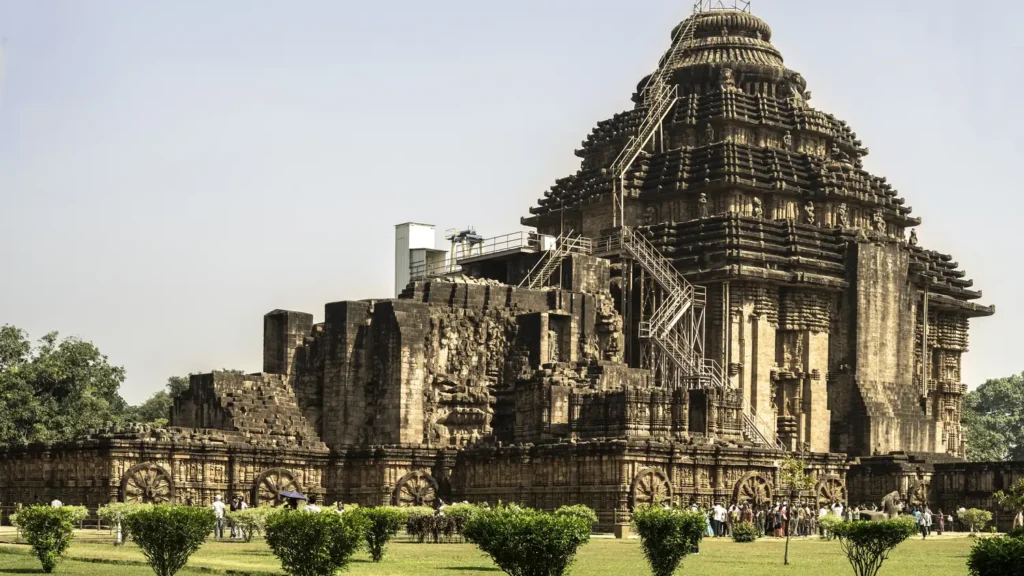
Konark: The Sun Temple Built as a Colossal Stone Chariot
A practical guide to the Konark Sun Temple — the 24 carved wheels and seven horses, why the sanctum is sealed with sand, when the light is best on the sculpture, and how to visit from Puri or Bhubaneswar.
Konark is one of the great monuments of India, and one of the strangest. Built in the 13th century by King Narasimhadeva I of the Eastern Ganga dynasty, the temple to the sun god Surya was conceived as his chariot — a vast stone vehicle with twenty-four carved wheels along its base and a team of seven straining horses drawing it across the sky. The main tower fell centuries ago and the sanctum is sealed, so what you visit is a magnificent fragment rather than a working temple. It is more than enough. A UNESCO World Heritage Site since 1984, Konark is the natural day trip up the coast from Puri, 35 km along the Marine Drive.
The Konark Sun Temple is a 13th-century UNESCO World Heritage monument on the Odisha coast, built as a giant stone chariot of the sun god — 24 carved wheels, seven horses, and some of India’s finest temple sculpture. The main tower collapsed long ago and the surviving hall is packed with sand, so you come for the exterior carving, not an interior. Half a day covers it; morning light is best. Easiest as a day trip from Puri (35 km) or Bhubaneswar (65 km) on a wider Odisha trip.
Why visit Konark
Three reasons Konark is unmissable — and one honest note about what you can and can’t see.
A temple built as a chariot
The whole conceit is extraordinary: the temple is Surya’s war-chariot rendered in stone, with twelve pairs of intricately carved wheels along the plinth and seven horses at the front. It is architecture as a single, enormous sculpture, and there is nothing else quite like it in India.
Sculpture on every surface
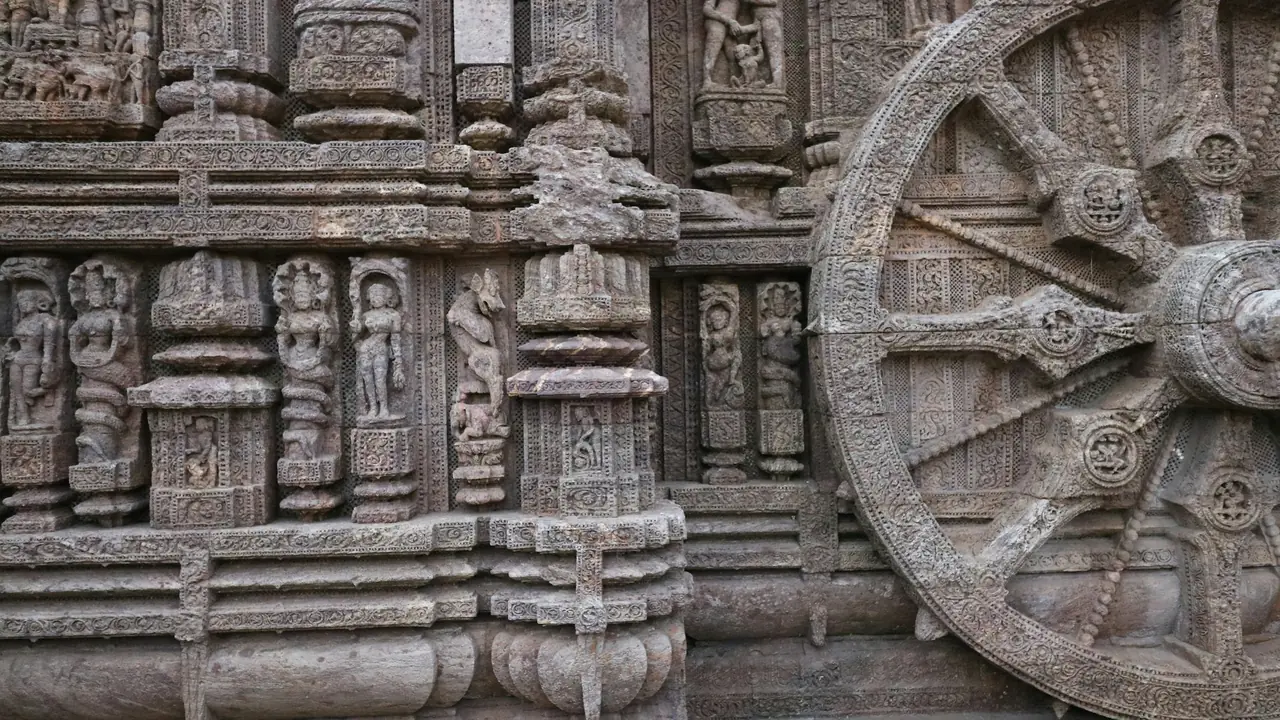
The carving runs from the divine to the frankly earthly — musicians, dancers, animals, everyday life and the erotic panels that draw comparisons with Khajuraho. The famous wheels double as sundials, their spokes and axles marking the hours.
A UNESCO monument by the sea
Inscribed on the World Heritage list in 1984, Konark sits a few kilometres from Chandrabhaga beach, so a visit pairs a world-class monument with the coast. The temple was known to mariners as the Black Pagoda, a landmark from the sea.
When to go
Konark is an open, largely shadeless site on the coast, so timing is about heat and light more than access. It is open year-round, every day.
October to February (the season): cool, clear and comfortable, with the best light for the sculpture. Come in the morning, when the sun is on the main east-facing façade and the carved detail reads at its sharpest.
December (the dance festival): the Konark Dance Festival is usually held at the open-air auditorium beside the temple, drawing classical dancers and larger crowds. Wonderful if you plan for it, busy if you don’t.
March to June (hot): increasingly fierce heat and little shade on the site. The July–September monsoon is green and quiet but humid, with the coast on cyclone-watch in the shoulder months.
Things to do at Konark
The temple complex is compact and walkable. Give the wheels and the main façade proper time, then the museum and the beach.
The chariot wheels and façade
Walk the base to see all twenty-four wheels, each carved with medallions and figures, then take in the surviving jagamohana (audience hall) rising behind them. The east face catches the morning sun; this is the image Konark is famous for and it deserves a slow circuit.
The sculpture panels
Bands of carving cover almost every surface — deities, musicians and dancers, processions, animals and the erotic maithuna panels. A guide or a good eye rewards you here; the detail is easy to walk straight past.
The Nata Mandir and horses
In front of the temple stands the Nata Mandir (dancing hall), and the great stone war-horses and wheels that complete the chariot image. Together they make the scale of the original design land.
The ASI site museum
The Archaeological Survey museum near the entrance holds sculpture recovered from the site and explains the collapse and the 1900s stabilisation. Twenty minutes here makes the ruin make sense.
Chandrabhaga Beach
About 3 km from the temple, a wide, quiet beach with a sunrise viewpoint — an easy add before or after the temple, and a reminder that Konark was a coastal landmark.
The light-and-sound show
An evening sound-and-light programme tells the temple’s story against the floodlit stone. Check current timings locally; it runs on a seasonal schedule and is a pleasant way to end a half-day if you’re staying nearby.
What to eat
Konark itself has only simple options; most visitors eat in Puri or bring the day around a meal there.
Eat in Puri
Puri has the real choice — seafood, Odia thalis and hotel restaurants. Most day-trippers eat there before or after Konark rather than at the temple.
Konark eateries
A cluster of simple restaurants and stalls by the temple do thalis, snacks and cold drinks — fine for a quick lunch, not a destination in themselves.
Chandrabhaga shacks
Seasonal shacks near Chandrabhaga beach serve fried fish and tea. Pleasant if you’re pairing the temple with the coast.
Water and sun cover
The temple site is open and hot outside winter, with little shade. Carry water, a hat and sunscreen, especially for a midday visit.
Where to stay
Most people visit Konark on a day trip and sleep in Puri or Bhubaneswar. There are a few places to stay near the temple if you want the beach and the quiet.
Puri
The natural base — widest choice of hotels on the coast and an easy drive up the Marine Drive to Konark in the morning. This is how most visitors do it.
Konark & Chandrabhaga
A handful of resorts and guesthouses near the temple and Chandrabhaga beach let you catch the temple early and the coast at sunrise, away from Puri’s bustle.
Getting there and around
From Puri: 35 km up the coastal Marine Drive, about an hour by road — one of the prettiest short drives in eastern India and the standard way to visit. Hire a car and driver for the day, ideally combining Konark with Raghurajpur.
From Bhubaneswar: about 65 km, roughly 1.5 hours. Many visitors do a Bhubaneswar–Konark–Puri loop in a single long day, though it’s more relaxed split over two.
Getting around the site: on foot. The complex is compact; wear closed shoes for the uneven stone and start early to beat both the heat and the tour groups.
Konark pairs perfectly with the pattachitra village of Raghurajpur, which sits between it and Puri — do both on one day out and keep the Chilika lagoon for its own morning.
A simple half-day plan
Leave Puri after breakfast, take Konark in the morning light, and be back for lunch.
Konark in the morning, Raghurajpur on the way back
Drive the Marine Drive from Puri and be at the temple mid-morning while the sun is on the east façade. Circle the wheels and sculpture, do the museum, and walk over to Chandrabhaga beach if you have time. On the way back, stop at Raghurajpur to watch the pattachitra painters. Back in Puri for a late lunch.
Practical tips that actually help
Come in the morning
The main façade faces east, so morning light brings out the carving and the wheels. Midday is flat and hot; late afternoon backlights the main face.
Walk all twenty-four wheels
Most people photograph one or two. Circling the whole base is how you read the chariot design and spot the sundial detail.
Hire a guide or read up first
The sculpture is dense with meaning that’s easy to miss. A licensed guide at the gate, or a little reading beforehand, transforms the visit.
The sanctum is sealed
There is no grand interior to enter — the surviving hall was filled with sand in 1903–04 to keep it standing. Come for the exterior, and you won’t be disappointed.
Wear real shoes
You walk on uneven, sun-warmed stone. Closed shoes beat sandals, and socks help if you’re asked to remove footwear in parts of the complex.
Check the dance-festival dates
The December Konark Dance Festival fills the site and its auditorium. Plan for it if you love classical dance, or avoid those dates if you want the temple quiet.
Mistakes first-time visitors make
- Expecting a temple you can go inside. Konark’s tower is gone and the hall is sand-filled. The glory is the exterior carving — come for that.
- Visiting at midday. Flat light and fierce heat. The morning sun on the east face is the whole point; plan around it.
- Rushing the wheels. The twenty-four wheels and the sculpture bands reward a slow circuit. An hour minimum, not fifteen minutes.
- Skipping Raghurajpur next door. The craft village sits right on the Puri–Konark route and takes half an hour. Doing Konark without it is a missed easy win.
Fitting Konark into an Odisha trip?
Konark is an easy half day from Puri — the question is what to pair it with and how to sequence the coast and Chilika. Tell me your dates and I’ll map the days.
Konark FAQs
Is the Konark Sun Temple open inside?
Largely no. The main tower collapsed centuries ago, and the surviving audience hall (the jagamohana) was filled with sand by British engineers in 1903–04 to stop it collapsing too, so it is sealed. You come for the extraordinary exterior sculpture and the chariot wheels, not for an interior.
What is the best time to visit Konark?
October to February, in the morning. The weather is cool and clear and the sun is on the east-facing façade, which is when the carving looks its best. March to June is hot with little shade, and the monsoon is humid.
How far is Konark from Puri and Bhubaneswar?
Konark is about 35 km from Puri along the coastal Marine Drive (roughly an hour) and about 65 km from Bhubaneswar (around 1.5 hours). It’s most often visited as a day trip from Puri.
Why is Konark called the chariot temple?
The temple was designed as the chariot of the sun god Surya — its base carries twenty-four large carved stone wheels and a team of seven horses at the front, so the whole building represents Surya’s vehicle crossing the sky.
How long do you need at Konark?
About half a day. An hour or two covers the wheels, the main façade, the sculpture and the site museum, with time to add Chandrabhaga beach or a stop at Raghurajpur on the way.
Is Konark a UNESCO World Heritage Site?
Yes. The Konark Sun Temple was inscribed on the UNESCO World Heritage list in 1984 and is one of India’s most important 13th-century monuments.
Related guides
Keep planning your Odisha trip with these:
Odisha Travel Guide
The temple triangle, the Chilika lagoon and the wild coast — how to put an Odisha trip together.
Puri
The Jagannath temple town and the base for the coast — where most Konark day trips start and end.
Written by Ashvinee Nagle
I travel India slowly and write it down honestly - practical guides and real itineraries from someone who lives here.
About Ashvinee →Plan your India trip with us
Get one short, honest India travel guide a week — plus a free 7-day Rajasthan itinerary to start.
Free. Unsubscribe any time.