
Bodh Gaya: Where the Buddha Was Enlightened
A practical guide to Bodh Gaya — the Mahabodhi Temple and the Bodhi tree, the Great Buddha statue, the monasteries built by every Buddhist nation, and how to visit the spiritual centre of the Buddhist world in southern Bihar.
Bodh Gaya is the holiest place in the Buddhist world — the spot, under a spreading peepal tree on the bank of the Niranjana river, where Prince Siddhartha sat in meditation and rose as the Buddha, the Awakened One. Around that tree grew the Mahabodhi Temple, now a UNESCO World Heritage Site, and around the temple a quiet pilgrim town where monasteries built by Thailand, Japan, Bhutan, Tibet, Myanmar and a dozen other nations stand side by side. It is a place of chanting and circumambulation rather than sightseeing, and the single most moving stop in all of Bihar.
Bodh Gaya, in Gaya district of southern Bihar, is where the Buddha attained enlightenment under the Bodhi tree. Its heart is the UNESCO-listed Mahabodhi Temple complex — the tree, the Vajrasana (diamond throne) and the soaring tower — surrounded by the 25 m Great Buddha statue and monasteries of every Buddhist nation. Come October to March, give it two unhurried days, and start at dawn. It pairs naturally with the Nalanda–Rajgir belt to the north on a Bihar trip.
Why visit Bodh Gaya
Three reasons Bodh Gaya is the heart of any Bihar trip — and one note on expectations.
The Bodhi tree and Mahabodhi Temple
This is the centre of the Buddhist world: the descendant of the very tree the Buddha sat under, the gilded Vajrasana throne beside it, and the 50 m Mahabodhi tower rising above. Walking the complex at dawn, among pilgrims from across Asia, is unforgettable.
Monasteries of every nation
Thailand, Japan, Bhutan, Tibet, Myanmar, Vietnam, China and more have each built a monastery and temple here, so a short walk takes you through the architecture and devotional style of the whole Buddhist world in an afternoon.
A genuinely contemplative town
Bodh Gaya is small, green and calm, built for meditation retreats and slow pilgrimage rather than tourism. It rewards time and stillness — early mornings and evenings are the best of it.
When to go
Bodh Gaya sits in the hot Gangetic plain, so the season matters a great deal.
October to March (the season): cool, dry and comfortable, and the time of the great Tibetan and international pilgrim gatherings. By far the best window — December and January are peak, when teachings and prayer festivals fill the town.
April to June (hot): fierce heat, often above 40°C, which makes daytime visits punishing. Go very early if you must come then.
July to September (monsoon): humid, with rain greening the countryside; Buddha Purnima (the Buddha’s birthday, usually May) is a major but very busy occasion to witness.
Things to do in Bodh Gaya
The Mahabodhi complex is the heart of it; the Great Buddha and the national monasteries fill out a rewarding two days.
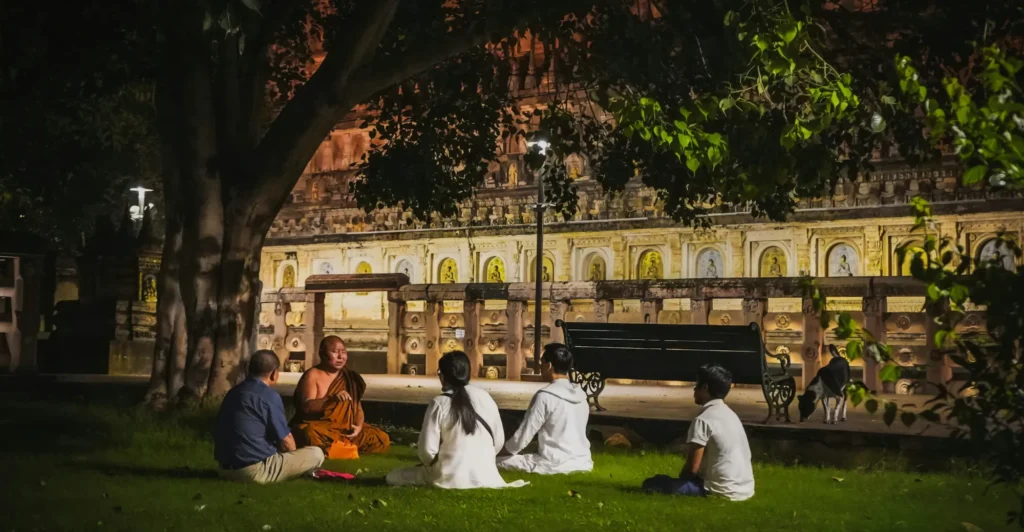
Mahabodhi Temple & the Bodhi Tree
The UNESCO-listed temple complex around the Bodhi tree — the tree itself, the Vajrasana diamond throne, the great tower and the lotus pond. Join the pilgrims circumambulating at dawn; expect security and a dress code, and leave phones per the current rules.
The Great Buddha Statue
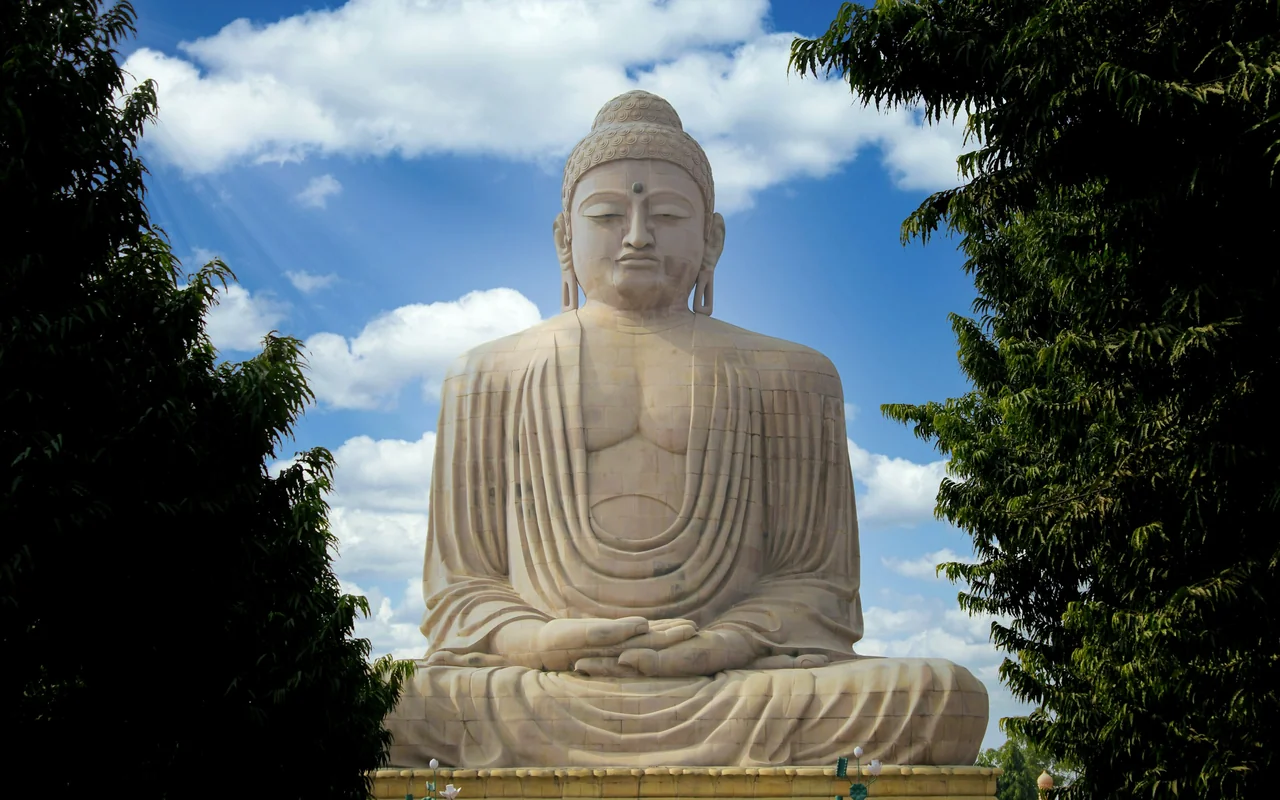
The serene 25 m sandstone-and-red-granite Great Buddha, unveiled in 1989, sits in meditation a short walk from the temple — one of the most photographed sights in Bihar and a calm spot in its own garden.
The national monasteries
Stroll between the Thai, Japanese (the giant Daijokyo Buddha), Bhutanese, Tibetan, Burmese and other monasteries, each in its own national style — an easy, fascinating circuit of the whole Buddhist world on foot.
Gaya & the Vishnupad Temple
The city of Gaya, about 13 km away, is a major Hindu pilgrimage centre for ancestral rites (pind daan) at the Vishnupad Temple on the Falgu river — a very different, intensely devotional counterpoint to Buddhist Bodh Gaya.
Meditation & the river
Several monasteries and centres run meditation sessions and short courses, and the Niranjana (Falgu) riverbank and Sujata village across it — linked to the Buddha’s fast and first meal — make a quiet walk. Bodh Gaya rewards doing less.
What to eat
Food is simple, largely vegetarian and international — this is a pilgrim town with visitors from across Asia.
Veg thali & tiffins
Simple North Indian vegetarian meals, thalis and South Indian tiffins are the mainstay, at modest restaurants and the dharamshala canteens around the temple.
Tibetan & Asian food
Thanks to the Tibetan and East Asian pilgrim crowds, you’ll find good Tibetan momos and thukpa, plus Thai, Japanese and Burmese flavours near the respective monasteries in season.
Litti chokha & chai
For the local taste, seek out Bihar’s litti chokha — roasted sattu-stuffed wheat balls with mashed vegetables — and endless sweet chai at roadside stalls.
Alcohol is banned
Bihar is a dry state — alcohol is prohibited across Bihar, including Bodh Gaya. Don’t expect a drink with dinner, and don’t carry alcohol in.
Where to stay
Bodh Gaya has the widest range of stays in Bihar, from monastery guesthouses to comfortable hotels and a few resorts.
Monastery guesthouses
Many national monasteries run simple, inexpensive guesthouses open to respectful visitors — a peaceful, authentic way to stay, within walking distance of the Mahabodhi Temple. Basic but special.
Hotels & resorts
Comfortable mid-range and upscale hotels and a few resorts cater to the international pilgrim trade, especially busy and pricier in the December–January teaching season. Book well ahead for peak dates.
Guesthouses & lodges
Plenty of budget guesthouses and lodges serve backpackers and Indian pilgrims — cheap and central, if plain.
Getting there and around
By air: Gaya International Airport is about 17 km from Bodh Gaya and has domestic flights plus seasonal international pilgrim charters (Thailand, Myanmar and more) in the winter season. Patna’s airport, about 135 km away, has far more routes year-round.
By train: Gaya Junction, around 13 km away, is a major stop on the Delhi–Kolkata line with good connections; taxis and autos run from there to Bodh Gaya.
Getting around: the temple, Great Buddha and most monasteries are walkable or a short auto ride apart. For Gaya town, the river villages or onward to Nalanda and Rajgir, hire an auto or a car with a driver.
Bodh Gaya pairs naturally with the Nalanda–Rajgir–Pawapuri belt to the north (about 3–4 hours by road) and with Patna. Most Bihar trips start or end here.
A simple 2-day plan
Two unhurried days do justice to the temple, the Great Buddha, the monasteries and a half-day in Gaya.
The Mahabodhi Temple & the monasteries
Start at dawn at the Mahabodhi Temple and the Bodhi tree, before the heat and crowds. After breakfast, visit the Great Buddha statue and spend the afternoon walking the national monasteries. Return to the temple at dusk for the evening chanting.
Gaya, the river & reflection
Take a half-day trip to Gaya for the Vishnupad Temple, or cross to Sujata village and the Niranjana riverbank. Keep the rest of the day slow — a meditation session, the quieter monasteries, and a last visit to the Bodhi tree.
Practical tips that actually help
Go at dawn
The Mahabodhi Temple is at its most beautiful and peaceful at sunrise, with pilgrims chanting and the air still cool. It is the highlight — don’t sleep through it.
Dress modestly
Cover shoulders and knees, and be ready to remove shoes at the temple and monasteries. Carry socks for hot or cold stone floors.
Check the phone rules
Phone and camera rules at the Mahabodhi complex change; there are paid cloakrooms and a camera ticket system. Check on the day and don’t assume you can photograph everything.
Remember it’s a dry state
Alcohol is banned across Bihar. Plan your evenings around that, and never carry alcohol into the state.
Build in stillness
Bodh Gaya isn’t a tick-list town. Leave time to just sit by the Bodhi tree or join a meditation session — that’s the point of coming.
Mind the peak season
December and January bring major Tibetan teachings and huge crowds; rooms are scarce and dear. Wonderful to witness, but book months ahead or pick quieter weeks.
Mistakes first-time visitors make
- Treating it as a quick half-day stop. Bodh Gaya rewards time. Rushing the temple and skipping the monasteries and dawn visit misses the whole point.
- Coming in peak summer. April–June heat in the plains is brutal. The cool October–March months are far better for walking the complex.
- Expecting a drink with dinner. Bihar is dry. Alcohol is banned statewide, so plan evenings accordingly.
- Confusing Bodh Gaya with Gaya. Buddhist Bodh Gaya and the Hindu pilgrimage city of Gaya are 13 km apart and very different. Allow time and transport for both if you want to see each.
Planning a Bodh Gaya and Bihar trip?
Bodh Gaya is the natural anchor of a Bihar Buddhist circuit. Tell me your dates and I’ll build it into a route with Nalanda, Rajgir and Patna.
Bodh Gaya FAQs
Why is Bodh Gaya famous?
Bodh Gaya is where the Buddha attained enlightenment under the Bodhi tree, making it the holiest site in Buddhism. Its Mahabodhi Temple complex is a UNESCO World Heritage Site, and the town is ringed by monasteries built by Buddhist nations from across the world.
How many days do you need in Bodh Gaya?
Two days are ideal — one for the Mahabodhi Temple, the Great Buddha and the monasteries, and a second for Gaya, the river villages or a meditation session. Pilgrims on retreat often stay far longer.
What is the best time to visit Bodh Gaya?
October to March, when the weather is cool and dry. December and January are peak, with major Tibetan teachings and pilgrim gatherings. Avoid the fierce April–June heat and the humid monsoon.
How do you reach Bodh Gaya?
Fly into Gaya International Airport, about 17 km away, which has domestic flights and seasonal international pilgrim charters; or use Patna’s better-connected airport about 135 km away. Gaya Junction railway station, around 13 km away, is well connected by train.
Can you enter the Mahabodhi Temple?
Yes — the Mahabodhi Temple complex is open to all visitors, of any faith. Dress modestly, be ready to remove shoes, and note that there are rules and a ticket system for phones and cameras, which change from time to time.
Is alcohol available in Bodh Gaya?
No. Bihar is a dry state and alcohol is prohibited across it, including Bodh Gaya. Don’t expect to buy a drink, and don’t carry alcohol into the state.
Related guides
Keep planning your Bihar trip with these:
Bihar Travel Guide
Bodh Gaya, Nalanda, Rajgir and Patna — how to put a Bihar Buddhist-circuit trip together.
Nalanda
The red-brick ruins of the ancient Mahavihara, the world’s most famous early university — the natural next stop from Bodh Gaya.
Mahabodhi Temple and Great Buddha photos via the Unsplash licence.
Written by Ashvinee Nagle
I travel India slowly and write it down honestly - practical guides and real itineraries from someone who lives here.
About Ashvinee →Plan your India trip with us
Get one short, honest India travel guide a week — plus a free 7-day Rajasthan itinerary to start.
Free. Unsubscribe any time.