
Rajgir: Peace Stupa, Ropeway and Hills Sacred to Two Faiths
A practical guide to Rajgir — the Vishwa Shanti Stupa and its ropeway, Vulture’s Peak, the hot springs, Ghora Katora lake, the glass bridge and nature safari, and how to visit this ancient Magadhan capital in central Bihar.
Rajgir — ancient Rajagriha — was the first capital of the Magadha kingdom, cradled in a ring of five low hills in central Bihar, and it is sacred ground for both Buddhists and Jains. The Buddha spent many rainy seasons here and preached from Vulture’s Peak; Mahavira and many Jain tirthankaras are tied to its hills. Today it blends pilgrimage and gentle holiday: a chairlift-style ropeway up to a white peace pagoda, natural hot springs, a lake with a Buddha on an island, and newer draws like a glass bridge and a nature safari. It is the perfect base for the Nalanda cluster.
Rajgir, in central Bihar near Nalanda, is an ancient Magadhan capital sacred to Buddhists and Jains, set among five hills. The highlights are the Vishwa Shanti Stupa (reached by a ropeway) on Ratnagiri hill, Vulture’s Peak where the Buddha preached, the Brahmakund hot springs, Ghora Katora lake, and newer attractions like the glass bridge and nature safari. Give it a day (two with Nalanda and Pawapuri). Best October to March on a Bihar trip.
Why visit Rajgir
Three reasons Rajgir is the most rewarding base in the Bihar interior.
Sacred to two faiths
Few places are this holy to both Buddhists and Jains. The Buddha preached from Vulture’s Peak and many Jain tirthankaras are linked to Rajgir’s hills — layers of pilgrimage in one small valley.
The ropeway and peace stupa
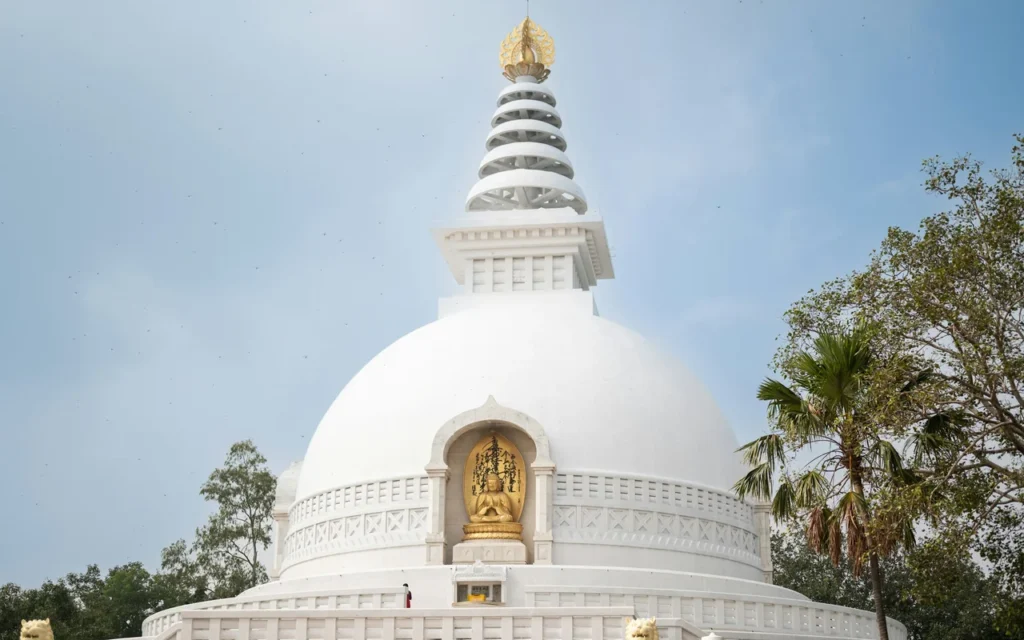
A single-chair ropeway lifts you up Ratnagiri hill to the gleaming white Vishwa Shanti Stupa, a Japanese-built peace pagoda with sweeping views over the hills — the signature Rajgir experience.
Pilgrimage meets gentle holiday
Alongside the ancient sites, Rajgir has hot springs, the lovely Ghora Katora lake, a glass bridge and a nature safari, so it works as a relaxed family stop as well as a pilgrimage, and as the ideal base for Nalanda and Pawapuri.
When to go
Rajgir sits in a hot valley but its hills and festival bring their own seasons.
October to March (the season): cool and pleasant, perfect for the ropeway, the hills and the lake. The Rajgir Mahotsav dance-and-music festival usually falls in this window too.
April to June (hot): very hot in the valley; the hot springs are less appealing and midday walking is hard. Go early if you come then.
July to September (monsoon): the hills turn green and dramatic, but trails can be slippery and some outdoor attractions may pause in heavy rain.
Things to do in Rajgir
The ropeway and peace stupa are the headline; the hot springs, lake and newer attractions fill a full day.
Vishwa Shanti Stupa & ropeway
Ride the single-person ropeway up Ratnagiri hill to the white marble Vishwa Shanti Stupa (peace pagoda), with its golden Buddhas and wide views. The ropeway is the classic Rajgir experience; there’s also a newer modern ropeway nearby.
Griddhakuta (Vulture’s Peak)
The hill from which the Buddha delivered many teachings, with a shrine and a Japanese-built temple nearby. A short climb leads to a quietly powerful viewpoint over the valley.
Brahmakund hot springs
The natural hot springs at the foot of Vaibhavgiri hill have drawn pilgrims for millennia. They’re busy and basic rather than a spa — go to watch the devotion as much as to bathe.
Ghora Katora Lake
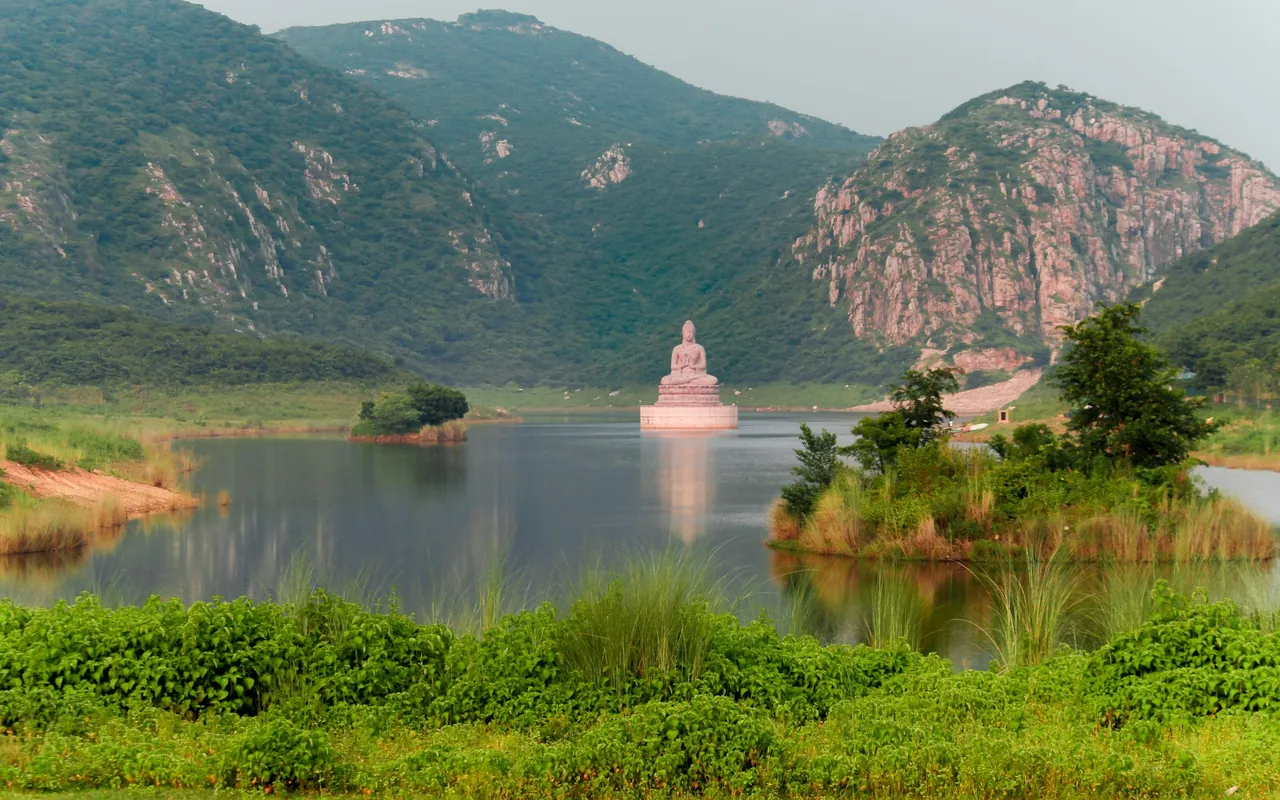
A serene lake ringed by hills, with a Buddha statue on an island at its centre, reached by eco-friendly horse cart or e-vehicle. The state’s loveliest half-hour of doing nothing at all.
Glass bridge & Nature Safari
The Rajgir Nature Safari and Zoo Safari and a cantilever glass bridge (in the style of China’s) have made Rajgir a family-holiday draw. Tickets can sell out — book the glass bridge slot online ahead in season.
Cyclopean wall & ancient sites
Rajgir’s ancient remains include stretches of the Cyclopean wall that once ringed the city, Bimbisara’s jail, Jarasandh’s akhara and Jain hill temples — scattered reminders of its age as Magadha’s capital.
What to eat
Food is simple, vegetarian-leaning and local — eat in town, and don’t leave without Silao khaja.
Veg thali & tiffins
Simple North Indian vegetarian meals, thalis and tiffins at hotels and modest restaurants in town are the mainstay, with some non-veg at hotels.
Silao khaja
On the Nalanda road, Silao is famous for khaja — a crisp, flaky, layered sweet in syrup. Pick up a box; it’s the signature treat of the area.
Litti chokha
Bihar’s classic litti chokha — roasted sattu-stuffed wheat balls with smoky mashed vegetables — is the local street staple worth trying.
Dry state
Bihar is a dry state — alcohol is prohibited across it, including Rajgir’s hotels and resorts.
Where to stay
Rajgir has the best spread of stays in the Bihar interior — the natural base for Nalanda and Pawapuri.
Hotels & resorts
Rajgir has comfortable mid-range hotels and a few resorts, plus Bihar Tourism (Tourism) properties — the handiest base for the whole Nalanda–Rajgir–Pawapuri cluster. Busy around the Rajgir Mahotsav.
Guesthouses & lodges
Simpler guesthouses and pilgrim lodges serve those on a tighter budget, central and plain.
Patna
If you want city comforts, Patna (about 100 km) can serve as a base for a long day trip to Rajgir and Nalanda, though staying in Rajgir is far more relaxed.
Getting there and around
From Patna: Rajgir is about 100 km south-east, roughly 2.5–3 hours by road. It’s also on a railway branch line, with Rajgir station served by trains from Patna and beyond.
From Nalanda & Bodh Gaya: Nalanda is only about 12 km away, and Bodh Gaya is around 3–4 hours by road — Rajgir sits neatly between them on a Bihar circuit.
Getting around: the sites are spread around the hills, so a car with a driver or hired autos make most sense. Ghora Katora is reached by eco horse-cart or e-vehicle, and the stupa by ropeway.
Base in Rajgir for a night or two and you can comfortably cover Rajgir’s own sights, the Nalanda ruins (12 km) and Pawapuri’s Jal Mandir in one tidy loop.
A full 1-day plan
One day covers Rajgir’s highlights; add a second to fold in Nalanda and Pawapuri.
Stupa, peak, springs and lake
Start early with the ropeway up to the Vishwa Shanti Stupa, then Griddhakuta (Vulture’s Peak) and the Brahmakund hot springs. After lunch, ride out to Ghora Katora Lake, and fit in the glass bridge or nature safari if you’ve booked.
Practical tips that actually help
Ride the ropeway early
The single-chair ropeway to the peace stupa is the Rajgir highlight — and quietest just after it opens, before tour groups arrive.
Pre-book the glass bridge
The glass bridge and nature safari are ticketed and slots sell out in season. Book online ahead rather than hoping to buy on the day.
Take the eco ride to Ghora Katora
Private vehicles are kept out of the lake approach. Use the eco-friendly horse cart or e-vehicle — it’s part of the charm.
Base here for the cluster
Rajgir is the best base for Nalanda (12 km) and Pawapuri. Stay a night or two and do the cluster as an easy loop.
Dry state
Alcohol is banned across Bihar, including Rajgir’s hotels. Plan evenings accordingly.
Time the Mahotsav
The Rajgir Mahotsav (usually around October) brings dance, music and crowds — wonderful to catch, but book accommodation well ahead.
Mistakes first-time visitors make
- Doing Rajgir as a rushed day trip from Patna. It’s 2.5–3 hours each way, and the sites are spread out. Stay a night to enjoy it and the Nalanda cluster properly.
- Turning up for the glass bridge without a ticket. Slots sell out in season. Book online ahead or you may miss it.
- Skipping Ghora Katora. The lake with its island Buddha is Rajgir’s loveliest spot. Don’t cut it to save an hour.
- Coming in peak summer. The valley gets very hot and the hot springs lose their appeal. October–March is far better.
Planning Rajgir into a Bihar trip?
Rajgir, Nalanda and Pawapuri make one perfect cluster. Tell me your dates and I’ll build it into a Bihar route with Bodh Gaya and Patna.
Rajgir FAQs
What is Rajgir famous for?
Rajgir — ancient Rajagriha — was the first capital of Magadha and is sacred to both Buddhists and Jains. It’s famous for the Vishwa Shanti Stupa and its ropeway, Vulture’s Peak where the Buddha preached, the Brahmakund hot springs, Ghora Katora lake, and newer draws like the glass bridge and nature safari.
How do you reach Rajgir?
Rajgir is about 100 km (2.5–3 hours) from Patna by road and has its own railway station on a branch line. It’s only about 12 km from Nalanda and around 3–4 hours from Bodh Gaya, so it sits neatly on a Bihar circuit.
How many days do you need in Rajgir?
One full day covers Rajgir’s own highlights. Add a second day to combine it with the Nalanda ruins (12 km) and Pawapuri’s Jal Mandir, using Rajgir as your base.
What is the best time to visit Rajgir?
October to March, when the weather is cool and pleasant for the ropeway, the hills and the lake, and when the Rajgir Mahotsav usually takes place. Avoid the fierce April–June heat.
Is the Rajgir glass bridge worth it, and how do you book?
The cantilever glass bridge and the nature/zoo safari are popular family attractions with fine hill views. They’re ticketed and slots sell out in season, so book online in advance rather than relying on same-day tickets.
Can you combine Rajgir with Nalanda and Pawapuri?
Yes — they form one tight cluster. From a base in Rajgir you can easily see the Nalanda ruins (12 km), Pawapuri’s Jal Mandir and Rajgir’s own sites over a day or two.
Related guides
Keep planning your Bihar trip with these:
Bihar Travel Guide
Bodh Gaya, Nalanda, Rajgir and Patna — how to put a Bihar Buddhist-circuit trip together.
Nalanda
The red-brick ruins of the ancient university — Rajgir’s natural pairing, just down the road.
Vishwa Shanti Stupa and Ghora Katora Lake photos via the Unsplash licence.

Written by Ashvinee Nagle
I travel India slowly and write it down honestly - practical guides and real itineraries from someone who lives here.
About Ashvinee →Plan your India trip with us
Get one short, honest India travel guide a week — plus a free 7-day Rajasthan itinerary to start.
Free. Unsubscribe any time.