
Travel to Khonoma: A First-Timer’s Guide to Nagaland’s Green Village
An honest guide to Khonoma — the terraces, the stone gateways, the conservation story, homestays and how to visit respectfully with a local guide.
Khonoma is a hilltop Angami village about 20 km from Kohima, known for its stepped rice terraces, stone gateways and a community decision to stop hunting and protect its forests. It’s one of the most rewarding places in Nagaland to slow down — best seen with a local guide, and best of all with a night in a homestay.
Go with a local guide, stay one night in a homestay, and walk the terraces in the morning. It’s about 20 km from Kohima — roughly an hour by road.
Permits checked: 27 October 2026, against the Nagaland ILP portal and Nagaland Tourism’s entry-permits page. Rules change — confirm before you travel.
Why visit Khonoma
Why Khonoma is worth a night:
The terraces
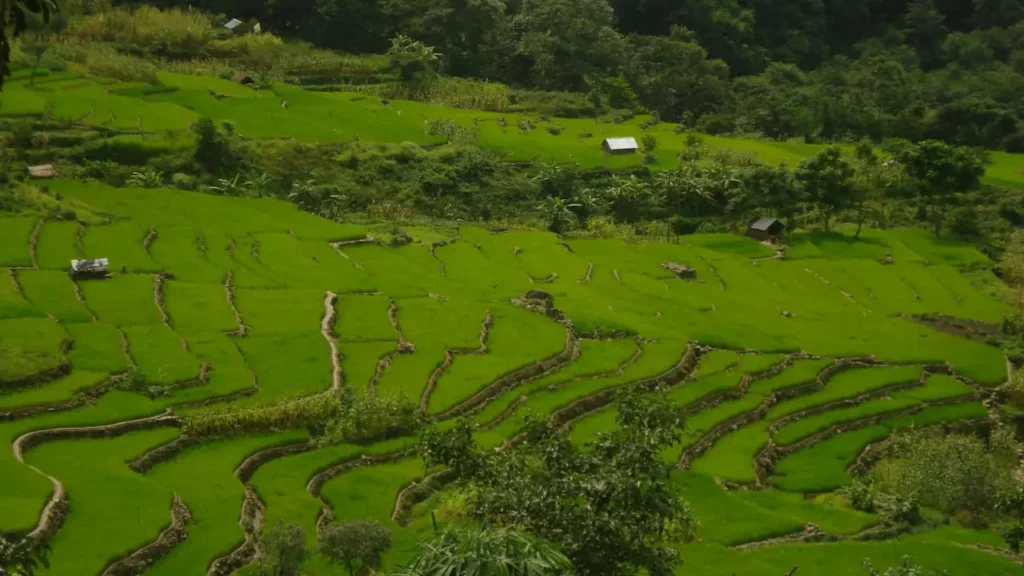
Green stepped rice fields around the village.
A conservation story
The village chose to stop hunting and protect its forests.
A village stay
Homestays give you a real sense of Angami life.

Rice terraces at Khonoma. Photo: Ahe Phucho / Unsplash
When to go
October to May: dry and pleasant; the best time for walking.
June to September (monsoon): the terraces are greenest, but paths are muddy.
Harvest season: the terraces turn golden around October–November, depending on the crop and weather.
Early morning: the quietest and most beautiful time.
Hire a local guide — they explain the village’s history and introduce you to people.
Top things to do in Khonoma
What to see in Khonoma:
Rice terraces
Walk the paths between the stepped fields.
Stone gateways
Traditional gateways into the village’s clan areas.
Conservation sites
The village’s community-protected forest.
Morungs
Traditional community houses.
Village walk
Lanes, houses and views over the valley.
Dzuleke
A smaller Angami village nearby, with a forest stream.
What to eat in Khonoma
Food here is home cooking at your homestay.
Home-cooked meals
Rice, greens, smoked pork and chutney.
Smoked pork
Often with bamboo shoot.
Rice from the terraces
Grown in the fields around you.
Water & snacks
Shops are limited.
Let your homestay know in advance if you have dietary needs.
Where to stay
Stay in a village homestay — book ahead, especially in Hornbill week. A daily budget of about ₹2,000–4,000 per person covers a homestay with meals and the village fee; a guide and the taxi from Kohima are extra. Where charged, the village fee is a small entry or conservation contribution, usually collected in the village — confirm the amount locally.
Village homestays
Simple rooms with local families.
Dzuleke homestays
A quieter village stay.
How to get to Khonoma & around
Khonoma is about 20 km from Kohima — roughly an hour by road.
Visitors who aren’t indigenous inhabitants of Nagaland — Indian or foreign — need an Inner Line Permit, applied for online at the official ILP portal (₹200 for 30 days for Indian tourists, ₹500 for foreign tourists). Tourists don’t need a guarantor but must give a local contact. Foreign visitors also need a Protected Area Permit — apply on the e-FRRO portal (see Nagaland Tourism).
A simple 2-day plan
One day — but a night is better:
Kohima to Khonoma
Drive from Kohima in the morning, meet your guide, walk the terraces and gateways, and stay the night.
Practical tips that actually help
Hire a guide
They open doors and explain the history.
Carry cash
Fees and homestays are cash only.
Ask first
Ask before photographing people.
Rain gear
Showers are common.
Stay the night
The village is best in the evening and early morning.
Respect the forest
Hunting is banned here — don’t disturb wildlife.
Mistakes first-time visitors make
- Visiting without a guide. You’ll miss the stories.
- Rushing it in a few hours. Stay the night.
- Photographing without asking. Always ask first.
- Leaving litter. The village protects its environment.
Planning a village stay?
Khonoma pairs with Kohima and Kisama. Tell us your dates and we’ll help you plan it.
Plan my Nagaland trip →Khonoma FAQs
How far is Khonoma from Kohima?
About 20 km — roughly an hour by road.
Do you need a guide?
It’s strongly recommended; a local guide explains the history and introduces you to people.
Can you stay overnight?
Yes, in village homestays — book ahead, especially in December.
What is Khonoma known for?
Its terraces, stone gateways and community conservation.
Do you need a permit?
Visitors who aren’t indigenous inhabitants of Nagaland — Indian or foreign — need an Inner Line Permit, applied for online at the official ILP portal (₹200 for 30 days for Indian tourists, ₹500 for foreign tourists). Tourists don’t need a guarantor but must give a local contact. Foreign visitors also need a Protected Area Permit — apply on the e-FRRO portal (see Nagaland Tourism).
Related guides
Keep planning your Nagaland trip with these:
Nagaland Travel Guide
The Hornbill Festival, Naga villages and Dzukou — how to plan the whole of Nagaland.
Travel to Kohima
The hill capital.

Ashvinee Nagle
I’m Ashvinee — I help first-time travellers plan India trips that actually work. I’ve spent years exploring the country’s regions, from Rajasthan’s forts to Kerala’s backwaters, and I write the guides I wish I’d had on my own first trips.

Written by Ashvinee Nagle
I travel India slowly and write it down honestly - practical guides and real itineraries from someone who lives here.
About Ashvinee →Plan your India trip with us
Get one short, honest India travel guide a week — plus a free 7-day Rajasthan itinerary to start.
Free. Unsubscribe any time.