
Travel to Kohima: A First-Timer’s Guide to Nagaland’s Hill Capital
An honest guide to Kohima for first-time visitors — the War Cemetery, the state museum, the market, where to stay, permits, and how to start trips to Khonoma, Kisama and Dzukou from here.
Kohima is Nagaland’s hill capital, spread along a ridge at about 1,400 metres. It’s where most trips begin — the starting point for Khonoma, Kisama and the Dzukou trek — and it’s worth more than a night in its own right, for the War Cemetery, the state museum and one of the most interesting markets in the Northeast.
Arrive from Dimapur (about 3 hours by road), give Kohima two days, and use it as the starting point for Khonoma, Kisama and Dzukou. Sort your Inner Line Permit online before you travel, and book months ahead for Hornbill week.
Permits checked: 27 October 2026, against the Nagaland ILP portal and Nagaland Tourism’s entry-permits page. Rules change — confirm before you travel.
Why visit Kohima
Three reasons Kohima deserves more than a transit night:
History
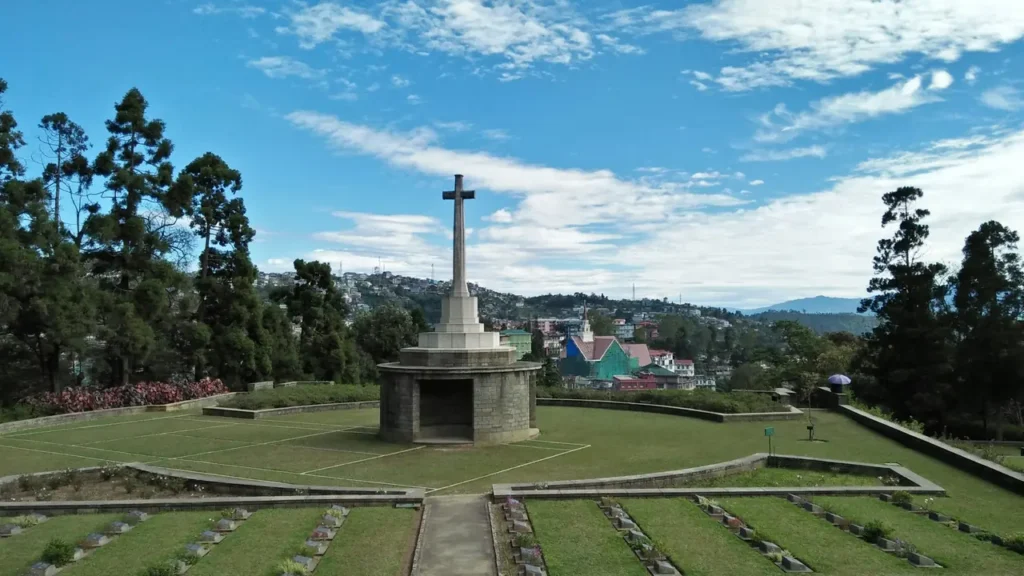
The War Cemetery marks the 1944 Battle of Kohima, one of the turning points of the Second World War in Asia.
Naga culture
The state museum and the market give a first look at Nagaland’s many communities.
The starting point
Villages, Kisama and the Dzukou trek are all within easy reach.

The Kohima War Cemetery. Photo: Vipin Joseph / Unsplash
When to go
October to May: the most reliable months — mostly dry, with cold nights in winter.
1–10 December: Hornbill Festival at Kisama, 10–12 km away — Kohima is full, so book months ahead.
June to September (monsoon): green, but landslides can slow the roads.
December and January: cold, clear days; pack warm layers.
During Hornbill week, rooms in Kohima sell out and prices rise — book months ahead, or stay in a village homestay nearby.
Top things to do in Kohima
Here’s what’s worth your time in and around Kohima.
Kohima War Cemetery
A quiet, beautifully kept cemetery on the slopes where the 1944 battle was fought, including the site of the famous tennis court.
Nagaland State Museum
Displays on Naga communities, dress, tools and traditions — a good introduction before the villages. Open 10 am–4 pm; closed on Sundays and public holidays.
Central Market & BOC Market
Kohima’s two busy, eye-opening markets — local produce, smoked meats, fermented foods and more. Ask before taking photos.
Mary Help of Christians Cathedral
A large cathedral on a hill with views over the town.
Kisama Heritage Village
Traditional houses of the Naga communities, 10–12 km away. The cultural programme runs during Hornbill week (1–10 December). At other times the morungs, a World War II Museum and the bamboo halls are there, but the site is used mainly for events — check what’s open before making a separate trip. See our Kisama guide.
What to eat in Kohima
Kohima is the best place in Nagaland to try Naga food.
Smoked pork with bamboo shoot
The classic Naga dish — smoky, sour and rich.
Axone dishes
Food made with fermented soybean — strong-smelling and delicious.
Raja mircha chutney
The king chilli — use with caution.
Cafés
A few good cafés for coffee and snacks.
Nagaland has a liquor prohibition law — don’t expect to buy alcohol easily.
Where to stay
Stay central — Kohima’s roads are steep and traffic is slow. A daily budget of about ₹2,500–6,000 per person covers a hotel and meals; a hired car is extra.
Town hotels
Simple to comfortable hotels close to the sights.
Homestays
A more local stay with home-cooked food.
Village homestays
Close to Kisama during festival week.
How to get to Kohima & around
Kohima is about 74 km — roughly 3 hours by road — from Dimapur.
Visitors who aren’t indigenous inhabitants of Nagaland — Indian or foreign — need an Inner Line Permit, applied for online at the official ILP portal (₹200 for 30 days for Indian tourists, ₹500 for foreign tourists). Tourists don’t need a guarantor but must give a local contact. Foreign visitors also need a Protected Area Permit — apply on the e-FRRO portal (see Nagaland Tourism).
A simple 2-day plan
Two days in Kohima, before heading out to the villages:
War Cemetery, museum & market
Start at the War Cemetery, then the State Museum (10 am–4 pm) and Central Market or BOC Market. On Sundays and public holidays the museum is closed — swap it for the cathedral on Aradura Hill. Finish with Naga food in town.
Kisama or Khonoma
Choose Kisama Heritage Village — at its liveliest in Hornbill week; at other times check what’s open first — or a full day at Khonoma, staying the night if you can.
Practical tips that actually help
Permit first
Apply for your ILP online before you travel.
Carry cash
ATMs are limited outside the centre.
Warm layers
Nights are cold, especially in winter.
Mind Sundays
Many shops close in this largely Christian state.
Ask first
Ask before photographing people.
Book Hornbill early
Rooms sell out months ahead.
Mistakes first-time visitors make
- Arriving without an ILP. It’s checked at entry points.
- Leaving Hornbill rooms to the last minute. Kohima fills up.
- Treating Kohima as a transit stop. Give it a full day at least.
- Expecting to buy alcohol. Nagaland has a prohibition law.
Planning Nagaland around Kohima?
Kohima is the starting point for Khonoma, Kisama and Dzukou. Tell us your dates and we’ll help you plan the rest of Nagaland around it.
Plan my Nagaland trip →Kohima FAQs
How many days do you need in Kohima?
Two days: one for the War Cemetery, museum and market, and one for Kisama or Khonoma.
How do you reach Kohima?
Fly or take a train to Dimapur, then drive about 74 km — roughly 3 hours — to Kohima.
What is the best time to visit Kohima?
October to May, with 1–10 December for the Hornbill Festival at Kisama.
Is there an entry fee for the Kohima War Cemetery?
No fee is listed; it’s maintained by the Commonwealth War Graves Commission.
Do you need a permit for Kohima?
Visitors who aren’t indigenous inhabitants of Nagaland — Indian or foreign — need an Inner Line Permit, applied for online at the official ILP portal (₹200 for 30 days for Indian tourists, ₹500 for foreign tourists). Tourists don’t need a guarantor but must give a local contact. Foreign visitors also need a Protected Area Permit — apply on the e-FRRO portal (see Nagaland Tourism).
Related guides
Keep planning your Nagaland trip with these:
Nagaland Travel Guide
The Hornbill Festival, Naga villages and Dzukou — how to plan the whole of Nagaland.
Travel to Khonoma
The green village and its terraces.
Ashvinee Nagle
I’m Ashvinee — I help first-time travellers plan India trips that actually work. I’ve spent years exploring the country’s regions, from Rajasthan’s forts to Kerala’s backwaters, and I write the guides I wish I’d had on my own first trips.

Written by Ashvinee Nagle
I travel India slowly and write it down honestly - practical guides and real itineraries from someone who lives here.
About Ashvinee →Plan your India trip with us
Get one short, honest India travel guide a week — plus a free 7-day Rajasthan itinerary to start.
Free. Unsubscribe any time.