
Ramappa Temple: The Kakatiya Masterpiece UNESCO Made a World Heritage Site
A practical guide to the Ramappa (Rudreshwara) Temple near Warangal — the 13th-century Kakatiya temple of floating bricks and carved bracket figures, why UNESCO listed it in 2021, and how to visit from Warangal or Hyderabad.
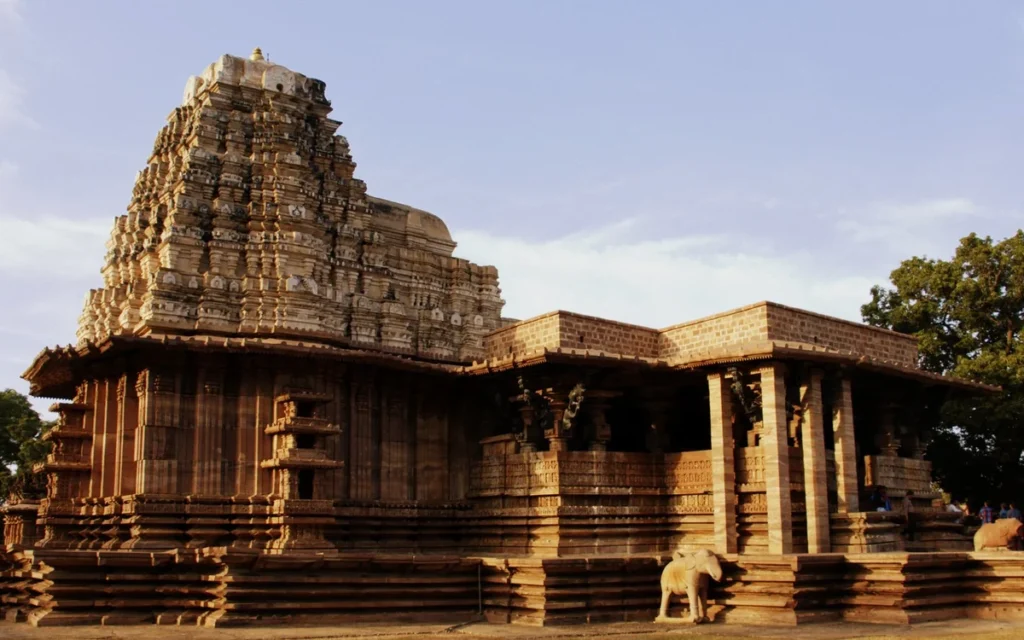
The Ramappa Temple is the finest thing the Kakatiyas built, and one of the most remarkable temples in India. Completed in 1213 near the village of Palampet, about 70 km from Warangal, it is a temple to Shiva that breaks several rules at once: it is the only major Indian temple named not after a god or a king but after its sculptor, Ramappa; its towering superstructure is built of bricks so light they are said to float on water; and it stands on a sandbox foundation engineered to ride out earthquakes. The black-stone bracket figures of dancers and musicians on its exterior are among the greatest sculpture of medieval India. In 2021 UNESCO made it a World Heritage Site — and it remains, as Marco Polo is said to have called it, the brightest star in the galaxy of temples.
The Ramappa (Rudreshwara) Temple, near Palampet about 70 km from Warangal, is a 13th-century Kakatiya temple to Shiva and a UNESCO World Heritage Site (inscribed 2021). It is famous for its lightweight floating-brick tower, its earthquake-resistant sandbox foundation, and its exquisitely carved black-stone bracket figures. Give it a half day, ideally from a base in Warangal, and pair it with the Kakatiya fort and temples there on a wider Telangana trip. October to March is the season.
Why visit Ramappa
Three reasons Ramappa is unmissable — and one honest note on getting there.
A temple named for its sculptor
Almost uniquely in India, the temple is named after the artist who carved it, Ramappa, rather than a deity or a patron — a measure of how extraordinary his work was considered even at the time.
Floating bricks and a sandbox base
The soaring superstructure is built of porous, lightweight bricks said to float on water, reducing the load on the structure, while the whole temple sits on a sand-filled foundation designed to absorb earthquakes — engineering centuries ahead of its time.
Sculpture of the first rank
The black basalt bracket figures on the exterior — dancers, musicians and mythical beings, polished to a shine and carved with astonishing delicacy — are among the finest medieval sculpture in India, and the reason UNESCO recognised the temple in 2021.
When to go
Ramappa is an open temple in the Deccan countryside, so timing is about the heat and the light.
October to March (the season): cool, clear weather ideal for the drive out and for studying the carving in good light. This is the window to plan around.
April to June (hot): fierce Deccan heat with little shade at the temple. If you come, be there early in the morning and keep the visit short.
July to September (monsoon): green and atmospheric, with the Ramappa Lake full and the countryside at its best, though with some rain. A fine time for the setting if not for long hours in the open.
Things to do at Ramappa
The temple is compact and rewards slow looking. Give the bracket figures and the tower proper attention, then the Nandi and the lake.
The temple & its tower
The star-shaped main shrine on its raised platform, crowned by the famous lightweight floating-brick tower. Walk right around it to take in the proportions and the carved base before going in — the whole structure is the achievement.
The bracket figures
The black-stone madanika bracket figures at the eaves — dancers, musicians and mythical beings, polished and carved in exquisite detail — are the glory of Ramappa. A guide or a good eye, and a slow circuit, are well rewarded here.
The Nandi mandapa
In front of the shrine, a large, finely carved Nandi (Shiva’s bull) sits in its own pavilion, alert and beautifully finished — one of the most admired Nandi sculptures of the Kakatiya period.
Ramappa Lake
The large Kakatiya-built tank a short distance from the temple is a reminder that the same dynasty engineered water as ambitiously as it carved stone — a quiet, scenic spot to round off the visit.
The engineering
Take a moment to appreciate what makes Ramappa extraordinary beyond the carving — the floating bricks that lighten the tower and the sandbox foundation built to absorb seismic shocks. It is as much a feat of engineering as of art.
Kakatiya Warangal
Ramappa is the crown of Kakatiya heritage, but the fort, gateways and Thousand Pillar Temple at Warangal complete the picture. Base there and see both over a day or two.
What to eat
There is little at Palampet itself; most visitors eat in Warangal around the trip.
Eat in Warangal
Warangal has the real choice of restaurants — biryani, South Indian and local Telangana thalis. Most people eat there before or after the drive out to Ramappa.
Highway dhabas
Simple dhabas along the route serve thalis, snacks and tea through the day — the realistic answer for a quick bite on the way.
Stalls near the gate
A few small stalls near the temple sell cold drinks, tea and snacks — fine for a pause, not a meal.
Water & sun cover
The temple is open with little shade. Carry water, a hat and sunscreen, especially outside the winter months.
Where to stay
Almost nobody stays at Palampet; Warangal is the base, with Ramappa an easy half day out.
Warangal
The nearest city with a proper choice of mid-range and budget hotels, and the natural base for both Ramappa and the Kakatiya sites in the city. An easy half-day drive out and back.
Near Palampet
A limited number of basic guesthouses and government accommodation near the temple suit travellers who want an early, unhurried morning at Ramappa — arrange ahead; options are few.
Getting there and around
From Warangal: about 70 km, roughly 1.5 hours by road to Palampet. A hired car and driver is by far the easiest, and lets you combine Ramappa with the lakes or the Warangal sites.
From Hyderabad: about 210 km, four to five hours — too far for a comfortable day trip, so base in Warangal and drive out from there.
Getting around: the temple complex is compact and walked on foot. There is no useful public transport to Palampet itself, so a car for the half day is the practical approach.
Ramappa belongs with Warangal, not Hyderabad — it’s too far for a day return from the capital. Base in Warangal and give Ramappa its own half day, ideally in the morning light.
A simple half-day plan
Leave Warangal after breakfast, take Ramappa in the morning light, and be back for lunch.
Ramappa in the morning
Drive from Warangal and be at the temple mid-morning while the light is good on the carving. Circle the shrine and its tower, study the bracket figures and the Nandi, and walk over to Ramappa Lake before driving back to Warangal for a late lunch.
Practical tips that actually help
Come in the morning
Morning light brings out the detail of the black-stone carving and the heat is bearable. Midday is flat and hot on the open platform.
Study the bracket figures
The eaves sculptures are the masterpiece and easy to walk past. Give them time, and hire a guide at the gate or read up beforehand to see what you’re looking at.
Understand the engineering
The floating bricks and sandbox foundation are as remarkable as the carving. Knowing the story before you go transforms the visit.
Base in Warangal
Ramappa is too far from Hyderabad for a day return. Stay in Warangal and give the temple a relaxed half day rather than a rushed dash.
Wear real shoes
You walk on uneven stone and, in parts, remove footwear near the shrine. Closed shoes with socks are the comfortable choice.
Carry water and sun cover
The site is open and shadeless. Water, a hat and sunscreen make a real difference outside the cool months.
Mistakes first-time visitors make
- Trying to visit from Hyderabad in a day. It’s 210 km each way. Base in Warangal, 70 km away, and give Ramappa a proper morning instead.
- Rushing past the carving. The bracket figures are the whole point and are easy to miss. Slow down and look closely, ideally with a guide.
- Visiting at midday. Flat light and open heat. The morning is far better for both the carving and your comfort.
- Skipping Warangal. Ramappa is the crown, but the Warangal fort and Thousand Pillar Temple complete the Kakatiya story. Do both.
Fitting Ramappa into a Telangana trip?
Ramappa and Warangal are the heart of Telangana’s heritage. Tell me your dates and I’ll build them into a route with Hyderabad and the wider state.
Ramappa FAQs
Why is the Ramappa Temple a UNESCO World Heritage Site?
UNESCO inscribed the Ramappa (Rudreshwara) Temple in 2021 for its outstanding Kakatiya architecture and sculpture — in particular its lightweight floating-brick superstructure, its earthquake-resistant sandbox foundation, and its exceptional carved bracket figures. It was India’s newest World Heritage Site at the time.
Where is the Ramappa Temple and how do you reach it?
It is near the village of Palampet in Mulugu district, about 70 km (1.5 hours) from Warangal and around 210 km from Hyderabad. Most visitors base in Warangal and drive out for a half day with a hired car.
What is special about Ramappa Temple?
It is the only major Indian temple named after its sculptor (Ramappa), its tower is built of bricks light enough to float on water, it stands on an earthquake-absorbing sandbox foundation, and its black-stone bracket figures are among the finest medieval sculpture in India.
How long do you need at Ramappa Temple?
About half a day, including the drive from Warangal. An hour or so at the temple covers the shrine, the tower, the bracket figures and the Nandi, with time for the nearby Ramappa Lake.
What is the best time to visit Ramappa Temple?
October to March, when the weather is cool and the light is good for the carving. April to June is very hot with little shade, and July to September is the green but rainy monsoon.
Can you combine Ramappa with Warangal?
Yes, and you should — they are the two halves of the Kakatiya story. Base in Warangal, see the fort, gateways and Thousand Pillar Temple there, and give Ramappa, 70 km east, its own half day.
Related guides
Keep planning your Telangana trip with these:
Telangana Travel Guide
Hyderabad, the Kakatiya temples, the dams and the Deccan hills — how to put a Telangana trip together.
Warangal
The Kakatiya capital, its fort and the Thousand Pillar Temple — the base for a Ramappa visit and the rest of the story.
Ramappa Temple photo by SukuPhotography, CC BY-SA 4.0, via Wikimedia Commons; cropped and converted to WebP.
Written by Ashvinee Nagle
I travel India slowly and write it down honestly - practical guides and real itineraries from someone who lives here.
About Ashvinee →Plan your India trip with us
Get one short, honest India travel guide a week — plus a free 7-day Rajasthan itinerary to start.
Free. Unsubscribe any time.