
Mainpat: A Grassland Plateau in the North, and the Tibetan Settlement That Has Been There Sixty Years
A practical guide to Mainpat in Surguja — what the plateau actually is, the waterfalls and the bouncing ground at Jaljali, the monastery, and an honest answer on whether it is worth the long drive north.
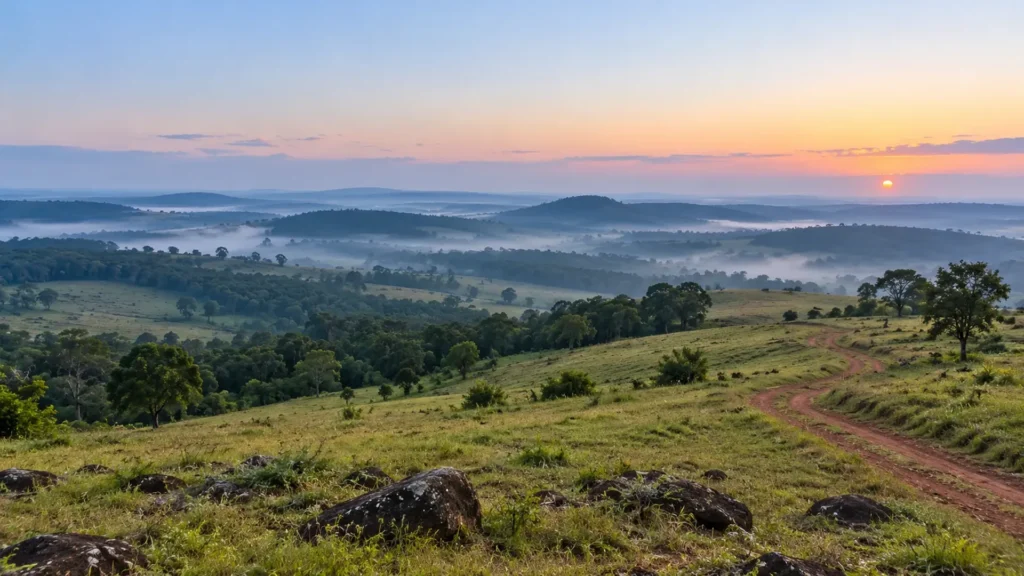
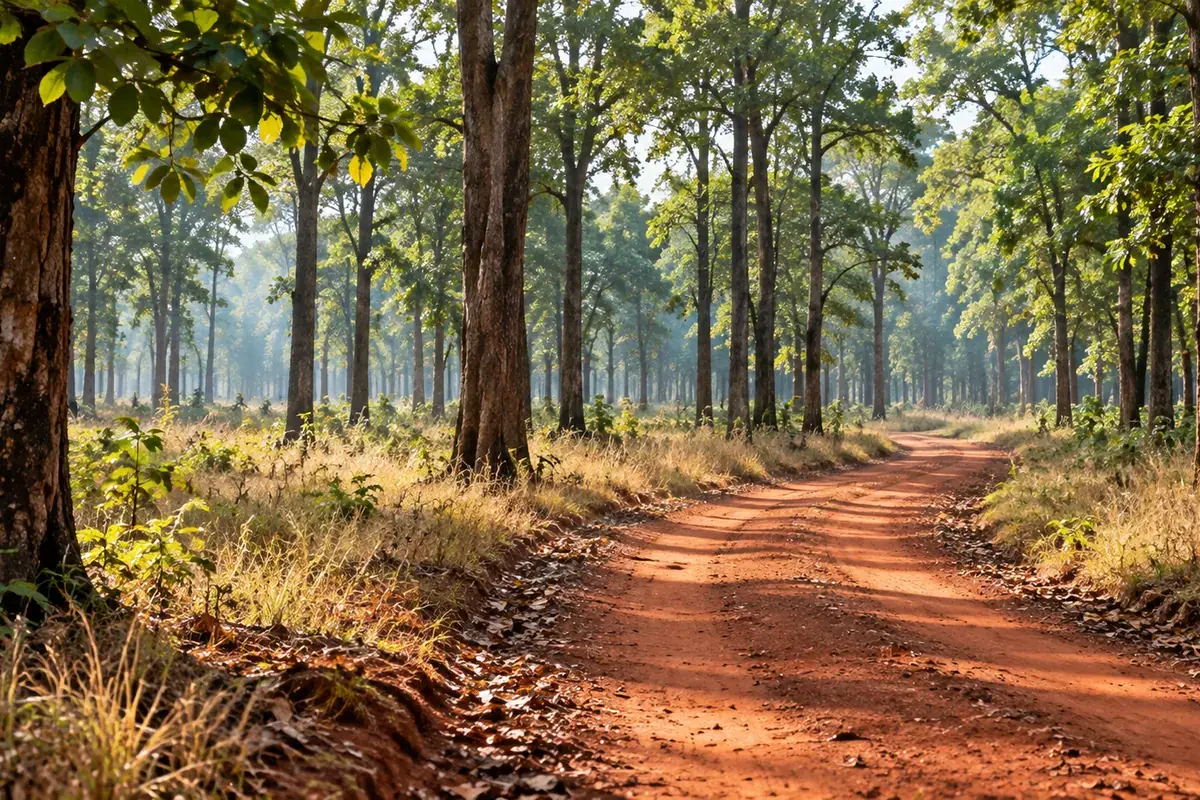
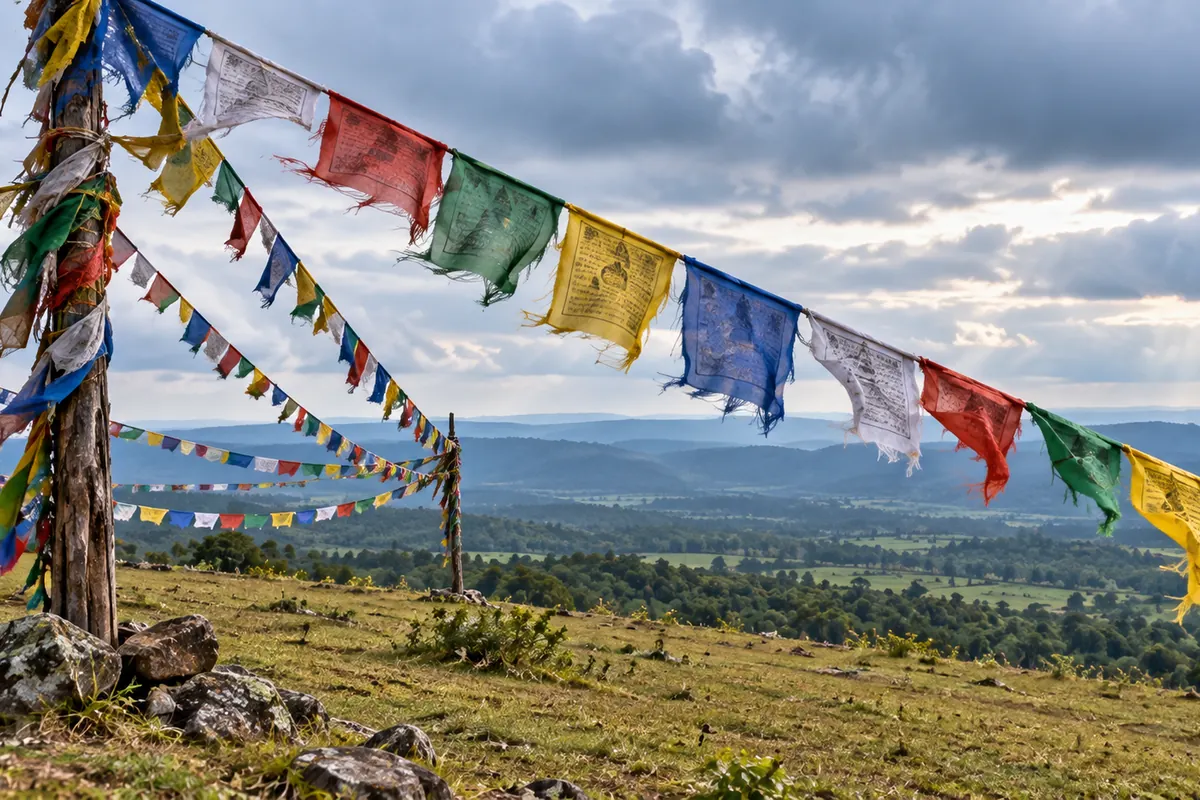
Mainpat is the part of Chhattisgarh that does not look like the rest of it. A rolling grassland plateau in Surguja district, up in the far north of the state, cool enough that people from the plains come here to escape the heat — which is why it collects nicknames it does not really deserve. It is called the Shimla of Chhattisgarh, which sets up the wrong expectation entirely, and Mini Tibet, which is closer to something real: a Tibetan refugee settlement was established here in the early 1960s and its monastery, prayer flags and community are still part of the place. What you actually get is open grassland, patches of sal forest, red earth tracks and a lot of sky.
Mainpat is a plateau in Surguja district in northern Chhattisgarh, roughly 75 km from Ambikapur and a long way from everything else in the state. The draws are cool air, open grassland, a handful of waterfalls and viewpoints, the oddity of Jaljali — ground that gives underfoot — and the Tibetan settlement founded here in the 1960s. One to two days. October to March, though the monsoon is when the plateau looks best. Only add it to a Chhattisgarh trip if you genuinely have the days; it is nowhere near Bastar.
Why visit Mainpat
Three honest reasons to go — and one very good reason not to.
Landscape unlike the rest of the state
Open rolling grassland at altitude, with mist in the folds at dawn and sal forest in patches. Chhattisgarh is mostly dense forest and river plain; this is neither, and the contrast is the point.
A settlement with real history
Tibetan families were resettled here in the early 1960s and the community has been on the plateau ever since. The monastery, the flags and the food are not a tourist installation — they are what sixty years of living somewhere looks like.
Almost no visitors
Even by Chhattisgarh standards Mainpat is quiet. Outside weekends and the summer escape season you will have the viewpoints and the tracks largely to yourself.
When to go
Mainpat sits high enough that the seasons behave differently here from the rest of Chhattisgarh. It is also far enough north that the drive is a factor in every decision.
October to March (the reliable window): clear, dry and genuinely cold at night in December and January — bring a jacket, which is not advice you need anywhere else in this state. Best light, firmest tracks, easiest driving.
July to September (the beautiful one): the plateau is green, the waterfalls run properly and mist sits in the valleys. It is when Mainpat looks its best and when the roads are at their worst. A trade-off worth making if you do not mind slow, wet driving.
April to June (why people come): the plains are brutal and the plateau is noticeably cooler, which is the original reason this became a getaway. Pleasant enough, but the grass is burnt off and the waterfalls are thin.
Things to do at Mainpat
Everything here is spread out across the plateau and none of it takes long on its own. The driving between is a real part of the day.
Tiger Point
The best known of the plateau’s waterfalls, dropping off the escarpment into forest below. Strongest in and just after the monsoon and reduced to a trickle by late spring, so set your expectations by the season you are in.
Jaljali
A patch of ground that visibly gives and springs back when you jump on it — a boggy sub-surface under a firm turf mat. It is a genuine curiosity and it takes ten minutes. Locals will show you where to stand.
The Tibetan settlement and monastery
Prayer flags, a monastery and a settlement that has been here since the 1960s. Visit quietly and as a guest rather than as a sightseer — this is somebody’s home and place of worship, not an attraction laid on.
Mehta Point at sunset
An escarpment viewpoint looking out over the plains below the plateau. Go for sunset; the drop-off and the haze over the lowlands do the work.
Ulta Pani
A stretch of road where water appears to run uphill. It is an optical illusion produced by the surrounding slope, and knowing that does not stop it being fun to watch. Ten minutes, on the way to somewhere else.
Dawn on the grassland
Get out before sunrise. Mist sits in the folds of the plateau, the light comes across the grass sideways, and there is nobody about. This is the thing people remember, and it is not on any signboard.
What to eat
Simple local food, plus the one genuinely distinctive thing on the plateau: Tibetan cooking that has been here sixty years.
Tibetan food
Momos, thukpa and butter tea, made by a community that has been cooking it on this plateau for sixty years. Small, informal places rather than restaurants — ask locally.
Chhattisgarhi staples
Rice-led Chhattisgarhi cooking is easier to find in Ambikapur than on the plateau itself. Ask for chila or faraa rather than the default north Indian menu.
Poha and chai
The standard, and very welcome at altitude on a cold morning before a dawn drive out onto the grassland.
Carry supplies
Sights are spread out and shops are few. Stock up in Ambikapur or at your accommodation before spending a day driving between viewpoints.
Where to stay
Limited and simple either way. Staying on the plateau buys you dawn; staying in Ambikapur buys you comfort.
On the plateau
State tourism accommodation and a small number of simple resorts and homestays. Basic, and the only way to be out on the grassland at first light — which is the best hour here by a distance. Book ahead; there is not much of it.
Ambikapur
The district town, with ordinary hotels, reliable food and ATMs. Fine as a base, but it means a two-hour round trip and you will not see the plateau early or late.
Getting there and around
From Ambikapur: roughly 75 km, around two hours up onto the plateau. Ambikapur is the nearest town of any size and the practical gateway.
From Raipur: a very long way — in the region of 350 to 400 km north, a full day’s drive. This is the single biggest argument against including Mainpat in a short trip.
Getting around: your own vehicle, without exception. The sights are spread across the plateau with several kilometres between them, public transport is minimal, and the best of the place is the driving between points rather than the points themselves.
Mainpat is in the far north and Bastar is in the far south. They are not on the same trip unless you have ten days or more. If you have a week, spend it in the south and leave the plateau for another time.
A simple 2-day plan
One afternoon for the viewpoints, one dawn for the grassland. That is the shape.
Arrive, and the plateau in the afternoon
Drive up from Ambikapur after breakfast. Settle in, then take the afternoon slowly: Jaljali, Ulta Pani and the Tibetan settlement, finishing at Mehta Point for sunset over the plains.
Dawn on the grassland, then Tiger Point
Be out before sunrise with mist in the folds — the best hour on the plateau and the reason to have slept up here. Breakfast, then Tiger Point while the light is still low, and drive back down to Ambikapur by afternoon.
Practical tips that actually help
Bring a jacket
December and January nights are genuinely cold up here. This is the one place in Chhattisgarh where that is true.
Sleep on the plateau
Dawn is the whole thing. Staying in Ambikapur means a two-hour drive and arriving after the light has gone flat.
Treat the settlement as a home
It is a living community and a working monastery, not an exhibit. Ask before photographing people, and buy something if you are visiting the shops.
Set waterfall expectations by season
Tiger Point is dramatic after the monsoon and thin by April. If the falls are your reason for coming, come in the right half of the year.
You need your own vehicle
Sights are kilometres apart and buses barely serve them. Arrange a car in Ambikapur before you come up.
Check the roads in the monsoon
The plateau is at its most beautiful in the rains and its least drivable. Ask locally before committing to the ascent.
Mistakes first-time visitors make
- Expecting a hill station. There is no mall road, no colonial architecture and no promenade. It is open grassland with a handful of viewpoints, and it is better for it.
- Squeezing it into a Bastar trip. They are at opposite ends of a large state. Adding Mainpat to a week in the south means two full days in a car and very little else.
- Day-tripping from Ambikapur. You arrive mid-morning and leave mid-afternoon, missing both dawn and sunset — which are the two hours worth being here for.
- Coming in April for the waterfalls. The cool air is real in the hot months; the water is not. Those are different reasons to visit.
Not sure Mainpat fits your trip?
Honestly, for most first visits to Chhattisgarh it does not — the south is the stronger week. Tell me your dates and how long you have and I will tell you straight whether the plateau is worth the drive north.
Mainpat FAQs
What is the best time to visit Mainpat?
October to March for reliable weather, clear light and easy driving, with genuinely cold nights in December and January. July to September is when the plateau looks best, green with the waterfalls running, but the roads are slow and wet.
Why is Mainpat called Mini Tibet?
Because a Tibetan refugee settlement was established on the plateau in the early 1960s and the community, its monastery and its prayer flags are still there. It is a real settlement with sixty years of history, not a themed attraction.
How far is Mainpat from Ambikapur?
About 75 km, roughly two hours up onto the plateau. Ambikapur is the nearest town of any size and the practical gateway; Raipur is a full day’s drive further south.
Is Mainpat worth visiting?
If you have ten days or more in Chhattisgarh, or you are already in the north of the state, yes — it is quiet, cool and unlike anywhere else in the region. On a week-long first trip it is not, because Bastar in the far south is the stronger use of the same days.
What is Jaljali at Mainpat?
A patch of ground that gives and springs back when you jump on it, caused by a boggy layer beneath a firm mat of turf. It takes about ten minutes to see and it is one of the few genuinely odd things on the plateau.
Related guides
Keep planning your Chhattisgarh trip with these:
Chhattisgarh Travel Guide
Waterfalls, limestone caves, Bastar’s weekly markets and the brick temples of Sirpur — how to put a Chhattisgarh trip together.
Chitrakote Falls
India’s widest waterfall, in Bastar. If you only have a week in Chhattisgarh, this is where it should go.
Written by Ashvinee Nagle
I travel India slowly and write it down honestly - practical guides and real itineraries from someone who lives here.
About Ashvinee →Plan your India trip with us
Get one short, honest India travel guide a week — plus a free 7-day Rajasthan itinerary to start.
Free. Unsubscribe any time.