
Meghalaya — Living root bridges, waterfalls and the famously clear Umngot River
Cloud-wrapped plateaus, root bridges grown by hand, waterfalls that pour off the cliffs, and a river so clear the boats seem to float. Here’s everything you need to plan it well.
Meghalaya, at a glance
Meghalaya — “the abode of clouds” — is a high, green plateau in India’s Northeast, south of Assam and hard against the border with Bangladesh. It’s home to the Khasi, Jaintia and Garo peoples, and its villages are known for how well they look after their land. Most people arrive through Guwahati and base themselves in Shillong; from there the state splits into a few easy trips — Sohra for waterfalls, caves and the root bridges, the border villages for Mawlynnong and the clear Umngot at Dawki, and the Jaintia Hills to the east for something quieter.
Two things shape every Meghalaya plan. Sohra and Mawsynram are among the wettest places on earth, so the season changes everything — from what the waterfalls look like to whether the river at Dawki is clear. And while the distances look short, the hill roads are slow, so give each area its own day.
Which season? October to April for easier walking to the root bridges, and October to May for Dawki — with the clearest Umngot water most reliable in November–February. June to September for the fullest waterfalls at Sohra — with heavy rain, slippery paths and slower roads.
Permits checked: 27 October 2026, against Meghalaya Tourism’s planning FAQ. Rules change — confirm before you travel, especially near the Bangladesh border.
Six places that make a classic Meghalaya trip
You can see the highlights in under a week. Pick four or five of these, and plan around the weather rather than against it.
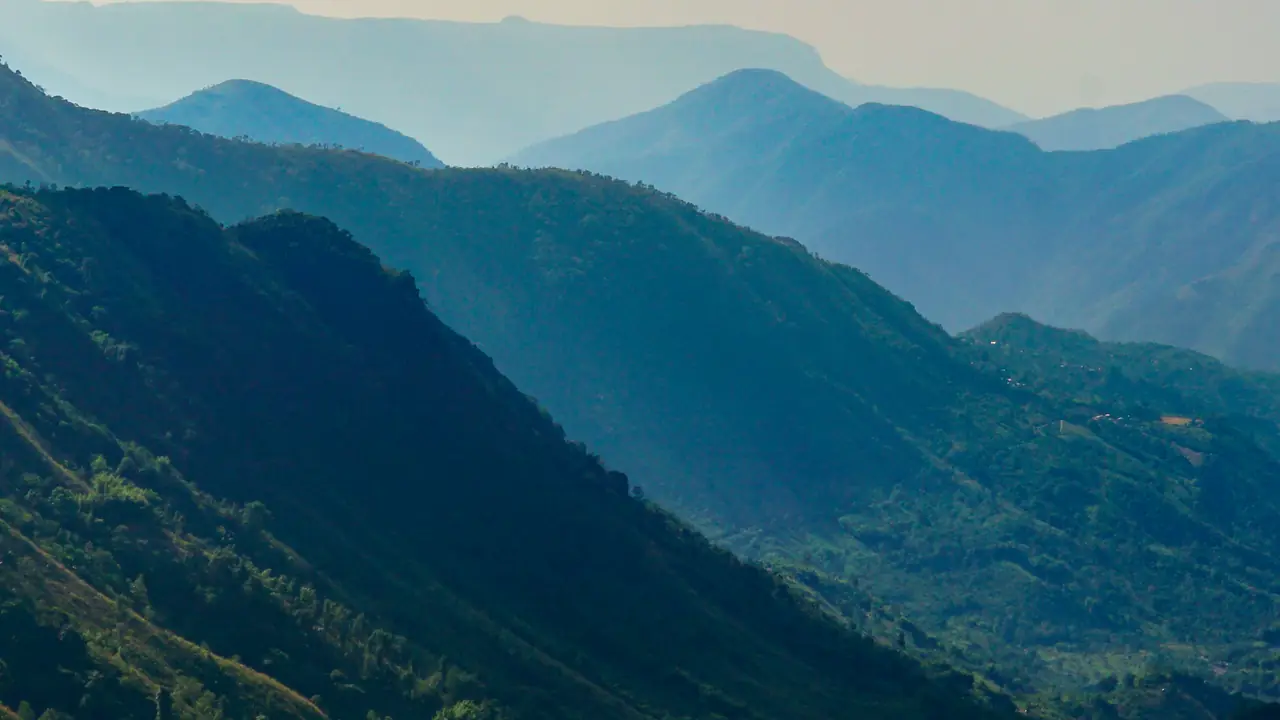
Shillong — The Hill Capital
Meghalaya’s capital sits at about 1,500 metres among pine-covered hills, and it’s where most trips start and end. Police Bazaar is the busy centre for food and shopping; Ward’s Lake, the cathedral and the viewpoints at Shillong Peak and Laitlum are easy half-days. It also has one of India’s liveliest music scenes — look for live gigs in the cafés.
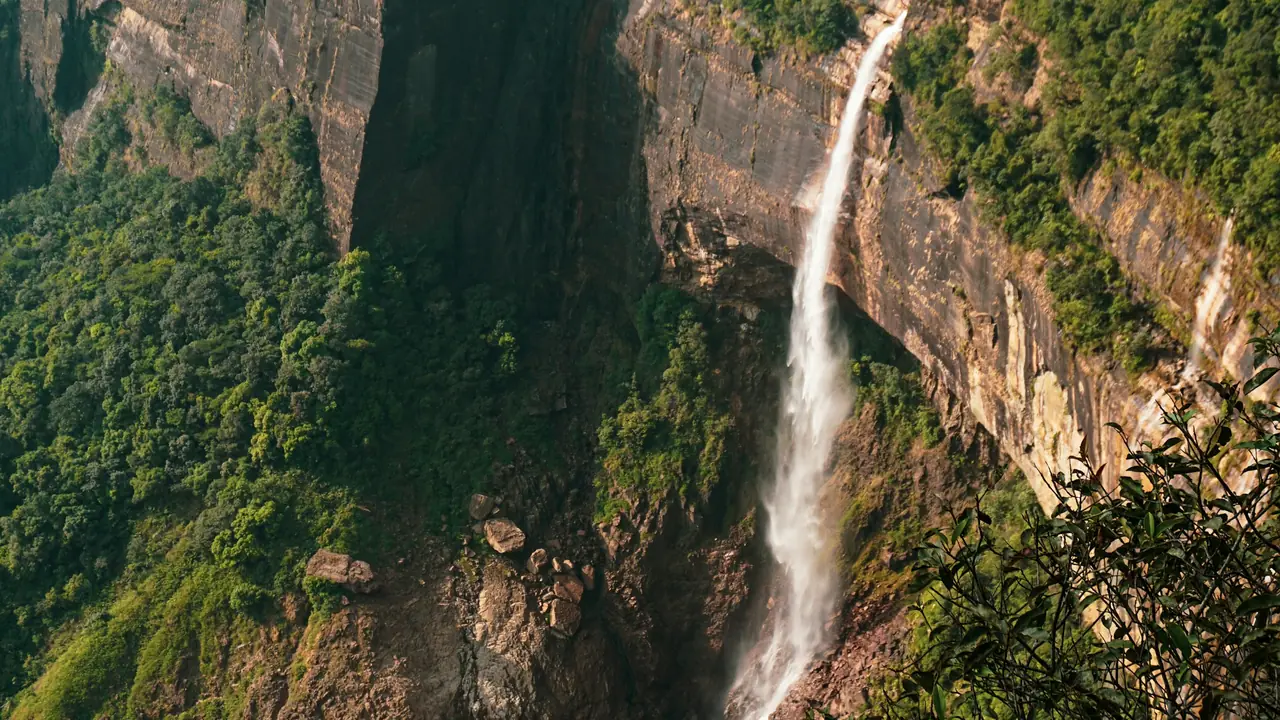
Sohra (Cherrapunji) — Waterfalls & Cloud
About 55 km from Shillong, Sohra sits on the edge of a plateau above the plains of Bangladesh. Nohkalikai and the Seven Sisters Falls pour off the cliffs, Mawsmai Cave is a short lit walk through limestone, and the cloud can roll in and out within minutes. It’s also the base for the root bridges below.
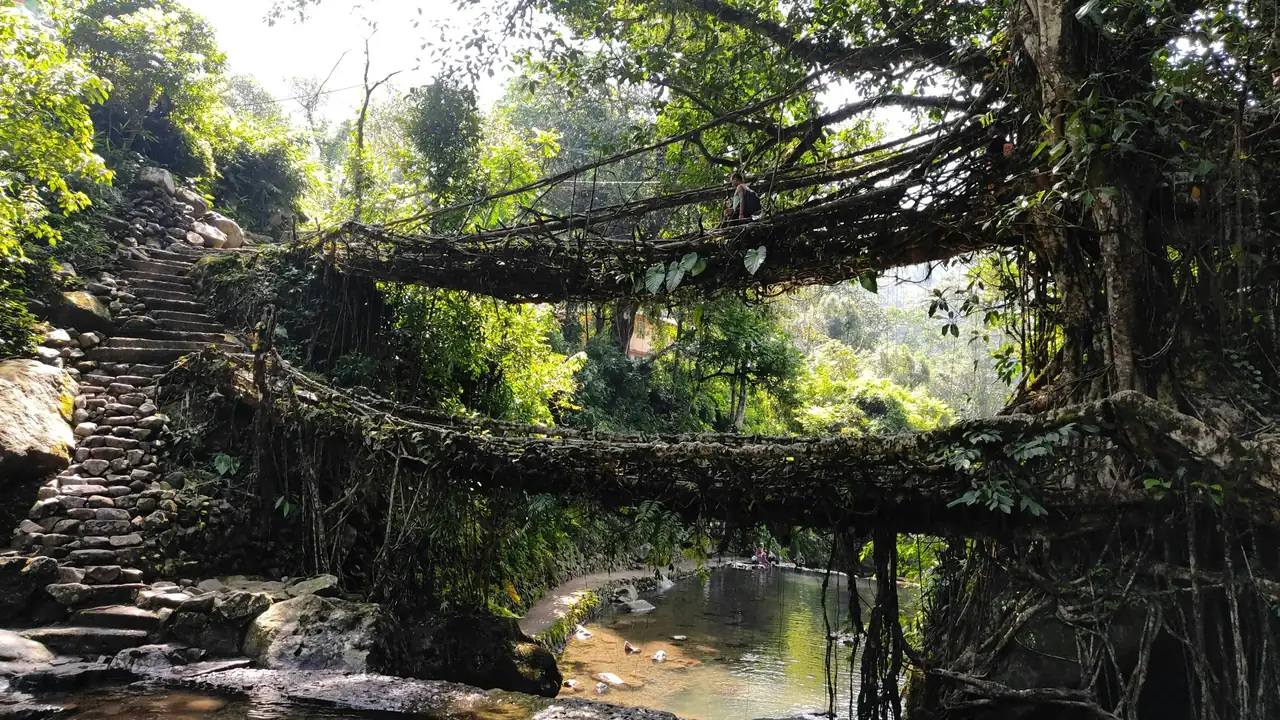
Nongriat — The Living Root Bridges
The double-decker living root bridge at Nongriat is grown, not built: Khasi villagers have trained the roots of rubber fig trees across the stream for generations. Getting there means roughly 3,000–3,500 steps down from Tyrna and the same back up — a full, sweaty day. Stay overnight in a village homestay if you want to do it slowly.
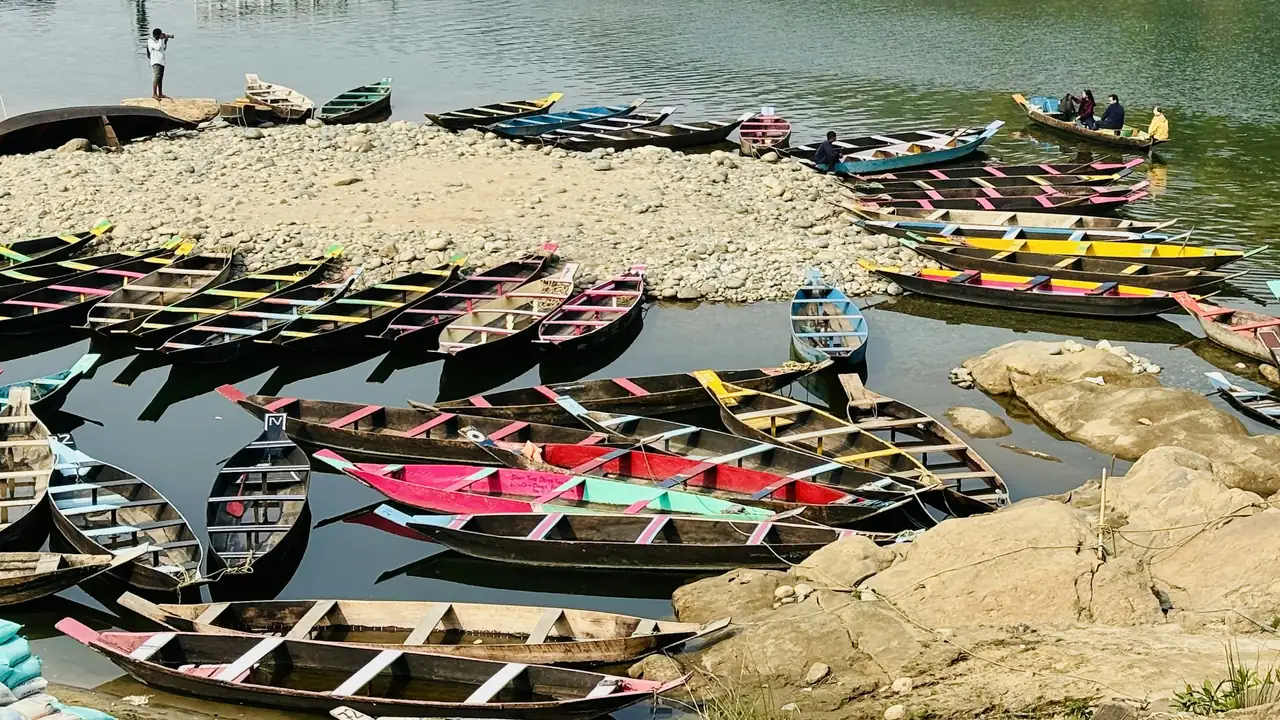
Dawki & Shnongpdeng — The Clear River
On the Bangladesh border, the Umngot River is famous for water clear enough that boats seem to float on air — most reliably in the dry winter months, November to February, and only after a spell without rain. Meghalaya Tourism recommends October to May for visiting Dawki. In the monsoon it runs high and brown and boating may be suspended. Shnongpdeng, just upstream, is quieter, with riverside camps and a suspension bridge.
Mawlynnong — The Tidy Village
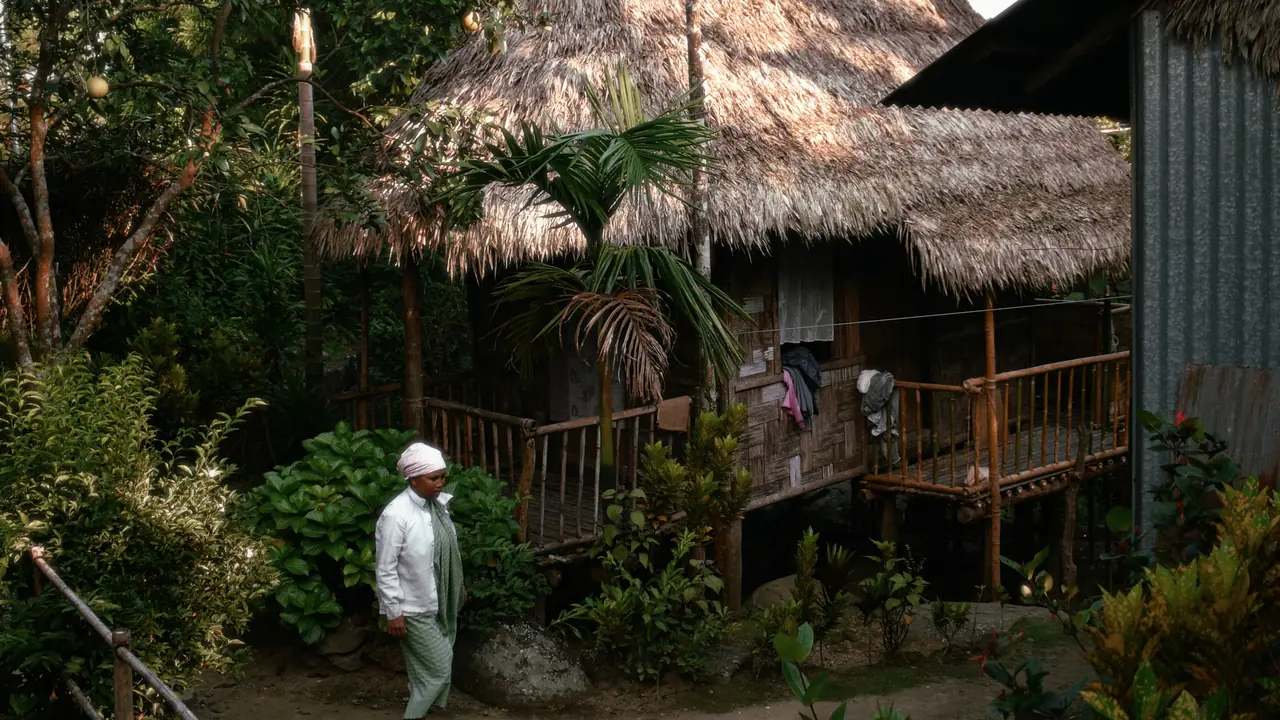
A small Khasi village known for its spotless lanes, bamboo bins and flower-lined paths, with a living root bridge at nearby Riwai and a bamboo “sky view” platform. It gets busy by late morning, so go early or stay the night, and pay the small village fees — they keep the place the way it is.
Jowai & the Jaintia Hills — The Quiet East
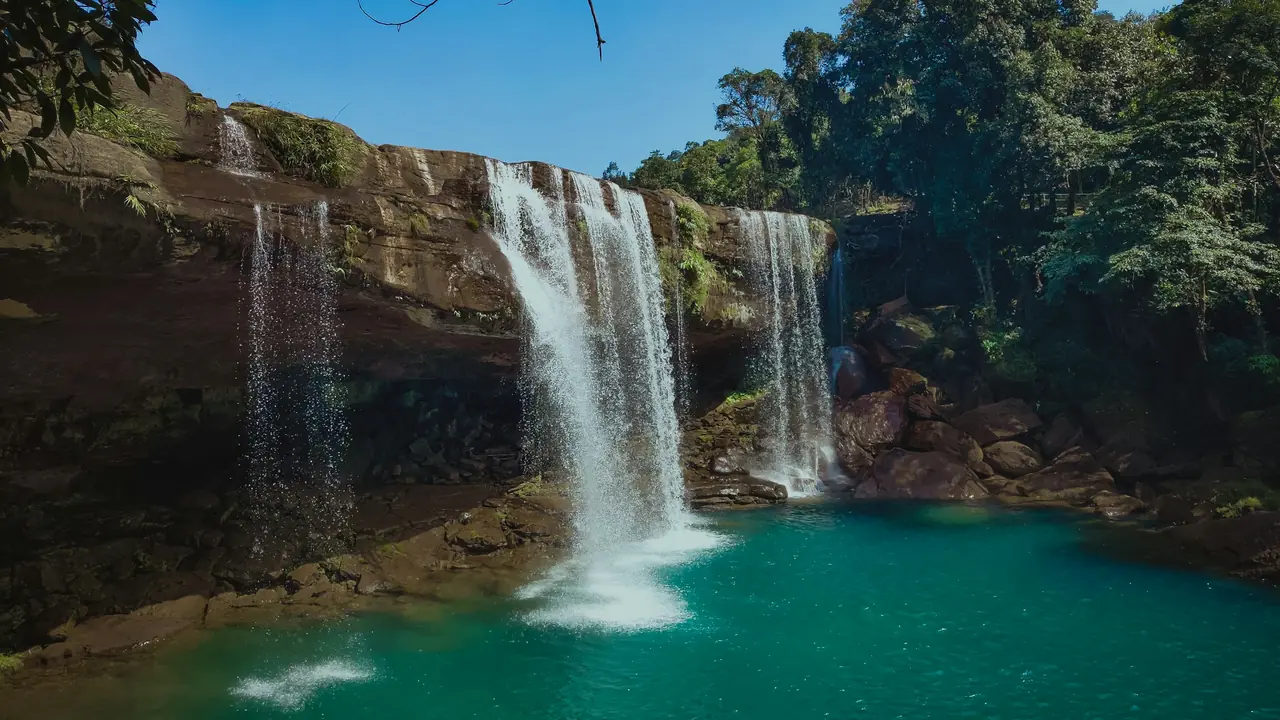
East of Shillong, the Jaintia Hills see far fewer visitors. Krang Suri Falls has a blue pool you can swim in during the dry season, and Nartiang has one of the largest groups of standing stone monoliths in the region. It’s an easy add-on for a slower trip, or on the way to Assam.
Pick the route that fits your dates
Meghalaya works at three lengths. Guwahati is the gateway for all of them; build in a buffer day in the monsoon.
Shillong & Sohra
Day 1 arrive Guwahati, drive to Shillong · Day 2 Shillong and Laitlum · Day 3 Sohra’s falls and caves · Day 4 back to Guwahati. A short first look; it doesn’t leave time for the root-bridge trek.
The classic loop
Days 1–2 Shillong · Day 3 to Sohra · Day 4 Nongriat root bridges (a full day of steps — or stay the night in the village) · Day 5 Mawlynnong and Dawki, with a night at Shnongpdeng · Day 6 back to Guwahati, about 5–6 hours. In the monsoon, add a buffer day: landslides and fog slow the roads.
Meghalaya, the Jaintia Hills & Kaziranga
Days 1–5 as in the six-day loop, ending at Dawki · Days 6–7 Jowai and the Jaintia Hills (Krang Suri, Nartiang) · Day 8 drive to Kaziranga, about 6–7 hours · Day 9 jeep safari in Kaziranga · Day 10 a second safari or tea country · Day 11 to Guwahati, about 4–5 hours. Drop the Jaintia Hills for a 9-day version — see our Assam guide for Kaziranga.
Six things worth building the trip around
- Walk down to the double-decker root bridge at Nongriat — start early, and save energy for the climb back up.
- Take a boat on the Umngot at Dawki or Shnongpdeng in the dry winter months (November–February), when the water is at its clearest.
- Watch the cloud pour over the cliffs at Laitlum Canyons or Nohkalikai Falls — pick a clear spell; mornings can be foggy, and Laitlum is often at its best at sunset.
- Walk through the Mawphlang sacred forest with a local Khasi guide.
- Spend an evening in Shillong for live music and a plate of jadoh in a local eatery.
- Stay a night in a village homestay — Nongriat, Mawlynnong or Shnongpdeng — once the day visitors leave.
Where to stay
Shillong has the widest choice, from heritage-style hotels to simple guesthouses; staying near Police Bazaar or Laitumkhrah keeps you close to food. Sohra has a handful of resorts on the cliff edge and simple guesthouses in town. For the villages — Nongriat, Mawlynnong, Shnongpdeng — homestays and riverside camps are basic but the most memorable way to stay.
How to get around
Fly or take the train to Guwahati, then drive about 3 hours to Shillong by taxi or shared Sumo. Shillong’s own airport at Umroi has limited flights, so most people use Guwahati. Within Meghalaya, a car with a local driver is by far the easiest way to link Sohra, Dawki and the villages; shared taxis run between the main towns but not to the viewpoints.
What to eat
Khasi food is pork-heavy, smoky and full of black sesame and local herbs. Try these at least once:
- Jadoh (rice cooked with pork)
- Dohneiiong (pork in black sesame)
- Doh khlieh (pork salad)
- Tungrymbai (fermented soybean)
- Pumaloi (steamed rice cake)
- Pukhlein (sweet rice fritter)
- Momos & thukpa
- Local tea
Small things that make a big difference
Do this
- Start early — the light, the views and the roads are all better before the afternoon cloud and traffic.
- Carry cash for village entry fees, parking and boat rides; card payments are rare outside Shillong.
- Wear shoes with good grip — paths to the root bridges and falls are wet and slippery much of the year.
- Ask before photographing people, and keep to marked paths in sacred forests and villages.
- Plan around Sundays — many shops and some sights close or open late in this largely Christian state.
Avoid this
- Don’t underestimate the Nongriat steps — the climb back up is hard in heat or humidity.
- Don’t expect clear water at Dawki in the monsoon — it’s a dry-season sight, and boating may stop after heavy rain.
- Don’t pack Shillong, Sohra and Dawki into one day — the distances are short, but the roads aren’t.
- Don’t leave litter in the villages — Mawlynnong and others depend on visitors respecting how they look after them.
Common Meghalaya questions
What is the best time to visit Meghalaya?
October to April is the most reliable: dry, mostly clear, and the season for Dawki (October to May; the clearest water is most reliable in November–February). March and April can be hazy. June to September is the monsoon — the waterfalls are at their most dramatic, but expect heavy rain, fog, leeches and road delays.
How many days are enough for Meghalaya?
Four days cover Shillong and Sohra. Six days add the Nongriat root bridges, Mawlynnong and Dawki. Eight add the Jaintia Hills, and 10–11 let you continue to Kaziranga in Assam.
Do I need a permit to visit Meghalaya?
Indian visitors don’t need a permit for Meghalaya — just carry a government photo ID. Foreign visitors don’t need an Inner Line Permit, but must register on arrival (hotels usually handle this) and may need additional permission for some areas near the Bangladesh border. See Meghalaya Tourism’s planning FAQ.
How do I reach Meghalaya?
Fly or take a train to Guwahati in Assam, then drive about 3 hours to Shillong by taxi or shared Sumo. Shillong airport at Umroi has limited flights.
How hard is the walk to the double-decker root bridge?
It’s roughly 3,000–3,500 steps down from Tyrna to Nongriat and the same back up — fine for most reasonably fit walkers, but hard on knees and in humid weather. Allow a full day, carry water, or stay overnight in Nongriat to split it.
Plan your Meghalaya trip with Travel India
Whether you want a short Shillong-and-Sohra break, the root-bridge trek with a night in the village, or a slower loop through the Jaintia Hills and on to Assam, Meghalaya can be planned around your dates, budget and travel style.
Photos via Unsplash: hero — Tshewe Rhakho, Shillong — MD Yousof Alam, Sohra — Ashwina kumar, Nongriat — Abhishek Tirkey, Dawki — Shraddha Wasnik, Mawlynnong — Mrinmoy, Jaintia Hills — Arghya Mondal.
Written by Ashvinee Nagle
I travel India slowly and write it down honestly - practical guides and real itineraries from someone who lives here.
About Ashvinee →