
Assam — Land of the Mighty Brahmaputra
Green tea gardens, one-horned rhinos, and the widest river you’ll ever cross. Assam is India’s Northeast at its most accessible — wildlife, living monasteries on a river island, Ahom-era temples, and a food culture unlike anywhere else in the country.
Assam at a glance
Assam sits in India’s far northeast, threaded end to end by the Brahmaputra — one of the world’s great rivers. Most trips start in Guwahati, the state’s gateway city, then fan out to Kaziranga’s grasslands, the tea country around Jorhat, and the river island of Majuli. Distances feel long on the map but the classic circuit is easy to string together, and the November-to-April window gives you clear skies, open safari gates, and the best of the cool season.
Six places that make a classic Assam trip
A rhino reserve, a river island, tea estates, and the old Ahom capital — string these together and you’ve seen the best of the state.
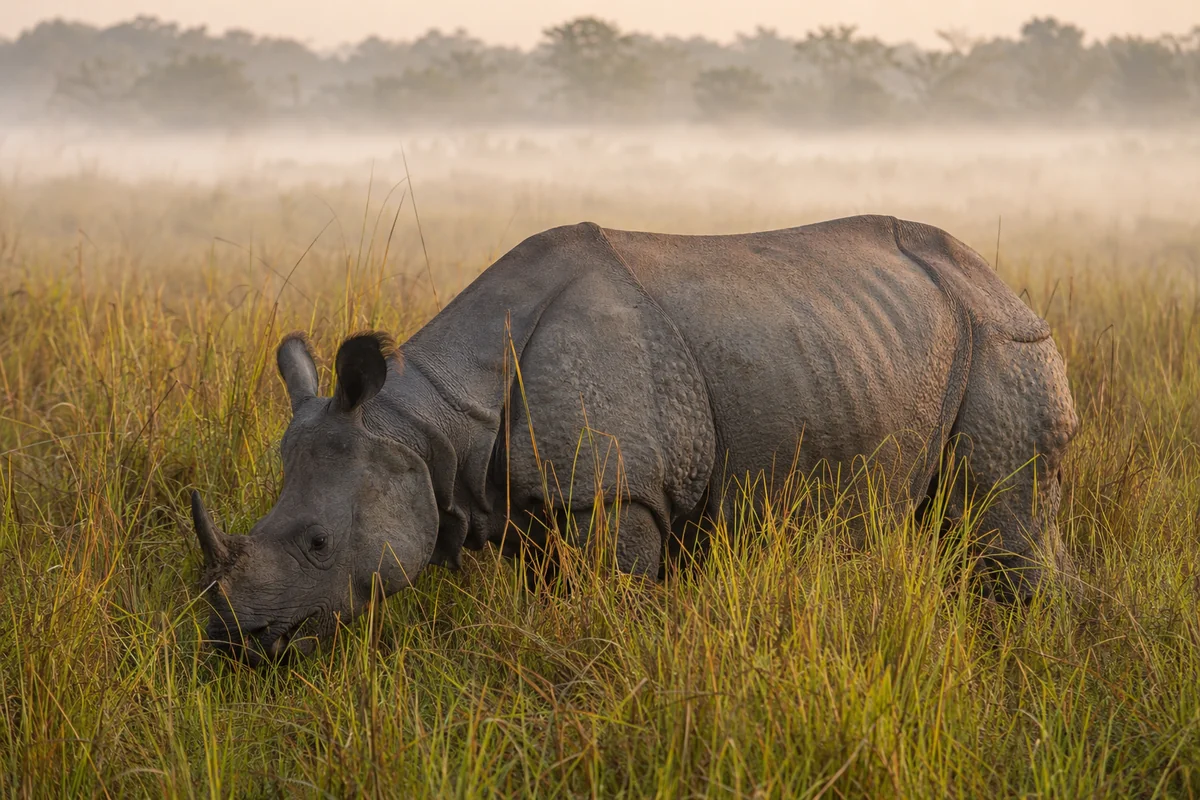
Kaziranga
Two-thirds of the world’s one-horned rhinos, plus elephants, wild buffalo and tigers, across flooded grassland.
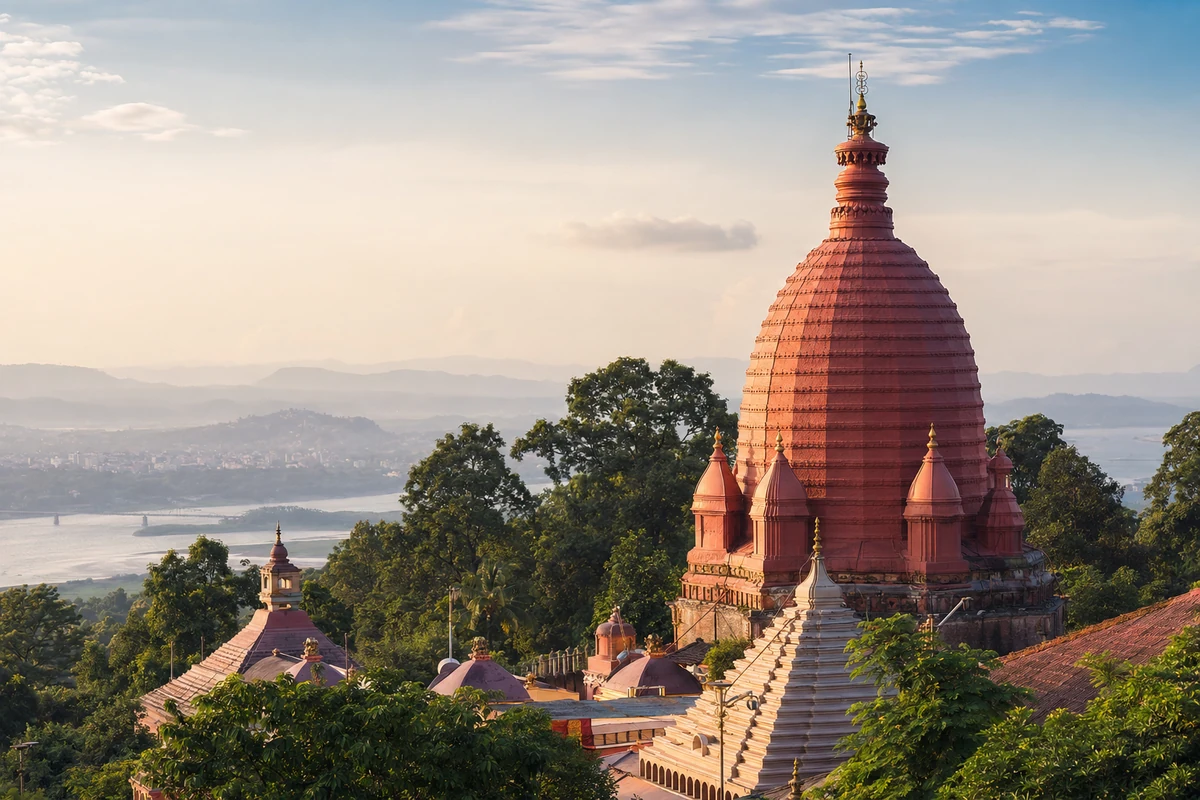
Guwahati
The river gateway. Hilltop Kamakhya temple, Brahmaputra cruises, and every onward road and flight.
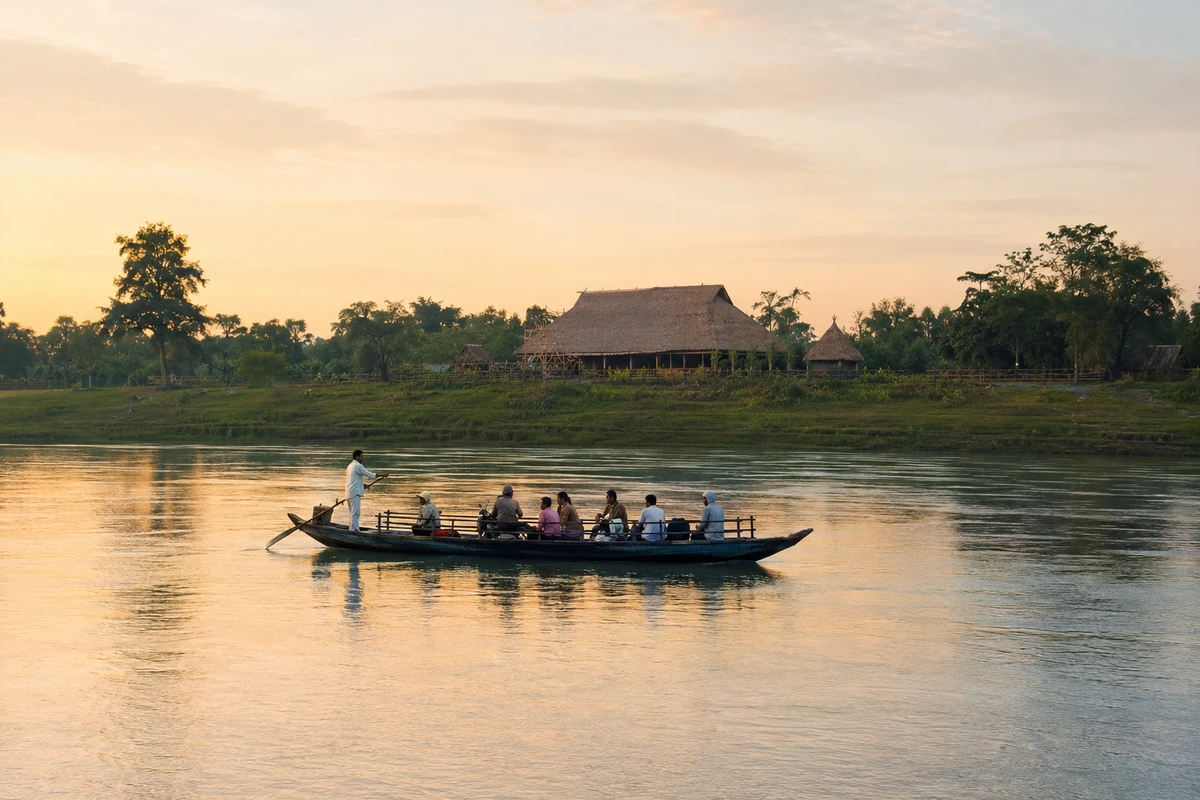
Majuli
The world’s largest river island — Vaishnavite monasteries (satras), mask-makers, and slow ferry crossings.
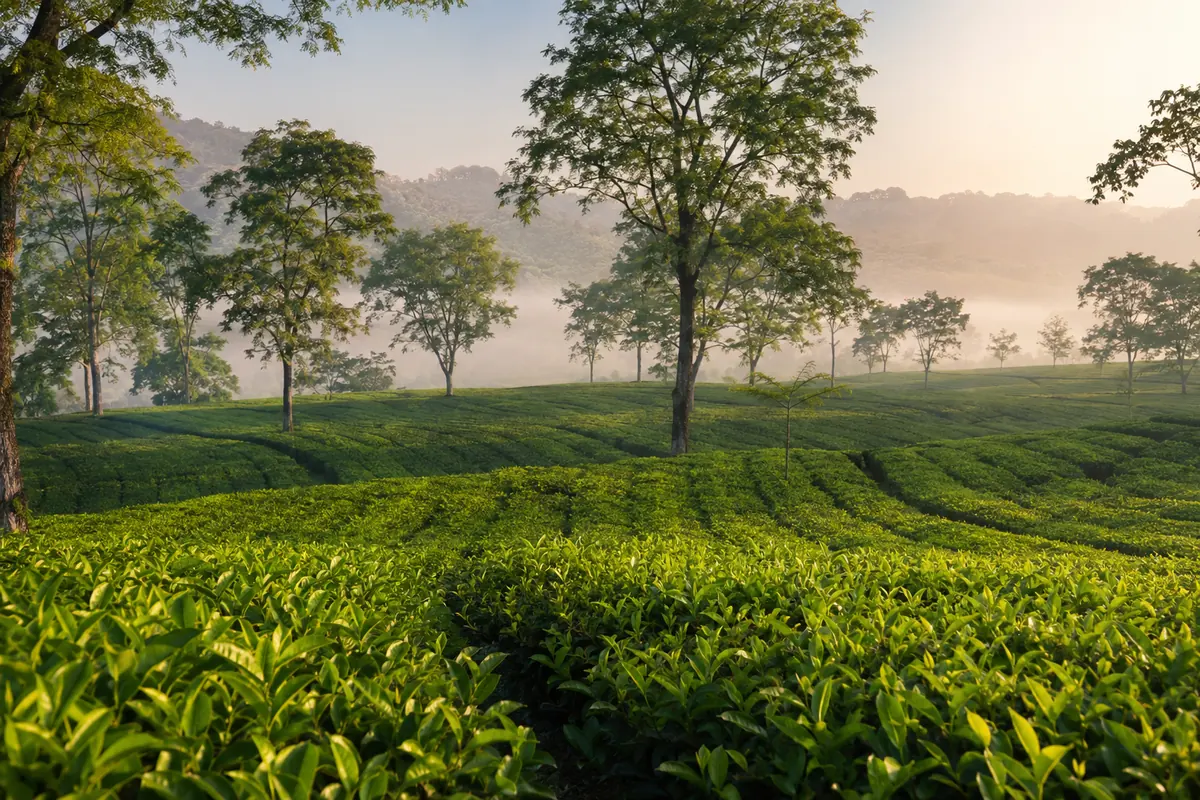
Jorhat
Assam’s tea capital and the jumping-off point for Majuli. Colonial-era estates and bungalow stays.
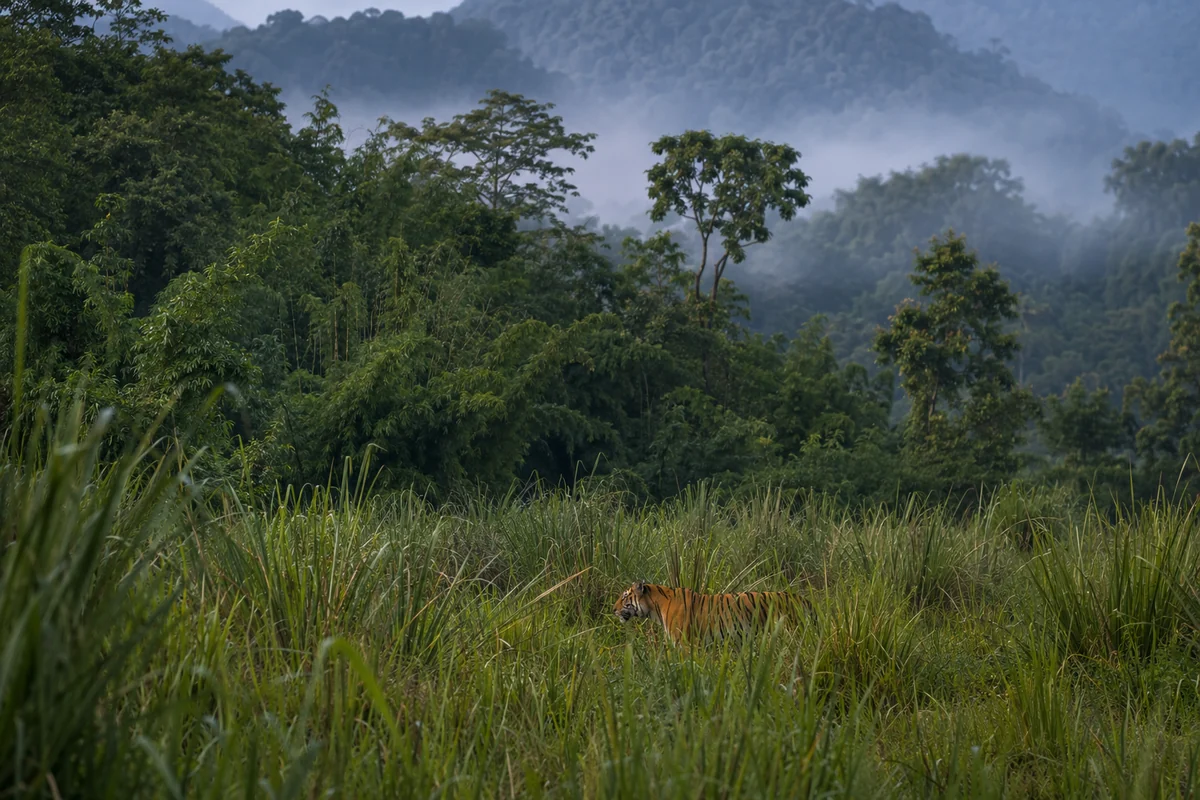
Manas
A UNESCO tiger reserve on the Bhutan border — wilder and quieter than Kaziranga, with golden langurs.
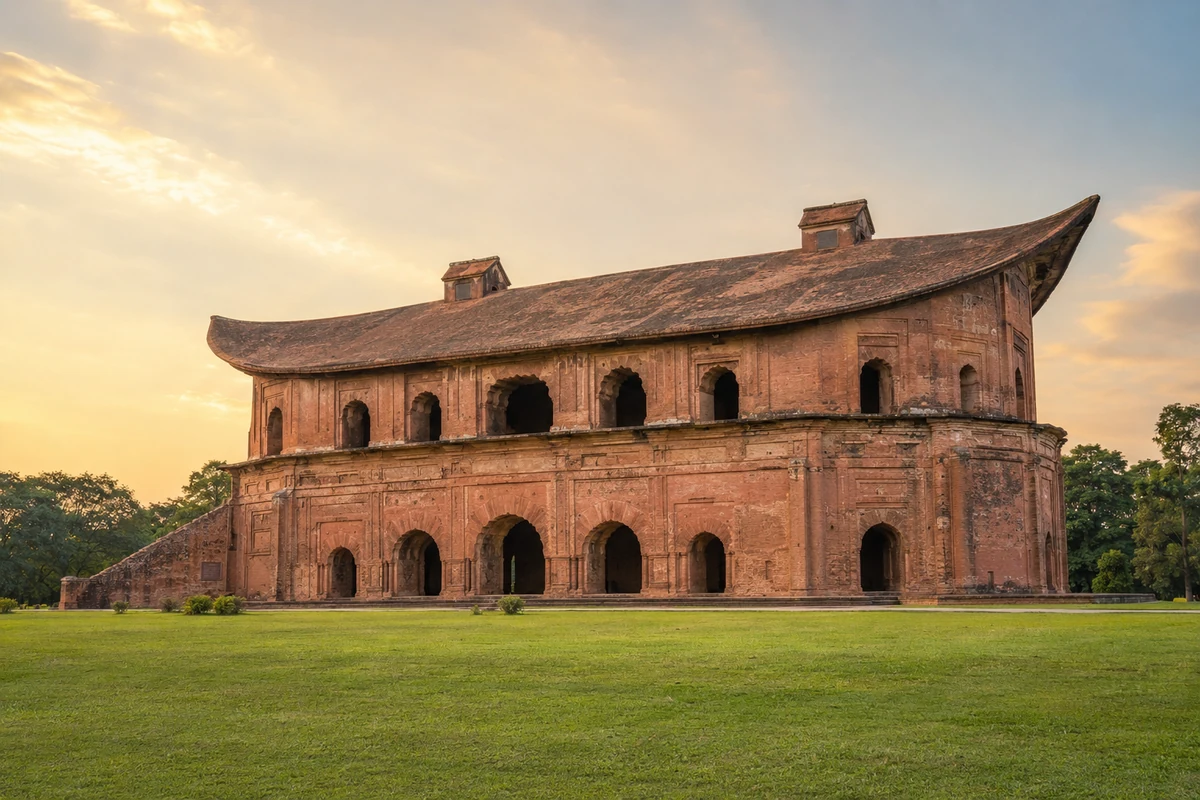
Sivasagar
The old Ahom capital. Six centuries of temples, tanks and palaces from a dynasty that outlasted the Mughals.
Pick the route that fits your dates
Three ways to shape the trip, depending on how much time you have.
Rhinos & river
Guwahati → Kaziranga → back to Guwahati. Kamakhya temple, a Brahmaputra sunset cruise, and two days of safaris. The essential first-timer loop.
Wildlife & tea
Add Jorhat’s tea estates and a night in a heritage bungalow, then a day trip across to Majuli’s satras. The most popular length.
The full circuit
Everything above plus Sivasagar’s Ahom monuments and Manas on the Bhutan border. The complete, unhurried Assam.
Six things worth building the trip around
The experiences that stay with people long after they leave.
Rhino safari at Kaziranga
Jeep or elephant-back at dawn, when rhinos graze the mist-covered grassland and the light is at its softest.
Sunset cruise on the Brahmaputra
Push off from Guwahati as the sun drops behind the river. Wide, calm, and completely disarming.
Stay on a tea estate near Jorhat
Wake in a colonial-era planter’s bungalow surrounded by green — a walk through the gardens, a tasting, real quiet.
Satras & mask-making on Majuli
Cross by ferry to the river island, watch monks rehearse, and meet the artisans keeping the mask tradition alive.
Darshan at Kamakhya
One of India’s most important Shakti temples, perched on Nilachal Hill above Guwahati with sweeping river views.
Ahom ruins at Sivasagar
Rang Ghar, Talatal Ghar and the temple tanks — the surviving architecture of a 600-year dynasty.
Getting the practical stuff right
Where to stay
Base in Guwahati for the city and river; stay inside or beside Kaziranga for early safaris; and splurge on one night in a Jorhat tea bungalow. On Majuli, keep it simple — homestays and eco-cottages are the norm.
How to get around
Fly into Guwahati (LGBI) — it’s the main hub, with Jorhat a smaller alternative. Hire a car with driver for the Kaziranga–Jorhat leg; roads are decent. Majuli is reached only by ferry from Nimati Ghat near Jorhat.
What to eat
Try an Assamese thali, masor tenga (tangy fish curry), khar, aloo pitika, pork with bamboo shoot, and pitha for something sweet. And of course — fresh Assam tea, straight from the source.
Small things that make a big difference
Do this
- Book Kaziranga safaris ahead in peak season (Dec–Feb) — jeep permits sell out.
- Carry layers: mornings are genuinely cold, afternoons warm.
- Check the Majuli ferry timings the day before — they’re weather-dependent.
- Keep some cash on hand; ATMs thin out east of Jorhat.
Avoid this
- Don’t visit in the monsoon (Jun–Sep) — Kaziranga closes and the Brahmaputra floods.
- Don’t try to do Manas and Kaziranga in one rushed day; they’re far apart.
- Don’t photograph inside satras or temples without asking first.
- Don’t underestimate drive times — plan the Kaziranga–Sivasagar leg generously.
Assam travel FAQs
When is the best time to visit Assam?
November to April. The weather is cool and dry, Kaziranga’s safari gates are open, and the skies are clear for river cruises. Avoid the June–September monsoon, when parks close and the Brahmaputra floods.
How many days do you need for Assam?
Six to nine days covers the classic circuit comfortably. Five is enough for Guwahati and Kaziranga; seven lets you add tea country and Majuli; nine gives you Sivasagar and Manas too.
Is Assam safe for tourists?
Yes — the main tourist circuit (Guwahati, Kaziranga, Jorhat, Majuli, Sivasagar) is well-travelled and welcoming. As anywhere, take normal precautions and check current advisories for border areas before you go.
How do I get to Kaziranga?
Fly into Guwahati, then it’s roughly a 5–6 hour drive east by car. Many travellers hire a car with driver for the whole Kaziranga–Jorhat leg. Jorhat airport is a closer alternative if you’re flying onward.
Do I need a permit to visit Assam?
No special permit is required for Indian or foreign travellers to enter Assam (unlike some neighbouring Northeast states). You’ll only need standard park entry and safari permits for Kaziranga and Manas.
Ready to plan your Assam trip?
Tell us your dates and what you’d love to see, and we’ll help you shape a route through the tea gardens, grasslands and the great river.
Written by Ashvinee Nagle
I travel India slowly and write it down honestly - practical guides and real itineraries from someone who lives here.
About Ashvinee →