

Travel to Jowai & the Jaintia Hills: A First-Timer’s Guide to Meghalaya’s Quiet East
An honest guide to the Jaintia Hills — Krang Suri Falls, the Nartiang monoliths, Jowai town, when to go and how to fit it into a longer Meghalaya trip.
East of Shillong, the Jaintia Hills see far fewer visitors than Sohra or Dawki. Jowai is the main town; nearby, Krang Suri Falls drops into a blue pool you can swim in during the dry season, and Nartiang has one of the largest groups of standing stone monoliths in the region.
Add one or two nights in Jowai to a longer trip. See Krang Suri Falls in the dry season and the Nartiang monoliths, then continue towards Assam or back to Shillong.
Why visit Jowai & the Jaintia Hills
Why the Jaintia Hills are worth the detour:
Fewer crowds
Quiet roads and villages, far from the busy Sohra circuit.
Krang Suri
A blue pool beneath a waterfall — one of Meghalaya’s prettiest falls.
Standing stones
Nartiang’s monoliths are a reminder of the Jaintia kingdom’s history.
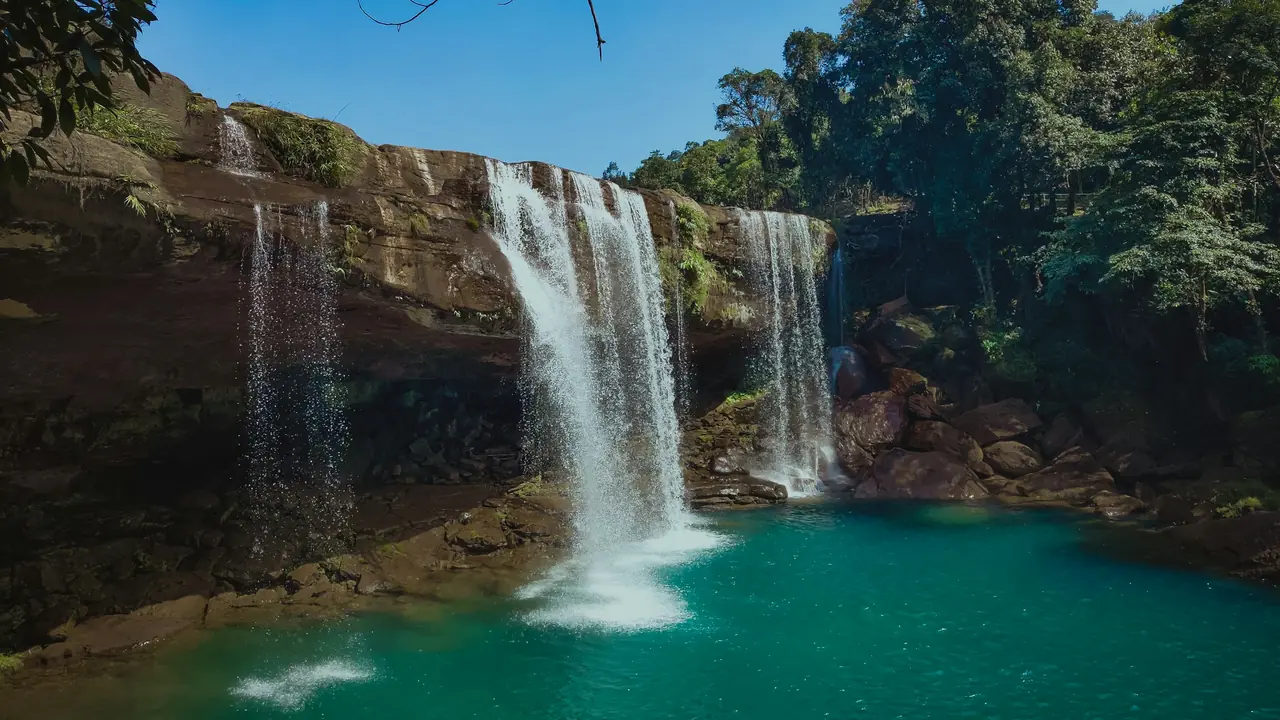
A waterfall in the West Jaintia Hills. Photo: Arghya Mondal / Unsplash
When to go
October to May: dry and clear — Meghalaya Tourism’s recommended time for Krang Suri’s blue pool.
November to February: cool and calm; the pool is at its clearest.
June to September (monsoon): the falls are full but swimming may be closed.
March to May: warmer, with some haze.
Krang Suri is a dry-season swim — check whether swimming is allowed before you go.
Top things to do in Jowai & the Jaintia Hills
The main sights around Jowai:
Krang Suri Falls
A waterfall over a blue pool. Reaching it means a walk down from the road and a climb back up; life jackets are available to rent if swimming is allowed. The pool looks best around 11 am–2 pm.
Nartiang monoliths
A large group of standing stones linked to the Jaintia kingdom. Open 6 am–6 pm.
Nartiang Durga temple
An old temple near the monoliths.
Thadlaskein Lake
A small lake on the road from Shillong.
Jowai
A quiet market town and the base for the area.
Phe Phe Falls
Another waterfall in the area: a 15–20 minute hike from the parking area near Shkentalang village, through bamboo and forest with some scrambling. Wear grippy shoes; best October–April.
What to eat in Jowai & the Jaintia Hills
Food in Jowai is simple and local.
Jadoh
The Khasi-Jaintia rice-and-pork staple.
Pork dishes
Smoked and stewed pork, often with local herbs.
Tea & snacks
Small stalls near the falls.
Snacks & water
Options are limited outside Jowai.
Carry snacks for the drive to Krang Suri — stalls are basic.
Where to stay
Jowai has a few simple hotels and guesthouses. A daily budget of about ₹2,000–5,000 per person covers a hotel and meals; a hired car is extra, but recommended for Krang Suri and Nartiang.
Town hotels
Simple and central.
Homestays
A more local stay.
How to get to Jowai & the Jaintia Hills & around
Jowai is about 1.5–2 hours by road from Shillong.
Indian visitors don’t need a permit for Meghalaya. Foreign visitors don’t need an Inner Line Permit, but must register on arrival (hotels usually handle this) and may need additional permission near the Bangladesh border — see Meghalaya Tourism’s planning FAQ.
A simple 2-day plan
Two easy days in the Jaintia Hills:
Shillong to Jowai & Nartiang
Drive from Shillong via Thadlaskein Lake, visit the Nartiang monoliths, and stay in Jowai.
Krang Suri & onward
Late morning at Krang Suri Falls (about 30 minutes from Jowai) for the best light on the pool. Allow 2–3 hours for the walk down, a swim and the climb back up before you start a long onward drive — back to Shillong or on towards Assam.
Practical tips that actually help
Dry season
Meghalaya Tourism recommends October–May for Krang Suri.
Swim safely
Rent a life jacket, and swim only where it’s allowed.
Cash
Fees and stalls are cash only.
Rain gear
Showers are common.
Drive time
Allow time for slow roads.
Respect sites
The monoliths are culturally important — don’t climb them.
Mistakes first-time visitors make
- Expecting a blue pool in the monsoon. The water is fuller and murkier.
- Skipping Nartiang. The monoliths are worth the short detour.
- Rushing it as a day trip. A night in Jowai makes it easier.
- Climbing on the monoliths. They’re culturally important.
Planning a longer Meghalaya trip?
The Jaintia Hills fit a longer loop on the way to Assam. Tell us your dates and we’ll help you plan it.
Plan my Meghalaya trip →Jowai & the Jaintia Hills FAQs
Can you swim at Krang Suri Falls?
In the dry season, usually yes — life jackets are available to rent. Check locally, as swimming may be closed in the monsoon, and allow time for the walk down and climb back up.
What are the Nartiang monoliths?
A large group of standing stones linked to the Jaintia kingdom.
How far is Jowai from Shillong?
About 1.5–2 hours by road.
When is the best time to visit?
October to May for Krang Suri (Meghalaya Tourism’s recommendation) and October to April for Phe Phe Falls, when the trails are drier.
Do you need a permit?
Indian visitors don’t need a permit for Meghalaya. Foreign visitors don’t need an Inner Line Permit, but must register on arrival (hotels usually handle this) and may need additional permission near the Bangladesh border — see Meghalaya Tourism’s planning FAQ.
Related guides
Keep planning your Meghalaya trip with these:
Meghalaya Travel Guide
Root bridges, waterfalls and the Umngot — how to plan the whole of Meghalaya.
Travel to Shillong
The hill capital.
Ashvinee Nagle
I’m Ashvinee — I help first-time travellers plan India trips that actually work. I’ve spent years exploring the country’s regions, from Rajasthan’s forts to Kerala’s backwaters, and I write the guides I wish I’d had on my own first trips.
Written by Ashvinee Nagle
I travel India slowly and write it down honestly - practical guides and real itineraries from someone who lives here.
About Ashvinee →Plan your India trip with us
Get one short, honest India travel guide a week — plus a free 7-day Rajasthan itinerary to start.
Free. Unsubscribe any time.