
Travel to Guwahati: A First-Timer’s Guide to Kamakhya & the Brahmaputra
An honest, no-fluff guide to Guwahati — the Kamakhya temple, a Brahmaputra sunset cruise, the island shrine of Umananda, rhinos at Pobitora, and how to use the city as your gateway to the rest of Assam and the Northeast.
Guwahati is the front door to Assam and the wider Northeast — the region’s biggest city, its main airport, and the point almost every trip passes through. It sprawls along the Brahmaputra, one of the world’s great rivers, and is crowned by the Kamakhya temple on Nilachal Hill, among the most important Shakti shrines in India. It’s a working city rather than a polished tourist town, but give it a day or two and it rewards you: a hilltop temple, a sunset cruise on a river so wide it feels like a sea, an island shrine mid-stream, and a rhino sanctuary an easy drive away. Most people use it as a hub — arrive, see the highlights, and fan out to Kaziranga, Jorhat and Majuli.
Guwahati is Assam’s gateway city and hub. Visit the hilltop Kamakhya temple early, take a Brahmaputra sunset cruise, and cross to the tiny island shrine of Umananda. With a spare half-day, drive out to Pobitora for rhinos at close range. One full day covers the city; two lets you slow down. It’s the natural start of a wider Assam trip onward to Kaziranga and the river island of Majuli.
Why visit Guwahati
Three reasons Guwahati is worth more than just a night on the way through.
Kamakhya temple
One of India’s most revered Shakti shrines sits on Nilachal Hill above the city, drawing pilgrims from across the country. The complex, the views over the Brahmaputra and the atmosphere make it the city’s essential stop.
The mighty Brahmaputra
Few rivers feel as vast. A sunset cruise, the island temple of Umananda, and the riverfront give Guwahati a character built entirely around the water — wide, calm and completely disarming at dusk.
The perfect hub
Every road and flight in the Northeast runs through here. Rhinos at Pobitora, the silk village of Sualkuchi and onward routes to Kaziranga and Meghalaya are all within easy reach.
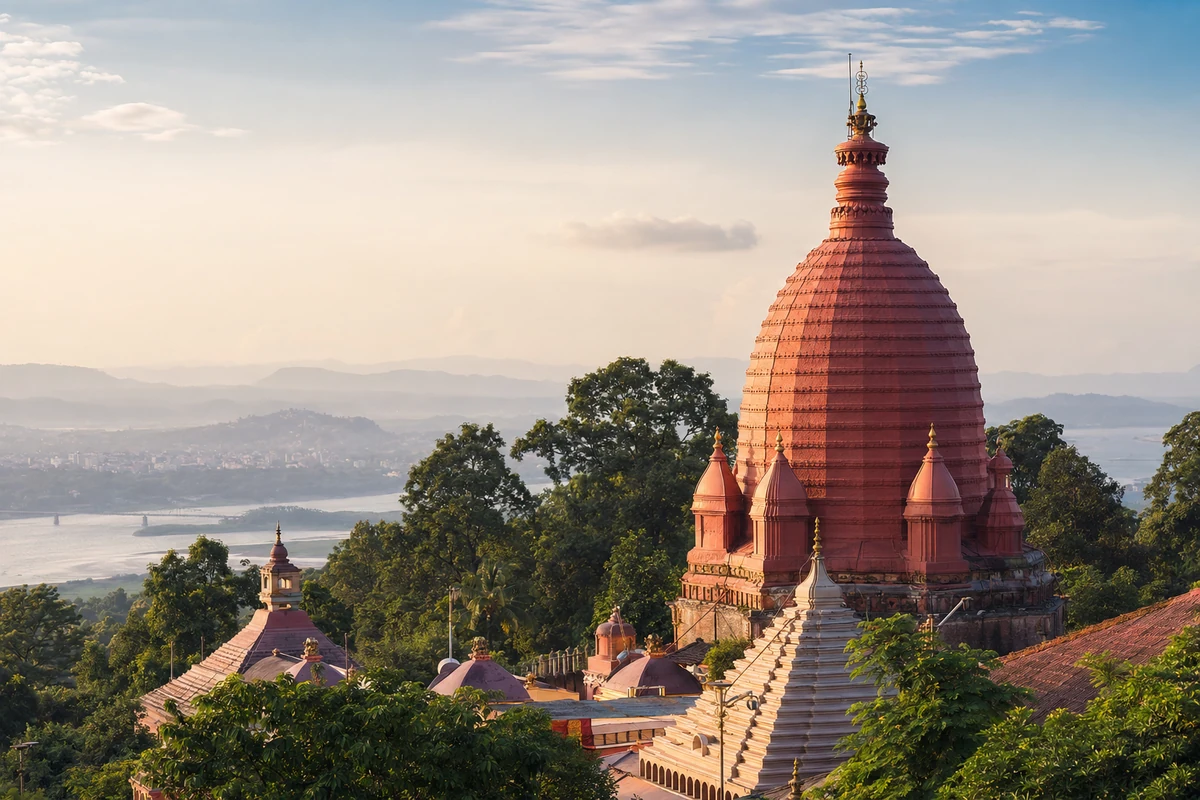
Kamakhya, one of India’s most important Shakti temples, crowns Nilachal Hill above the Brahmaputra.
When to go
October to March (the sweet spot): cool, dry and clear — comfortable for the hilltop temple, river cruises and day trips. This is the best window to visit, and the pleasantest time to be outdoors.
June (Ambubachi Mela): the huge annual Ambubachi festival at Kamakhya draws enormous crowds of pilgrims. Extraordinary to witness, but book far ahead and expect long queues and heat.
April to May (hot): increasingly hot and humid as summer builds, though evenings on the river stay pleasant. Start early and rest in the afternoon.
July to September (monsoon): heavy rain and a swollen Brahmaputra; the city is green and dramatic but cruises and day trips can be disrupted by the weather.
During the Ambubachi Mela in June, Kamakhya temple closes to visitors for several days and then reopens to vast crowds; the whole city fills up. It’s a remarkable event but a difficult time for a casual first visit — if you’re not coming for the festival, plan around it.
Top things to do in Guwahati
From a hilltop shrine to a sunset on the widest river you’ll ever cross, here is what fills a day or two.
Kamakhya temple at Nilachal Hill
The city’s spiritual heart — an ancient Shakti temple with a distinctive beehive dome, perched above the Brahmaputra. Go early to beat the queues and the heat, and take in the sweeping river views from the top.
Sunset cruise on the Brahmaputra
Push off from the city ghats as the sun drops behind the river. The water is so wide it feels oceanic; some cruises add music and food. The single most memorable hour in Guwahati.
Umananda island temple
A short boat ride reaches Peacock Island, one of the smallest inhabited river islands in the world, with a Shiva temple and resident golden langurs. A quick, atmospheric detour mid-stream.
Rhinos at Pobitora
About an hour and a half away, Pobitora Wildlife Sanctuary has one of the highest densities of one-horned rhino anywhere — a great half-day safari if you’re not going all the way to Kaziranga.
Assam State Museum & Srimanta Sankardev Kalakshetra
For context on the region’s history, tribes and art, the state museum and the sprawling cultural complex of Kalakshetra are well worth a slower afternoon.
Silk village of Sualkuchi
A short drive upriver, Sualkuchi is the weaving town behind Assam’s famous muga and pat silk. Watch the looms at work and buy directly from the source.
What to eat in Guwahati
Guwahati is the best place in Assam to eat widely — from a proper Assamese thali to street snacks and fresh river fish.
Assamese thali
The full spread — rice, dal, greens, khar, a tangy tenga, a fish or meat curry and a sweet. The single best way to understand Assamese food in one sitting.
Masor tenga & fish curries
Being on the Brahmaputra, Guwahati does river fish beautifully — above all masor tenga, the light, sour fish curry that defines Assamese cooking.
Khar & duck curry
Khar, a unique alkaline preparation, opens a classic Assamese meal; duck with ash gourd is a festive favourite worth seeking out.
Pitha & fresh tea
Rice-flour pithas, sesame and jaggery sweets, and endless cups of strong Assam tea round off any meal in the city.
For the real thing, choose a dedicated Assamese-thali restaurant over a generic multi-cuisine hotel — the city has several well-loved ones. River fish is freshest at lunch.
Where to stay
Stay central near Paltan Bazaar for transport and food, or along the riverfront for Brahmaputra views. Choose by budget and whether you want to be near the station or the water.
Riverfront & upscale hotels
The city’s better hotels offer river views, pools and easy cruise access — a comfortable base if you want to slow down and enjoy the water.
Paltan Bazaar & G.S. Road
The transport heart of the city — close to the railway station, buses and airport road, packed with reliable mid-range hotels. The practical traveller’s pick.
Guesthouses & business hotels
Plenty of clean, no-frills guesthouses and budget business hotels keep costs down while staying close to the sights and stations.
How to get to Guwahati & around
As the Northeast’s main gateway, Guwahati is the easiest city in the region to reach and the launch point for everywhere else in Assam.
Guwahati’s airport (LGBI) sits about 25 km west of the city, so allow time for the transfer. Use app cabs or prepaid taxis, and if you’re heading straight to Kaziranga you can sometimes arrange a driver to collect you at the airport.
A simple 2-day plan
One day for the temple and the river, a second for a rhino day trip or the silk village.
Kamakhya & the river
Start early at Kamakhya temple before the crowds, explore the riverfront, cross to Umananda island, and end with a Brahmaputra sunset cruise.
Rhinos or silk
Drive out to Pobitora for a morning rhino safari, or visit the silk village of Sualkuchi — then continue to Kaziranga and beyond.
Practical tips that actually help
Do Kamakhya early
Queues and heat build fast — arrive soon after opening, or buy a fast-track darshan ticket.
Book the sunset cruise
Evening cruises fill up in season; reserve earlier in the day for the best timing.
Use it as a hub
Base here and radiate out — Pobitora, Sualkuchi and Kaziranga are all easy from the city.
Mind Ambubachi
If you’re not there for the June festival, plan around it — the temple closes and the city fills.
Allow airport time
The airport is 25 km out; give yourself a buffer, especially in traffic.
Dress for the temple
Modest dress helps at Kamakhya; carry socks as you’ll remove shoes.
Mistakes first-time visitors make
- Treating it as only a stopover. A rushed night misses the sunset cruise and the temple at its calmest — give it a full day.
- Reaching Kamakhya at midday. You’ll queue in the heat; go early or pay for fast-track entry.
- Underestimating the airport transfer. It’s 25 km from the centre — easy to be caught short before a flight.
- Skipping the river entirely. The Brahmaputra is the point of Guwahati — don’t leave without an hour on the water.
Planning Assam beyond Guwahati?
Guwahati is the launch pad for the whole state — the rhinos of Kaziranga, the tea estates of Jorhat, and the river island of Majuli. Tell me your dates and pace, and I’ll map an Assam route from the city out along the Brahmaputra.
Plan my Assam trip →Guwahati FAQs
How many days do you need in Guwahati?
One full day covers Kamakhya, the riverfront, Umananda island and a sunset cruise. A second day lets you add a rhino safari at Pobitora or the silk village of Sualkuchi before moving on.
Is Guwahati worth visiting or just a transit city?
It’s both. Most people pass through on the way to Kaziranga or Meghalaya, but the Kamakhya temple, the Brahmaputra and nearby Pobitora make it well worth a full day rather than a quick overnight.
When is the best time to visit Guwahati?
October to March, when the weather is cool and dry — ideal for the hilltop temple, river cruises and day trips. Avoid the peak of the June Ambubachi festival unless you specifically want that experience.
Can I see rhinos near Guwahati?
Yes — Pobitora Wildlife Sanctuary, about an hour and a half east, has one of the highest rhino densities anywhere and makes an excellent half-day safari if you can’t reach Kaziranga.
How do I get to Guwahati?
Guwahati has the Northeast’s main airport (LGBI) with flights from Delhi, Kolkata and other cities, and is a major railhead connected across India. The airport is about 25 km west of the city centre.
Related guides
Keep planning your Assam trip with these:
Assam Travel Guide
Kaziranga, the Brahmaputra, Majuli, tea country and the Ahom monuments — how to string an Assam trip together.
Plan my Assam trip
Share your dates, pace and starting city, and I’ll suggest a Guwahati–Kaziranga–Majuli route that fits.
Written by Ashvinee Nagle
I travel India slowly and write it down honestly - practical guides and real itineraries from someone who lives here.
About Ashvinee →Plan your India trip with us
Get one short, honest India travel guide a week — plus a free 7-day Rajasthan itinerary to start.
Free. Unsubscribe any time.