
Travel to Kaziranga: A First-Timer’s Guide to Rhino Safaris & the Grasslands
An honest, no-fluff guide to Kaziranga National Park — which safari range to book, jeep versus elephant, the truth about permits and timings, when to go, and how to fold the park into a wider Assam trip.
Kaziranga is the reason many people come to Assam at all — a vast floodplain of elephant grass, shallow beels (wetlands) and forest along the Brahmaputra that shelters roughly two-thirds of the world’s greater one-horned rhinos. It’s a UNESCO World Heritage Site, one of the great conservation success stories in Asia, and also home to tigers, wild elephants, water buffalo and swamp deer. The park is easy to reach on a good highway from Guwahati or Jorhat, safaris are well organised, and two or three nights are plenty to see it properly. The trick is simple: base yourself at Kohora, book a couple of morning safaris across different ranges, and don’t try to do it as a rushed day trip.
Kaziranga is India’s best place to see the one-horned rhino, along with elephants, wild buffalo, swamp deer and a strong chance of tigers. Book a jeep safari in the Central (Kohora) range for the classic first visit, add the Western (Bagori) range for more rhinos, and go early morning for the best sightings. The park is open roughly November to April and closes for the monsoon. Base at Kohora on the highway, and fold it into a wider Assam trip with Jorhat and Majuli.
Why visit Kaziranga
Three reasons Kaziranga anchors almost every Assam trip — and rewards a couple of unhurried days.
The rhino capital of the world
No other park comes close for the greater one-horned rhino. You’ll often see them within minutes of entering — grazing the grassland, wallowing in the beels, sometimes crossing the track right ahead of the jeep.
Far more than rhinos
Kaziranga has one of the highest tiger densities anywhere, plus wild elephants, Asiatic water buffalo, swamp deer and hundreds of bird species. It’s a full big-game landscape, not a single-species stop.
Easy to reach and organise
A good highway links the park to Guwahati and Jorhat, safari permits are straightforward, and a cluster of lodges at Kohora keeps everything within reach. Little friction for a big wildlife payoff.
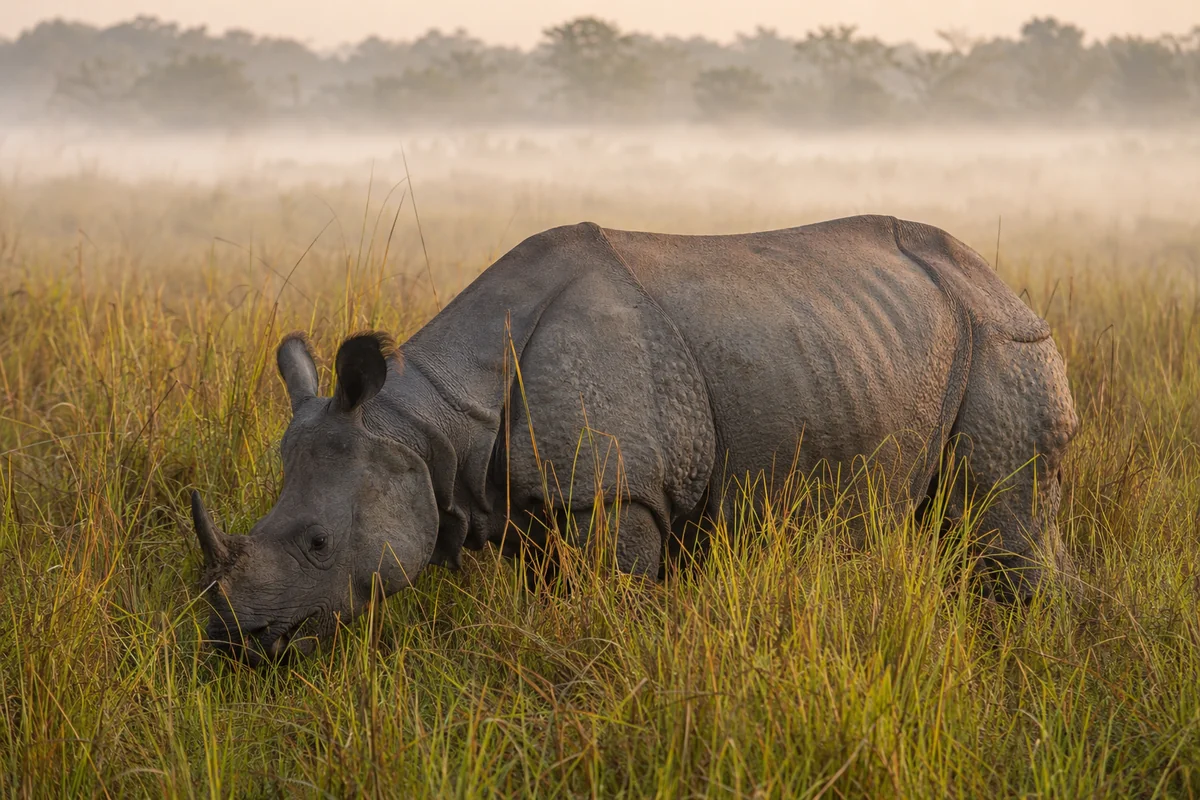
Kaziranga holds roughly two-thirds of the world’s greater one-horned rhinos — nowhere else comes close.
When to go
November to April (the sweet spot): the park is open, the grass is shorter after the floods recede, and cool clear mornings give the best sightings. This is peak season, and by far the best time to visit.
February to March (prime game-viewing): as the dry season advances the grass is at its lowest and animals gather around the shrinking water — excellent for rhinos and your best tiger odds.
November to December (green and mild): lush after the monsoon with pleasant days and cold mornings; carry a warm layer for the early jeep runs.
May to October (closed): the park closes for the monsoon when the Brahmaputra floods the grasslands. Gates reopen around the start of November — always confirm exact dates before you plan.
Kaziranga is closed during the monsoon (roughly May to October) when the park floods, and reopening dates shift year to year with the rains. Never lock in non-refundable travel until the current season’s opening is confirmed, and book jeep permits ahead for the busy December–February window.
Top things to do in Kaziranga
From dawn jeep runs to the shrinking wetlands where the wildlife gathers, here is what fills a couple of days.
Morning jeep safari in the Central range
The Kohora (Central) range is the classic first safari — open grassland, watchtowers over the beels, and near-guaranteed rhinos. Book the dawn slot for the best light and the most active wildlife.
Western range (Bagori) safari
The Bagori range is famous for dense rhino sightings across wide meadows, and good for elephants and buffalo too. A great second safari on a different morning to vary the landscape.
Eastern range (Agoratoli) for birds
The Agoratoli (Eastern) range is quieter, more wooded and wetland-rich — the pick for birdlife, with pelicans, storks, eagles and, in winter, migratory flocks around the beels.
Sunset over the beels
End a safari day at one of the watchtowers or a highway viewpoint as the light drops over the wetlands, with rhinos and deer silhouetted against the grass. Simple, and unforgettable.
Tea gardens around Kohora
The park is ringed by working tea estates. A short walk or drive through the gardens — and a cup at source — makes an easy, pretty break between safaris.
Orchid & biodiversity park
The Kaziranga National Orchid Park showcases hundreds of orchid species alongside local Assamese culture and food — a relaxed non-safari afternoon, especially good with children.
What to eat in Kaziranga
Most visitors eat at their lodge, but Assamese home cooking around the park is worth seeking out between safaris.
Assamese thali
Rice with dal, seasonal vegetables, a fish or chicken curry and a tangy note — the everyday meal, and a good introduction to the region’s light, fresh cooking.
Masor tenga
Assam’s famous sour fish curry, tangy with tomato, lemon or elephant-apple. Light and clean — the dish people miss most after leaving.
Fresh Assam tea
You’re in the middle of tea country — a cup of strong, malty CTC tea straight from a garden nearby is as fresh as it gets.
Pork with bamboo shoot
A Northeast classic — slow-cooked pork with fermented bamboo shoot. Ask your lodge; it’s not always on the menu but often available on request.
Food and drink inside the park is limited to what you carry on a safari, so eat a proper breakfast before the dawn run or pack a light snack and water. Most lodges lay on an early cup of tea before the jeep leaves.
Where to stay
Almost everyone bases at Kohora on the highway, where the park office and Central range gate sit. Choose by budget and how much comfort you want after early starts.
Luxury resorts & tea bungalows
A handful of high-end lodges and converted tea bungalows offer pools, spa treatments and guided safaris — a comfortable, unhurried base for a special trip.
Mid-range resorts at Kohora
The traveller’s pick — clean rooms, on-site restaurants and easy safari booking, minutes from the Central range gate for early departures.
Guesthouses & forest lodges
Simple guesthouses and government forest lodges keep costs down and put you close to the gates. Book the forest lodges well ahead in peak season.
How to get to Kaziranga & around
Kaziranga sits on National Highway 715 between Guwahati and Jorhat, so it’s an easy road trip and a natural stop on the classic Assam circuit.
Safari jeeps and permits are booked through the park authorities or your lodge, not hailed on the day — arrange them a day ahead, and for peak season a week or more. A car with driver for the Guwahati–Kaziranga–Jorhat leg is the easiest way to travel.
A simple 2-day plan
Two mornings of safari across different ranges, with relaxed afternoons in between.
Arrive & Central range
Reach Kohora by early afternoon, settle in, and take a late-afternoon or next-dawn Central range jeep safari. Sunset over the beels to finish.
Practical tips that actually help
Take the dawn slot
Morning safaris beat afternoons for activity and light — animals move before the day warms up.
Book permits ahead
Jeep permits sell out in December–February; arrange through your lodge a week or more in advance.
Do two ranges
Central and Western feel different — two morning safaris give you the fullest picture of the park.
Layer up
Open jeeps at dawn are genuinely cold in winter; bring a fleece and a hat for the first hour.
Bring binoculars
A basic pair transforms distant rhinos, birds and any big cat into a real sighting.
Confirm the season
The park closes for the monsoon and reopening dates vary — check before booking flights.
Mistakes first-time visitors make
- Visiting in the monsoon. The park is closed and flooded roughly May to October — an easy way to arrive to locked gates.
- Doing it as a day trip. You miss the dawn safari, the best hour by far, and spend the day in the car instead.
- Booking only one range. A single safari can be quiet; two mornings across ranges hugely improve what you see.
- Skipping warm clothes. People underestimate how cold an open jeep is at 6am in winter and cut the safari short.
Planning Assam beyond Kaziranga?
Kaziranga pairs naturally with the tea estates of Jorhat, the river island of Majuli, and Guwahati’s temples and river cruises. Tell me your dates and pace, and I’ll map an Assam route around the wildlife and the Brahmaputra.
Plan my Assam trip →Kaziranga FAQs
When is the best time to visit Kaziranga?
November to April, when the park is open and the grass is short after the floods. February and March give the best game-viewing as animals gather around shrinking water. The park closes for the monsoon, roughly May to October.
How many days do you need in Kaziranga?
Two nights and two morning safaris across different ranges are ideal for a first visit. Three nights let you add the Eastern range for birdlife and a relaxed day in the surrounding tea country.
Will I see a rhino — and a tiger?
Rhino sightings are almost guaranteed, often within minutes. Tigers are present in high density but shy and harder to see; your best odds are late in the dry season, February to March, when the grass is lowest.
How do I get to Kaziranga?
Most people drive from Guwahati (around five to six hours on NH715) or fly into the closer Jorhat airport (about two hours by road). Hiring a car with driver for the whole Kaziranga leg is the easiest option.
Do I need to book safaris in advance?
Yes, especially in peak season. Jeep safaris need a park permit arranged through your lodge or the park office, and the December-to-February slots fill up — book a week or more ahead to be safe.
Related guides
Keep planning your Assam trip with these:
Assam Travel Guide
Kaziranga, the Brahmaputra, Majuli, tea country and the Ahom monuments — how to string an Assam trip together.
Plan my Assam trip
Share your dates, pace and starting city, and I’ll suggest a Guwahati–Kaziranga–Majuli route that fits.
Written by Ashvinee Nagle
I travel India slowly and write it down honestly - practical guides and real itineraries from someone who lives here.
About Ashvinee →Plan your India trip with us
Get one short, honest India travel guide a week — plus a free 7-day Rajasthan itinerary to start.
Free. Unsubscribe any time.