
Travel to Jorhat: A First-Timer’s Guide to Assam’s Tea Capital
An honest, no-fluff guide to Jorhat — the heritage tea estates and planters’ bungalows, the gateway ferry to Majuli, the gibbons of Hoollongapar, when to go, and how to fold the tea country into a wider Assam trip.
Jorhat is the capital of Assam’s tea country — the town at the centre of the world’s single largest tea-growing region, ringed by estates that have been producing since the British planted the first bushes in the 1800s. It’s also the jumping-off point for Majuli, with the ferry leaving from nearby Nimati Ghat, and home to the last hoolock gibbons of Hoollongapar. The appeal here is gentler than the big sights elsewhere: a night in a colonial-era planter’s bungalow, a walk through the gardens, a tasting at source, and the slow green calm of the tea belt. Come for a night or two, treat yourself to an estate stay, and use it as the hinge between Kaziranga and Majuli.
Jorhat is Assam’s tea capital and the gateway to Majuli. Stay a night in a colonial-era planter’s bungalow, walk a working estate and taste tea at source, and if you have time, visit Hoollongapar Gibbon Sanctuary for India’s only apes. The ferry to Majuli leaves from Nimati Ghat nearby, so Jorhat pairs naturally with the river island. It sits between Kaziranga and Majuli on the classic circuit — an easy, restful link on a wider Assam trip.
Why visit Jorhat
Three reasons Jorhat earns a night — beyond just catching the Majuli ferry.
The heart of tea country
Jorhat is surrounded by some of the oldest and most storied tea estates in India. Walking the gardens, watching the plucking and processing, and tasting at source is the essence of a visit.
Heritage bungalow stays
Several estates have converted their colonial-era planters’ bungalows into heritage stays — verandahs, gardens and old-world calm. A night in one is the highlight for many travellers to Assam.
Gateway to Majuli & the gibbons
The ferry to the great river island of Majuli leaves from nearby Nimati Ghat, and Hoollongapar Gibbon Sanctuary — home to India’s only apes — is a short drive away. Jorhat connects the region’s best.
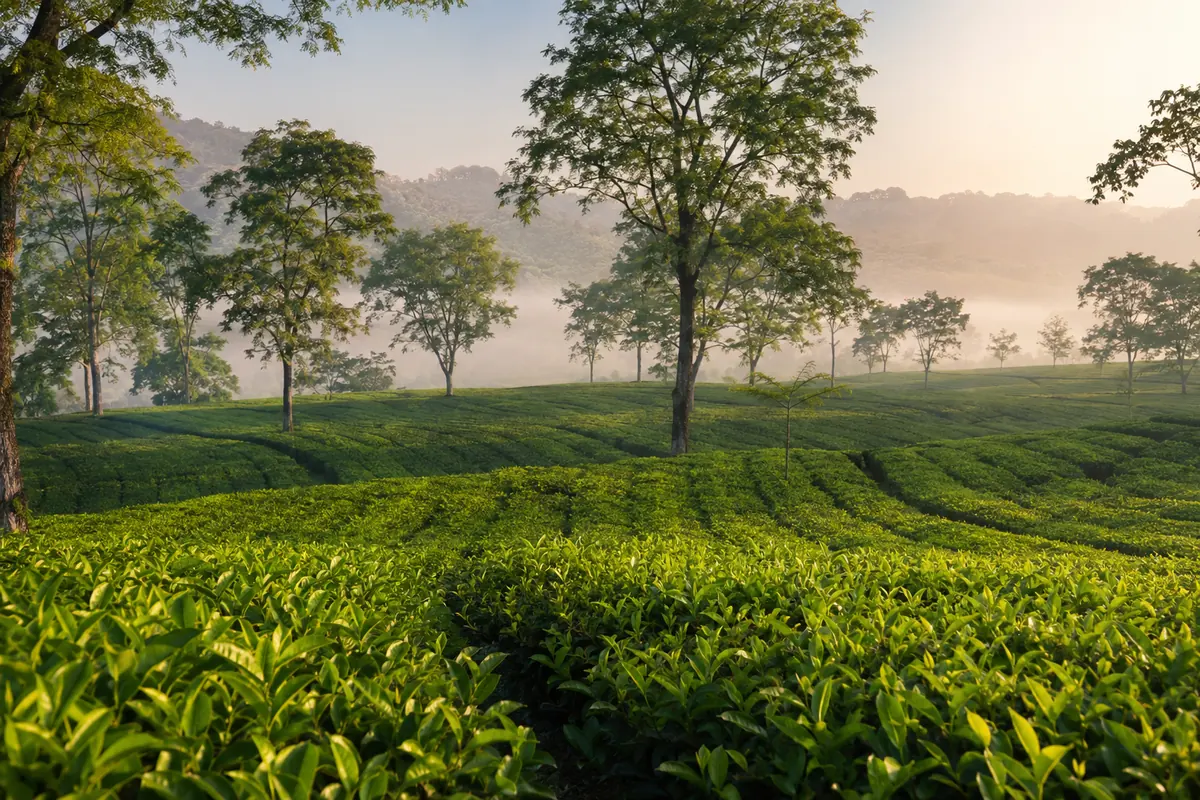
Jorhat sits at the heart of Assam’s tea country — the world’s single largest tea-growing region.
When to go
October to April (the sweet spot): cool, dry and comfortable, with the estates green and the ferries to Majuli reliable. The best window for a tea-country visit and any onward island trip.
The plucking season (roughly March to November): to see the gardens actually working — pluckers in the bushes, leaves being processed — aim for the growing months; the estates are quieter and dormant in deep winter.
April to May (warm): temperatures climb but the tea belt stays green and pleasant in the mornings and evenings; a fine time for garden walks if you start early.
June to September (monsoon): heavy rain makes the country lush but travel and the Majuli ferry unreliable. Estate stays still work, but plan flexibly.
If seeing a working tea garden matters to you, note that the bushes are dormant and the estates quiet in the coldest months — the plucking and processing happen mainly in the warmer growing season. And if you’re continuing to Majuli, remember the ferry from Nimati Ghat is weather-dependent, so keep your plans flexible.
Top things to do in Jorhat
From a tasting at source to India’s only apes swinging through the canopy, here is what fills a day or two.
Tour a heritage tea estate
Walk a working garden with a planter or guide — see the plucking, the withering and rolling in the factory, and finish with a tasting. Several estates around Jorhat welcome visitors; some are centuries old.
Stay in a planter’s bungalow
The colonial-era bungalows, with their wide verandahs, gardens and slow rhythm, are an experience in themselves. A night here — tea on the lawn, an estate walk at dawn — is unforgettable.
Hoollongapar Gibbon Sanctuary
A short drive from town, this forest shelters the western hoolock gibbon — India’s only ape — along with other primates. An early-morning walk with a guide gives the best chance of hearing and seeing them.
Ferry to Majuli from Nimati Ghat
The crossing to the world’s largest river island leaves from Nimati Ghat, a short drive from Jorhat. Even as a day trip it’s worthwhile, though an overnight on Majuli is better.
Cinnamora & the old estates
Jorhat claims some of Assam’s earliest commercial tea gardens. History buffs can seek out the pioneering estates and the old Gymkhana Club, home to one of Asia’s oldest golf courses.
Jorhat town & Dhekiakhowa
The town itself has lively markets, and the nearby Dhekiakhowa Bornamghar is a historic prayer hall with a lamp said to have burned for centuries — a quiet cultural stop.
What to eat in Jorhat
Jorhat eats well — classic Assamese cooking in town, and at the estates, the genteel table of the old planters’ tradition.
Assamese thali
The full local spread — rice, dal, greens, khar, a sour tenga and fish or meat. Reliable, fresh and the best everyday meal in town.
Planters’ table
The bungalow stays serve a gentle fusion of Assamese and colonial-era cooking — soups, roasts and local curries, often with garden vegetables and, of course, endless tea.
Fresh estate tea
You’re at the source of some of the world’s best-known tea — a proper tasting, or simply a cup on the lawn, is a must.
Fish tenga & pork
Masor tenga, the sour fish curry, and pork with bamboo shoot are the dishes to seek out beyond the thali.
If you’re staying on an estate, meals are usually included and cooked in-house — mention dietary needs when you book. In town, a dedicated Assamese restaurant beats the generic hotels for a proper thali.
Where to stay
The choice here is unusually clear: a heritage tea bungalow for the experience, or a practical town hotel for the ferry and connections.
Heritage tea bungalows
Converted planters’ bungalows with verandahs, gardens and old-world service — the reason many people stop in Jorhat at all. Worth the splurge for a night.
Town hotels
Comfortable mid-range hotels in town keep you close to the airport, the ferry road and the markets — practical for a short stay or an early Majuli start.
Guesthouses
Simple, clean guesthouses keep costs down while staying within easy reach of the ferry and onward transport.
How to get to Jorhat & around
Jorhat has its own airport and sits on the main road between Kaziranga and upper Assam, making it an easy and well-connected stop.
Jorhat’s own airport makes it a handy entry point for upper Assam — you can fly in, tour the tea country, and cross to Majuli without backtracking to Guwahati. For the island, allow time to reach Nimati Ghat and catch a scheduled ferry.
A simple 2-day plan
One day for the tea estates, a second for the gibbons or the Majuli ferry.
Tea country
Settle into a heritage bungalow, tour a working estate with a tasting, and enjoy a slow evening on the lawn. A dawn garden walk to start the next day.
Practical tips that actually help
Book an estate stay early
The heritage bungalows are limited and popular — reserve well ahead, especially in peak season.
Visit in growing season
To see the gardens working, come in the warmer plucking months rather than deep winter.
Plan the Majuli ferry
If continuing to the island, check ferry timings from Nimati Ghat and allow travel time from town.
Gibbons at dawn
The sanctuary’s apes are most active early — go first thing with a guide for the best chance.
Taste at source
Don’t leave without a proper tasting — and buy fresh estate tea to take home.
Use it as a hinge
Jorhat links Kaziranga and Majuli neatly — build it in between the two.
Mistakes first-time visitors make
- Only passing through for the ferry. Jorhat’s tea estates and bungalows deserve a night — don’t treat it as just a transit point.
- Expecting a busy garden in winter. The bushes are dormant in the coldest months; come in the growing season to see plucking.
- Leaving the estate stay too late. Heritage bungalows book out — reserve early or miss the best part of Jorhat.
- Cutting the Majuli ferry too fine. Timings are limited and weather-dependent — build in a buffer if you’re crossing.
Planning Assam beyond Jorhat?
Jorhat sits between the rhinos of Kaziranga and the river island of Majuli, with Guwahati’s temples and cruises down the line. Tell me your dates and pace, and I’ll map an Assam route that builds in a night in the tea country.
Plan my Assam trip →Jorhat FAQs
Why is Jorhat called the tea capital of Assam?
Jorhat sits at the centre of the world’s largest tea-growing region and has been a hub of the industry since the 1800s, ringed by historic estates and home to key tea institutions. It’s the natural base for exploring Assam’s tea country.
How many days do you need in Jorhat?
One night in a heritage tea bungalow with an estate tour is the essential experience. A second day lets you add the Hoollongapar Gibbon Sanctuary or cross to Majuli by ferry before moving on.
Can I stay on a tea estate near Jorhat?
Yes — several estates have converted their colonial-era planters’ bungalows into heritage stays, with garden walks, tastings and old-world hospitality. They’re limited in number, so book well ahead.
How do I get from Jorhat to Majuli?
Drive about fifteen kilometres to Nimati Ghat and take the ferry across the Brahmaputra to Kamalabari on Majuli. Ferries are scheduled and weather-dependent, so check timings and allow a buffer.
What is there to see near Jorhat?
Besides the tea estates, Hoollongapar Gibbon Sanctuary shelters India’s only apes, the ferry to Majuli leaves from nearby Nimati Ghat, and Kaziranga National Park is an easy drive away — making Jorhat a well-placed hub.
Related guides
Keep planning your Assam trip with these:
Assam Travel Guide
Kaziranga, the Brahmaputra, Majuli, tea country and the Ahom monuments — how to string an Assam trip together.
Plan my Assam trip
Share your dates, pace and starting city, and I’ll suggest a Guwahati–Kaziranga–Majuli route that fits.

Written by Ashvinee Nagle
I travel India slowly and write it down honestly - practical guides and real itineraries from someone who lives here.
About Ashvinee →Plan your India trip with us
Get one short, honest India travel guide a week — plus a free 7-day Rajasthan itinerary to start.
Free. Unsubscribe any time.