
Travel to Manas: A First-Timer’s Guide to the Bhutan-Border Wilderness
An honest, no-fluff guide to Manas National Park — tigers and golden langurs, the wild Bhutan-border grasslands, river rafting on the Manas, when to go, and how to add this quieter reserve to a wider Assam trip.
Manas is Assam’s wilder, quieter alternative to Kaziranga — a UNESCO World Heritage Site, tiger reserve and biosphere reserve spread along the Bhutan border, where the forested foothills of the Himalaya meet the grasslands of the plains. It’s contiguous with Bhutan’s Royal Manas across the river, so the sense of wilderness is real and unbroken. The park is famous for species you won’t easily see elsewhere — the golden langur, the tiny pygmy hog, the hispid hare and the Bengal florican — alongside tigers, elephants and wild buffalo. It sees a fraction of Kaziranga’s visitors, which is exactly the appeal. Come for a couple of nights, take safaris into the Bansbari and Mathanguri ranges, and enjoy a park that still feels genuinely remote.
Manas is a UNESCO tiger reserve on the Bhutan border — wilder, quieter and more remote than Kaziranga. Come for tigers, elephants and wild buffalo, plus specialities like the golden langur and pygmy hog, and for the spectacular setting where Himalayan foothills meet the plains. Safari the Bansbari and Mathanguri ranges, and consider river rafting on the Manas. Base at Bansbari or Barpeta Road, go November to April, and add it to a wider Assam trip for travellers who want fewer crowds.
Why visit Manas
Three reasons Manas rewards the extra effort to reach it.
Wild and uncrowded
Manas sees a fraction of Kaziranga’s visitors, so safaris feel genuinely wild — long stretches of grassland and forest with barely another jeep in sight. For many that solitude is the whole point.
Rare species
This is one of the best places on earth for the golden langur, and a stronghold for the pygmy hog, hispid hare and Bengal florican — creatures you simply won’t see in most parks — alongside tigers and elephants.
A spectacular setting
Backed by the blue Himalayan foothills and bordering Bhutan’s Royal Manas across the river, the landscape is more dramatic than the flat floodplain parks. The view from Mathanguri over the Manas river is unforgettable.
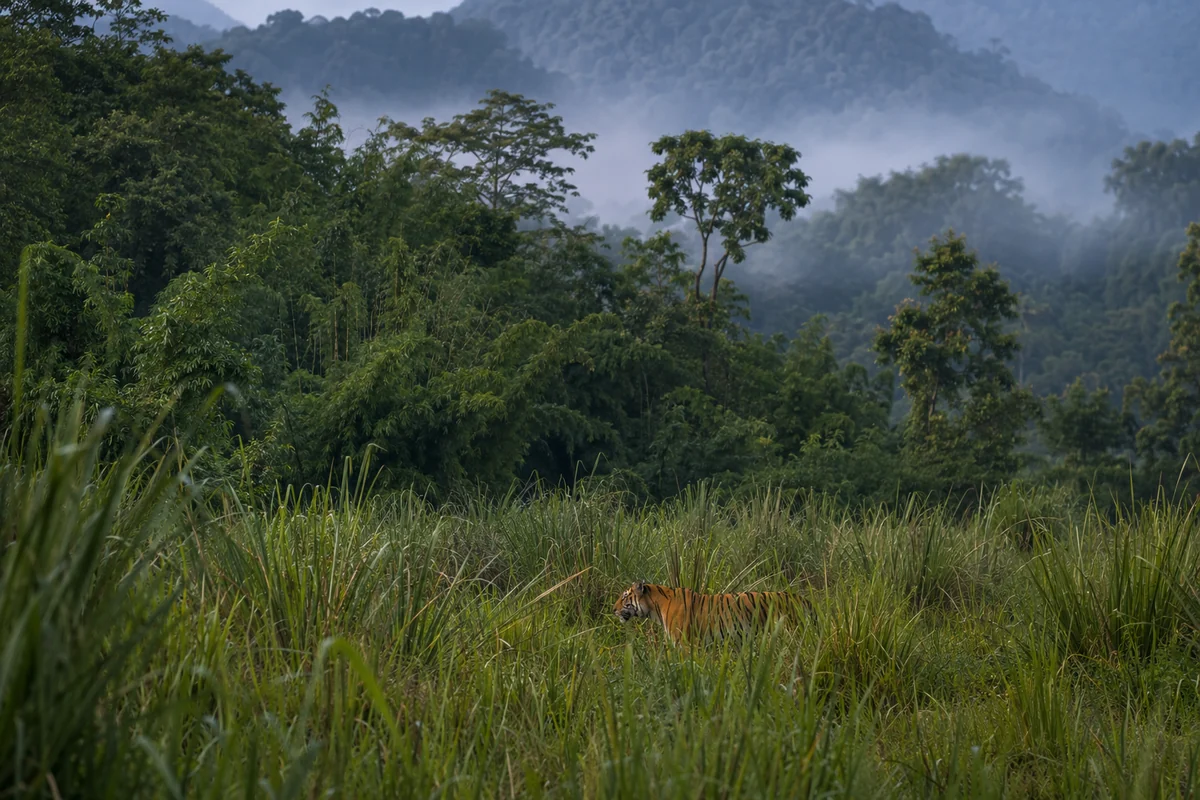
Manas is a UNESCO tiger reserve on the Bhutan border — wilder and quieter than Kaziranga.
When to go
November to April (the sweet spot): the park is open, the weather cool and dry, and the grass short enough for good sightings. This is the season to visit Manas.
February to April (best game-viewing): as the dry season advances, wildlife concentrates and visibility improves — the strongest window for tigers and the rarer species.
November to January (cool & green): fresh and pleasant after the rains, with cold mornings; carry warm layers for the early safaris.
May to October (closed): the park closes for the monsoon when the rivers rise and the grasslands flood. Reopening is usually around November — confirm before planning.
Like Kaziranga, Manas closes for the monsoon (roughly May to October) and reopening dates shift with the rains. It’s also more remote, so arrange permits, safaris and a stay in advance — there’s far less on-the-spot infrastructure than at the bigger parks, and the border location means some areas have access rules.
Top things to do in Manas
From a jeep run through empty grassland to a raft down a Himalayan river, here is what fills a couple of days.
Jeep safari in the Bansbari range
The main Bansbari range offers classic grassland-and-forest safaris with tigers, elephants, wild buffalo and superb birdlife — and a fraction of the crowds you’ll find elsewhere. Dawn is best.
Mathanguri on the Bhutan border
Drive up to Mathanguri, where the Manas river comes down from Bhutan between forested hills. The setting is the most beautiful in the park — forest lodges here look straight across to Royal Manas.
Spot the golden langur
Manas is among the best places in the world to see the golden langur, a strikingly pale primate found only in this border region. Ask your guide where the troops are moving.
River rafting on the Manas
When conditions allow, gentle rafting on the Manas river carries you through the reserve with forest on both banks and the Himalaya ahead — a rare way to experience a tiger reserve.
Bodoland villages
The park lies in the Bodoland region, and community-run tourism here supports the local Bodo people. A village visit or a community lodge adds real context to the wildlife.
Grassland birds & the florican
The grasslands are a stronghold for the rare Bengal florican and rich in other species — hornbills, eagles and more. Serious birders should build in extra early mornings.
What to eat in Manas
Dining is simple and lodge-based here — hearty local cooking after a day’s safari rather than a restaurant scene.
Assamese & Bodo thali
Rice with dal, greens, a fish or chicken curry and local touches — wholesome cooking, often with a Bodo accent, served where you stay.
Bodo specialities
The Bodo table brings its own dishes — herbs, pork, rice-based preparations and mild rice beer — a distinctive taste of the border region.
Fish from the Manas
Simple, fresh river fish — grilled or in a light curry — is a staple after a day in the park.
Fresh tea
You’re still in Assam — strong local tea is the way to start the cold safari mornings.
Manas is remote, so meals are almost always at your lodge or camp — there’s little in the way of restaurants. Mention dietary needs when you book, and carry snacks and enough cash, as facilities near the park are limited.
Where to stay
Options are fewer and simpler than at Kaziranga — forest lodges, jungle camps and community stays around Bansbari, with basic guesthouses in Barpeta Road. Choose for location and book ahead.
Mathanguri forest lodges
The government forest bungalows at Mathanguri have the finest setting in the park, overlooking the Manas river and Bhutan. Simple but unforgettable — book well in advance.
Bansbari lodges & camps
A handful of comfortable lodges and jungle camps near the Bansbari gate handle safaris and meals — the practical base for most visitors.
Barpeta Road guesthouses
The gateway town of Barpeta Road has simple guesthouses for those on a tight budget, with a short transfer to the park each day.
How to get to Manas & around
Manas is more remote than the other parks, reached via the gateway town of Barpeta Road, a few hours from Guwahati.
Because Manas sits on the international border and sees fewer visitors, arrange everything in advance — permits, safaris, transfers and your stay — through your lodge or a reliable operator. Don’t expect to organise things on arrival as you might at a busier park.
A simple 2-day plan
Two mornings of safari, with the Bhutan-border setting to savour in between.
Arrive & Bansbari safari
Reach Bansbari by afternoon and take a first jeep safari into the grasslands for tigers, elephants and golden langurs. Settle into your lodge as the light fades.
Mathanguri & the river
A dawn safari, then drive up to Mathanguri for the border views and, if conditions allow, a raft on the Manas before continuing your Assam journey.
Practical tips that actually help
Arrange everything ahead
Manas is remote — book permits, safaris and lodging in advance, not on arrival.
Take the dawn safari
Mornings are best for activity and light; the park is at its wildest early.
Go up to Mathanguri
The river-and-border setting is the most beautiful in the park — don’t miss it.
Layer up
Open jeeps at dawn are cold in winter — bring a fleece and hat.
Carry cash
Facilities near the park are limited; bring enough cash for your stay.
Confirm the season
The park closes for the monsoon — check the current opening before booking.
Mistakes first-time visitors make
- Expecting Kaziranga-style infrastructure. Manas is remoter and simpler — arrange everything in advance and travel prepared.
- Visiting in the monsoon. The park closes and floods roughly May to October — stick to the open season.
- Skipping Mathanguri. The border river setting is the highlight — don’t leave without seeing it.
- Coming just for tigers. Tigers are elusive here; come for the wilderness and the rare species, and enjoy any big cat as a bonus.
Planning Assam beyond Manas?
Manas pairs well with Guwahati and the rhinos of Kaziranga for a fuller wildlife trip, or the tea country and river island further east. Tell me your dates and pace, and I’ll map an Assam route that works in this quieter, wilder reserve.
Plan my Assam trip →Manas FAQs
How is Manas different from Kaziranga?
Manas is wilder, quieter and more remote, set on the Bhutan border where hills meet the plains. It has fewer rhinos but a spectacular setting and rare species like the golden langur and pygmy hog. Kaziranga is easier to reach and best for guaranteed rhino sightings.
When is the best time to visit Manas?
November to April, when the park is open and the weather cool and dry. February to April offers the best game-viewing as the dry season concentrates wildlife. The park closes for the monsoon, roughly May to October.
How do I get to Manas?
Fly or take a train to Guwahati, then drive around four hours to the Bansbari entrance via the gateway town of Barpeta Road. Because the park is remote, it’s best to arrange transfers and safaris through your lodge in advance.
What wildlife can you see in Manas?
Manas has tigers, elephants, wild buffalo and rhinos, plus rare species it’s famous for — the golden langur, pygmy hog, hispid hare and Bengal florican — along with rich birdlife. Sightings take patience, but the wilderness is the reward.
Is Manas worth visiting?
Yes, especially for travellers who want a wilder, less crowded park and a beautiful border setting. It’s more effort to reach than Kaziranga, but the solitude, the scenery and the rare species make it deeply rewarding.
Related guides
Keep planning your Assam trip with these:
Assam Travel Guide
Kaziranga, the Brahmaputra, Majuli, tea country and the Ahom monuments — how to string an Assam trip together.
Plan my Assam trip
Share your dates, pace and starting city, and I’ll suggest a Guwahati–Kaziranga–Majuli route that fits.
Written by Ashvinee Nagle
I travel India slowly and write it down honestly - practical guides and real itineraries from someone who lives here.
About Ashvinee →Plan your India trip with us
Get one short, honest India travel guide a week — plus a free 7-day Rajasthan itinerary to start.
Free. Unsubscribe any time.